


The Quiet Erasure of the Universal User Profile

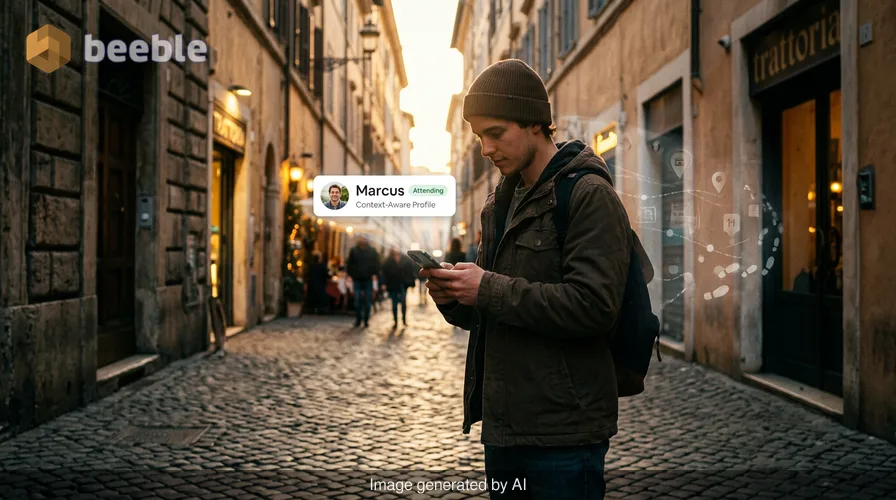
You are standing on a cobblestone street in Trastevere at dusk, waiting for a local guide to lead you through a "hidden pasta-making" Experience you booked an hour ago. Your phone buzzes. A notification invites you to a group chat with four other travelers. You tap a name—let's call him Marcus—and a profile pops up. But curiously, it’s not the Marcus you might have seen five years ago. There is no list of his last twenty vacation rentals, no links to his social media, and no way to track his digital footprint across the rest of the platform. You see his first name, a friendly photo, and a small badge indicating he’s also attending tonight’s dinner.
This small, seemingly insignificant interaction is the result of a massive, multi-year architectural overhaul at Airbnb. For years, the default setting of the internet was "more is more." If you had a profile, it was a global, static entity—a digital passport that you flashed at every gate. But as we move deeper into 2026, the industry is quietly retreating from this model. Airbnb’s recent implementation of a context-aware identity model represents a profound shift in how software engineers think about who you are and, more importantly, who is allowed to know you.
The Ghost in the Architecture
Historically, most web platforms were built on a monolithic concept of identity. In this legacy approach, a user is a single row in a database table. Whether you were booking a castle in Scotland or a surfboard lesson in Malibu, the system pulled from that same row. It was efficient for developers but increasingly clunky for a world demanding nuanced privacy. Why should the person teaching you how to bake sourdough in London have access to the same profile data as a host you stayed with in Tokyo three years ago?
Zooming out to the industry level, this "global profile" model has become a form of technical debt—a messy closet that companies have kept stuffing with features until the door won't shut. As Airbnb expanded its social features within Experiences, the risks of this unified identity became clear. If participants in a shared activity can see each other's full histories, the platform inadvertently creates a global social graph that users never explicitly signed up for. The solution wasn't just a UI update; it was a total reimagining of the underlying blueprint.
Scoped Identity: The Room-by-Room Approach
Technically speaking, Airbnb has replaced the universal profile with what engineers call "scoped identities." Imagine your digital self not as a single passport, but as a ring of specialized keys. One key opens the door to your pasta-making class; another opens the door to your apartment rental. The person holding the pasta key cannot see what’s behind the apartment door.
Under the hood, this is managed by creating multiple, context-specific profiles tied to individual interactions. When you join a group activity, the system generates a temporary, limited version of your identity that exists only within that specific context. Once the event is over, or if you step outside that group, that specific visibility vanishes. It is a pragmatic response to the "ubiquitous tracking" fatigue that has defined the last decade of web usage. By isolating social graphs, Airbnb ensures that your interaction with a group of strangers in a park doesn't leak into your broader life on the platform.
Himeji: The Invisible Gatekeeper
How does a server actually decide, in milliseconds, what Marcus is allowed to see about you? The heavy lifting is done by Himeji, Airbnb’s internal authorization framework. Rather than relying on static attributes (like "Is this person a friend?"), Himeji employs relationship-based access control (ReBAC) at runtime.
Think of Himeji as a high-end restaurant waiter. You don't just walk into the kitchen and grab a plate; you tell the waiter what you want, and the waiter checks the kitchen’s rules before bringing the data back to your table. In this case, the "rules" are context-dependent. Himeji asks: "Do these two users currently share a common Experience?" If the answer is yes, it serves the profile data relevant to that Experience. If the answer is no, the data remains opaque. This is a robust way to enforce privacy because the protection isn't just a layer of paint on the interface; it is baked into the very pipes that move the data.
The Great Code Migration
Moving an entire platform to this model is less like a software update and more like a home renovation where you have to replace every pipe while the family is still living there. To implement this, Airbnb’s engineering team had to perform a massive migration across their entire codebase. They had to hunt down every instance where a "User ID" was used and determine if it was being used for internal logic or external exposure.
To manage this at scale, the team utilized AI-assisted refactoring tools. These tools acted like high-tech metal detectors, scanning millions of lines of code to find candidate locations for the new identity model. However, the process remained human-in-the-loop. Engineers had to manually review the AI’s suggestions to ensure that the business logic—the "recipe" that makes the app work—wasn't ruined by a single wrong ingredient. This highlights a growing trend in software development: using AI not to replace the architect, but to handle the tedious work of stripping the old wallpaper so the architect can focus on the new design.
Paradoxes of the Privacy-First Social Web
There is a certain irony in building more complex systems just to show less information. Traditionally, social features were designed to maximize "frictionless" sharing. We were told that more connection was always better. But in practice, we’ve learned that digital friction can be a feature, not a bug. By intentionally fragmenting the user experience, Airbnb is acknowledging that true comfort in digital spaces comes from knowing exactly where your data starts and stops.
From a developer's standpoint, this move is a rejection of the "walled garden" philosophy that seeks to trap users in a single, all-encompassing identity. Instead, it moves toward a more resilient, modular web. It acknowledges that we are different people in different settings—a realization that social media platforms like Facebook and LinkedIn have struggled with for years as they tried to force our professional and personal lives into a single feed.
Reclaiming the Context
Ultimately, the shift toward context-aware identity is a victory for the user, even if it’s one you’ll never see a press release about. It’s a silent improvement that makes the digital world feel a little more like the physical one. When you go to a coffee shop, the barista knows your drink order, but they don't know your home address or who you dated in college. Why should our apps be any different?
As you sit down to eat that pasta in Rome, chatting with Marcus about the flour-to-egg ratio, you can do so with the knowledge that your digital footprint isn't trailing behind you like a heavy shadow. The next time you use a major app, pay attention to what is missing. Notice the moments where you aren't being asked to link an account or share your contacts. In those gaps, you’ll find the work of engineers who have realized that the most seamless experiences are often the ones that know when to leave you alone.
Sources:
- Airbnb Engineering & Data Science Blog: "Building Himeji: A Scalable Authorization Service."
- Joy Jing, Technical Lead at Airbnb: Public technical retrospectives on identity migration (2024-2025).
- Zanzibar: Google’s Consistent, Global Authorization System (Whitepaper basis for ReBAC systems).
- Architectural patterns in Relationship-Based Access Control (Open-source documentation and industry standards).



See you on the other side.
Our end-to-end encrypted email and cloud storage solution provides the most powerful means of secure data exchange, ensuring the safety and privacy of your data.
/ Create a free account
