


The Quiet Transformation of Streaming into Personal Synthesis

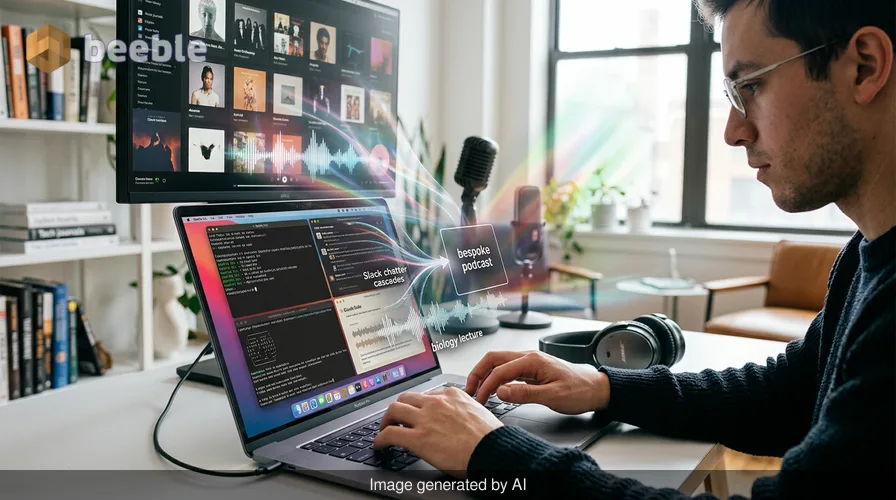
For over a decade, our relationship with streaming services has been defined by a specific kind of passive discovery. We opened an app, navigated a grid of curated artwork, and leaned back while an algorithm—that invisible, tireless digital librarian—offered us something it thought we might like. But as of May 2026, the walls of that curated library have started to turn transparent. With Spotify’s recent release of a command-line tool allowing AI agents like OpenClaw and Claude Code to generate and upload personal podcasts, we are witnessing a fundamental shift in the software industry’s philosophy. We are moving away from the era of content consumption and toward the era of personal synthesis.
At its core, this move represents a radical departure from the traditional broadcast model. Historically, a podcast was a one-to-many communication tool, a digital radio show hosted on a server and pushed to thousands of listeners; now, through this user lens, the podcast has become a private mirror, a one-to-one sonification of a user’s own data. Whether it is a summary of the day’s Slack messages or a breakdown of a biology lecture, the audio we consume is becoming as unique as our own fingerprints.
The Command Line as a Creative Suite
To the average smartphone user, the idea of opening a terminal window to interact with a music app feels like a regression. We have spent twenty years moving toward seamless, touch-first interfaces that hide the underlying logic of the operating system; paradoxically, Spotify is now asking its most advanced users to step back into the world of text-based commands and GitHub repositories. This isn’t a failure of UX design, but rather a pragmatic recognition of where the most exciting development is currently happening: the intersection of local AI agents and cloud-based APIs.
When you use a tool like OpenClaw to generate a podcast, you aren't just clicking a button; you are orchestrating a complex sequence of events. You are taking a raw dataset—perhaps a messy folder of PDF notes or a transcript of a three-hour meeting—and asking an LLM to find the narrative thread. Under the hood, the Spotify CLI tool then takes that synthesized script, passes it through a text-to-speech engine, and packages it into a format that the Spotify ecosystem can ingest. It is a workflow that feels more like software engineering than media consumption, yet the result is a perfectly polished audio file waiting in your library alongside the latest episodes of mainstream hits.
APIs as the Invisible Waiters of Media
To understand how this functions without getting lost in the technical weeds, we can look at the software architecture through a simple metaphor. In this ecosystem, the Spotify API acts as a restaurant waiter. Your AI agent—the chef—prepares a custom dish based on the ingredients you provided in your local environment. The waiter doesn’t need to know how the chef seasoned the steak; they simply need to know which table to deliver it to and how to carry the plate without dropping it.
Technically speaking, this process bypasses the traditional "gatekeepers" of the podcasting world. There is no RSS feed to manage, no hosting provider to pay, and no public directory to navigate. The code creates a direct pipeline between your private thoughts and your public-facing devices. This streamlined approach reflects a broader industry trend where APIs are no longer just for developers building third-party apps; they are becoming tools for power users to customize their own digital realities.
The Engineering Side-Project That Became a Feature
There is a long-standing tradition in the software world where internal tools—the things engineers build to fix their own frustrations—eventually become public-facing products. One can imagine a Spotify engineer, tired of squinting at their phone during a morning run, writing a script to read their emails back to them in a high-quality voice. In practice, this is how many of the most robust features in tech are born. They aren't the result of a focus group or a marketing brainstorm; they are the result of a developer solving a specific, personal problem.
However, by releasing this as an open-source tool on GitHub rather than a polished button in the mobile app, Spotify is making a calculated move regarding technical debt. Maintaining a complex AI generation interface within the main app is expensive and prone to bugs; by contrast, providing a CLI tool allows the developer community to do the heavy lifting of integration. It keeps the main app from becoming bloated while still satisfying the niche demand for hyper-personalized content.
The Illusion of the Personal Library
As we embrace these synthetic podcasts, we must also grapple with the concept of ecosystem lock-in. While the audio generated is "yours" in the sense that you provided the prompt and the source material, it lives within Spotify’s proprietary walls. This creates a curious tension: you are using open-source AI tools to create content, but you are storing that content in a digital storage unit that you do not truly own.
| Feature | Traditional Podcasts | AI-Generated (Personal) |
|---|---|---|
| Audience | Public / Many | Private / One |
| Creation Tool | DAW / Microphones | CLI / AI Agents |
| Distribution | RSS / Open Standards | Proprietary API |
| Content Source | Human Creator | User Data / Synthesis |
Consequently, the more we rely on these personal digests, the more we find ourselves tethered to the platform that hosts them. The convenience of having your class notes read to you by a professional-sounding AI voice is profound, but it comes at the cost of further consolidating our digital lives into a few overarching platforms. We are trading the fragmented, messy world of local files for the streamlined, interconnected world of cloud-based synthesis.
Beyond the Screen: Reclaiming Digital Intent
Ultimately, the ability to generate a personal podcast is more than just a novelty; it is a signal that our relationship with software is maturing. We are moving past the point of being mere recipients of a feed. By using AI agents to curate our own audio environments, we are taking an active role in the "blueprint" of our daily digital lives.
Through this evolution, we should remain hyper-observant of the friction that remains. While the generation process is becoming seamless, the barrier to entry—knowing how to use a CLI, managing API keys, navigating GitHub—remains high. This technical gatekeeping ensures that, for now, these tools belong to the builders. But as these capabilities inevitably migrate into the main interface, the distinction between a "creator" and a "listener" will continue to blur until it disappears entirely.
On an individual level, this is an invitation to look at your digital tools not as static boxes of content, but as agile frameworks that can be bent to your needs. The next time you find yourself overwhelmed by a mountain of digital text, remember that you have the power to transform that data into a different medium. You are no longer just an audience member; you are the executive producer of your own life's soundtrack.
Sources
- Spotify Developer Documentation: Web API Reference and CLI Guide (2026)
- OpenClaw Repository: README.md and Integration Protocols (GitHub)
- Anthropic Developer Blog: Leveraging Claude Code for Media Synthesis (2026)
- State of the Software Industry Report: The Rise of Personal APIs (Q1 2026)



See you on the other side.
Our end-to-end encrypted email and cloud storage solution provides the most powerful means of secure data exchange, ensuring the safety and privacy of your data.
/ Create a free account
