


The quiet transformation of the dollar into a corporate software product

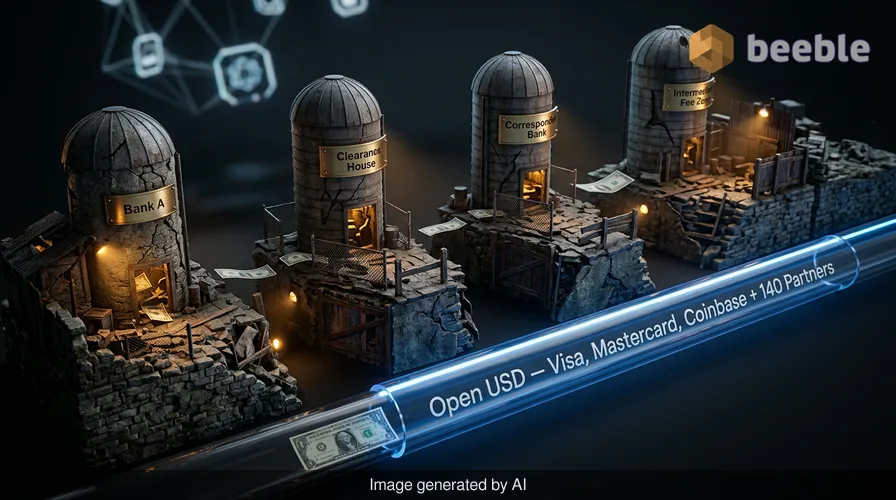
A small business owner in Ohio waits three days for a wholesale payment to clear. Across the ocean, a freelancer in Berlin watches a significant portion of their invoice vanish into a series of bank intermediary fees. These are the mundane frustrations of the old financial world. Historically, money moved through a series of disconnected silos; today, it is starting to flow through a single, interconnected pipe. The announcement that Visa, Mastercard, and Coinbase have joined a group of 140 businesses to launch Open USD is a major step in this transition. This move is not a speculative bet on a new cryptocurrency; it is a structural redesign of how the US dollar functions in a digital economy.
The invisible friction in our daily transactions
Most people think of money as a static object. You have a balance in your checking account, you tap your phone at a terminal, and the transaction is complete. Behind that tap is a complex and aging machinery of settlement. The dollar you spend travels through multiple banks, clearinghouses, and payment processors before it reaches the merchant. This process creates a delay that acts like an invisible leak in a business's cash flow. For a large corporation, these delays represent billions of dollars in idle capital. For a small business, they represent the difference between paying a supplier on time or incurring a late fee.
Stablecoins were supposed to fix this. These digital tokens are designed to maintain a value of one dollar by being backed by safe assets like Treasury bills. Until recently, however, stablecoins lived primarily on the fringes of finance. They were tools for crypto traders to move between volatile assets like Bitcoin. The launch of Open USD by the Open Standard consortium changes the focus from trading to utility. By removing fees for minting and redeeming tokens, the group removes the barriers that kept large companies from using blockchain for their core operations.
Why 140 companies want a shared dollar
In the 20th century, companies competed for customers but relied on the same government-issued currency. In the 21st century, companies are beginning to realize that the currency itself can be a shared technology project. Open Standard operates on a model where the earnings from the reserves backing Open USD are shared with the participating members. This turns the currency into a revenue-generating asset for the businesses that use it. In the past, only banks earned interest on the money sitting in payment systems; now, any business in the consortium has a direct economic interest in the success of the stablecoin.
| Feature | Traditional Bank Settlement | Open Standard (Open USD) |
|---|---|---|
| Settlement Speed | 1 to 3 business days | Near-instant |
| Access | Restricted to banking hours | 24/7/365 |
| Intermediary Fees | Multiple fees per transaction | Zero fees for minting/redeeming |
| Economic Benefit | Interest kept by the bank | Interest shared with partners |
| Transparency | Opaque ledger | Glass bank vault (Public blockchain) |
This shift is a reaction to the changing nature of global trade. When Visa reports a stablecoin settlement run rate of $7 billion as of March 2026, it is a signal that the infrastructure is ready for the mainstream. The involvement of 140 businesses suggests that the network effect is already in place. A currency is only as valuable as the number of places that accept it. By bringing together the biggest names in payments and crypto, Open Standard ensures that Open USD has a massive footprint from day one.
The regulatory guardrails of the GENIUS Act
Trust in money is a collective belief system. For decades, that trust was rooted in the authority of the central bank and the physical presence of local branches. The rise of digital assets created a period of financial anxiety where the rules were unclear and the risks were high. This changed with the passage of the GENIUS Act last year. This legislation created a federal framework for stablecoins, giving them a legal status that they previously lacked. It provided the clarity that conservative institutions like Visa and BNY needed to move forward.
Without these rules, a stablecoin is just a private experiment. With them, it becomes a legitimate form of electronic money. The GENIUS Act requires stablecoin issuers to hold high-quality reserves and undergo regular audits. This creates a level of safety that mirrors a traditional bank account but with the efficiency of a software protocol. For the everyday person, this means that the digital dollars in their wallet are backed by more than just a promise; they are backed by federal law and tangible assets.
Moving beyond the digital wild west
For years, crypto exchanges were often described as digital wild wests. They were places where speculators chased 100x returns and ignored the fundamental rules of economics. The emergence of Open USD represents the professionalization of the industry. The focus is no longer on the price of the token, because the price is always one dollar. Instead, the focus is on the plumbing. Carolyn Weinberg of BNY points out that neutral governance is the key to this next stage of growth. If one company controls the currency, other companies are hesitant to use it. If the currency is governed by a neutral consortium, it becomes a public utility.
This is similar to how the internet works. No single company owns the protocols that send emails or host websites. Because these protocols are open, everyone can build on top of them. Open USD aims to be the open protocol for money. It allows a fintech firm in London to settle a debt with a bank in Tokyo without needing to ask for permission from a central intermediary. This reduces the systemic risk of the financial system by removing single points of failure. If one bank in the network has a problem, the rest of the network continues to function.
The psychological shift in how we value money
On an individual level, we are moving toward a world where the distinction between a "bank account" and a "digital wallet" is disappearing. Practically speaking, your money is becoming a series of interconnected data points. This can be unsettling. There is a certain comfort in knowing that a bank is a physical building with a vault. Paradoxically, a blockchain offers a different kind of security. It acts as a glass bank vault where the reserves are visible to everyone, but the keys are held only by the owners.
This transparency addresses the financial anxiety that often comes with market volatility. When you can see the assets backing your currency in real-time, the fear of a bank run diminishes. You no longer have to trust the word of a CEO; you can verify the math for yourself. This is a profound shift in market psychology. It moves us away from a system of blind trust in institutions and toward a system of verifiable trust in code and law.
Building a more resilient financial future
Ultimately, the launch of Open USD is about more than just faster payments. It is about creating a financial system that is as resilient as the businesses it supports. Historically, financial crises happen when the plumbing of the economy gets clogged. By creating a low-cost, high-volume network that is open to everyone, the Open Standard consortium is building a better drainage system for the global economy. This ensures that money can always get to where it is needed most, whether that is a corporate headquarters or a kitchen table.
As we navigate these changes, it is important to observe our own habits. We should ask who controls the networks we use to send and receive value. The transition from government-only money to corporate-consortium money is a quiet revolution, but its impact is pervasive. By understanding the mechanics of these new systems, we can make better decisions about where we keep our wealth and how we participate in the global market. The goal is not just to move money faster, but to build a system that works for the people who use it every day.
Sources
- Visa Payments Forum 2026 Executive Summary
- Open Standard Technical Whitepaper (v2.1)
- BNY Digital Assets Innovation Report 2026
- GENIUS Act Legislative Summary (U.S. House of Representatives)
- Qivalis Consortium Euro-Stablecoin Launch Prospectus
- Global Dollar Network Participation Guidelines



See you on the other side.
Our end-to-end encrypted email and cloud storage solution provides the most powerful means of secure data exchange, ensuring the safety and privacy of your data.
/ Create a free account
