


The release calendar has never been fuller, so why does it feel like nothing is new?

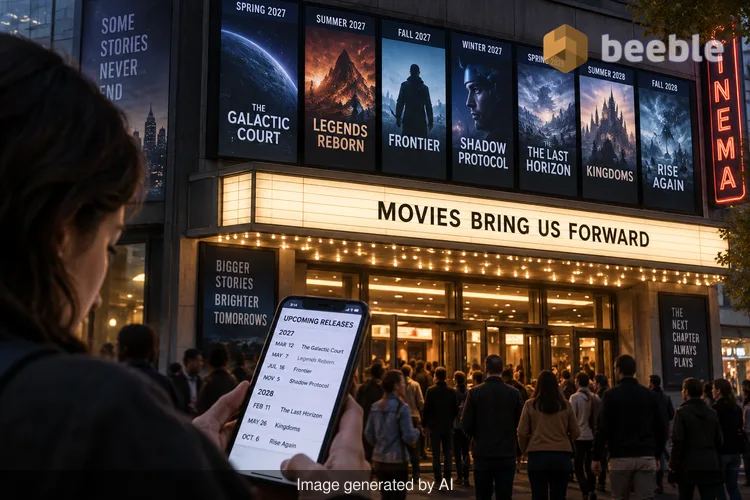
A distinct sense of exhaustion occurs when we see the title of a movie scheduled for a season that is three years away. This reaction is the result of a corporate strategy designed to claim consumer attention spans before a single frame of film exists. We scroll through lists of upcoming release dates on a Friday evening, yet the feeling is less about excitement and more about checking off a grocery list. This industrialization of anticipation has turned the act of moviegoing into a form of long-term planning. Today is September 10, 2026, and while the theaters are full, the schedule for the next eighteen months reveals a industry that relies on the architectural foundation of the past to build its future.
the architecture of anticipation
The way we consume movie calendars has changed. A decade ago, a release date was a promise of a specific event. Now, it is a marker in a sprawling digital city. We look at the schedule for the remainder of 2026 and see a map that is already drawn. The upcoming October 2 release of The Batman: Part II is not just a film arrival; it is a weight-bearing pillar for Warner Bros. Discovery. When a studio announces a date two years in advance, they are not just talking to the fans. They are talking to shareholders and theater chains to ensure their spot in a crowded environment. This process makes the audience feel like they are at the end of a very long queue.
Historically, the summer blockbuster was a seasonal phenomenon. In 2026, the industry moved away from seasons and toward a continuous stream of mandatory viewing. We saw this in May with the arrival of Avengers: Doomsday, which functioned as a diagnostic test for the health of the Marvel Cinematic Universe. The box office numbers showed that the audience is still there, but the conversation around the film had a clinical quality. People discussed the return of Robert Downey Jr. as a business maneuver rather than a narrative surprise. This is the new reality of the 2026-27 release calendar: every movie is a response to a previous data point.
the crowded corridor of late 2026
As we move into the final months of 2026, the schedule remains aggressive. Beyond the immediate shadow of the Batman, the industry is preparing for a holiday season that looks like a home renovation of 1990s nostalgia. Reboots are the cinematic equivalent of a kitchen remodel; the bones of the house are old, but the surfaces are polished and new. We have a slate that includes a mix of high-budget sequels and streaming exclusives that blur the line between the two formats.
| Release Date | Title | Platform/Format | Studio |
|---|---|---|---|
| Oct 2, 2026 | The Batman: Part II | Theatrical | Warner Bros. |
| Nov 20, 2026 | Unannounced Disney Animation | Theatrical | Disney |
| Dec 18, 2026 | Unannounced Star Wars Project | Theatrical | Lucasfilm |
| Dec 25, 2026 | Untitled Jordan Peele Film | Theatrical | Universal |
| Jan 2027 | Post-Holiday VOD Wave | Digital | Various |
The presence of an untitled Star Wars project in December is a familiar rhythm. For the audience, this date serves as a digital anchor. Even if we do not know the plot, we know where we will be during that week in December. This predictability is a double-edged sword. It offers comfort, but it also creates a derivative culture where the "new" is just a variation of the "known."
why the vod window is a second chance for niche films
Zooming out to the industry level, the most significant shift in the 2026 schedule is the collapse of the theatrical window for mid-budget films. While the big franchises stay in theaters for forty-five to sixty days, the smaller, resonant dramas move to VOD in as little as three weeks. This creates a fragmented experience for the audience. A film like the new Jordan Peele project will stay in the cultural conversation for months, but a smaller indie hit disappears from theaters and reappears on a streaming menu before the general public even notices it was gone.
This speed is disruptive to how we value art. We have infinite content, yet we often feel like there is nothing to watch. The streaming libraries of 2026 are endless digital buffets where the sheer volume of choice leads to paralysis. When a movie moves to streaming, it loses the physical presence of a theater and becomes another tile in an algorithm. The 2026-27 calendar shows that studios are now using VOD as a safety net for films that do not fit the blockbuster mold. This is a pragmatic choice, but it reinforces the idea that only the massive, interconnected franchises deserve the big screen.
the 2027 slate and the long game of narrative expansion
Looking toward 2027, the calendar is already becoming rigid. The most anticipated event is Avengers: Secret Wars, scheduled for May 7, 2027. This film is the endgame of a strategy that began years ago. Paradoxically, the more interconnected these movies become, the more opaque they are to a casual viewer. The audience is expected to have a deep understanding of narrative structures across multiple platforms. If you did not watch the Disney+ series in 2025, the 2027 movie might feel like walking into the middle of a lecture.
Disney also has Frozen 3 set for November 24, 2027. This is a clear example of the industry's reliance on established IP. These sequels are not risks; they are utilities. They provide a predictable return on investment in an industry that is otherwise volatile. For the parent scrolling through a streaming app on a Friday night, Frozen 3 is a guaranteed ninety minutes of peace. The studio knows this, and they schedule these releases to coincide with the exact moments of highest demand. The 2027 calendar is less a creative plan and more a psychological map of the consumer's year.
finding the human scale in a sea of release dates
We often treat the movie calendar as a fixed reality, but it is actually a conversation between the developer and the player—or in this case, the studio and the audience. If we stop showing up for the tenth version of a familiar story, the calendar changes. The current slate for 2026 and 2027 is a reflection of our collective habits. We reward the familiar with our money and our time, so the industry continues to provide it. The result is a ubiquitous presence of the same characters and stories, year after year.
Reclaiming conscious choice over our media consumption requires a shift in perspective. Instead of waiting for the next big date on the calendar, we can look for the movies that do not have a ten-year plan. The most profound cinematic experiences of 2026 are likely the ones that are not currently occupying a prime holiday slot in 2027. When we look past the bloated schedules of the major studios, we find stories that are resonant because they are new, not because they are part of a universe.
The industry will always try to sell us the future to distract us from the present. The 2026-27 release calendar is a tool for that distraction. By understanding the business mechanics behind these dates, we can see the schedule for what it is: a suggestion rather than a mandate. The next time you see a release date for a movie coming out in 2027, remember that your time is the one thing the algorithm cannot fully predict.
Sources:
- Disney Investor Relations Release Schedule
- Warner Bros. Discovery Production Reports
- Box Office Mojo Yearly Projections
- Variety Industry Analysis 2026
- Metacritic Upcoming Movie Release Calendar



See you on the other side.
Our end-to-end encrypted email and cloud storage solution provides the most powerful means of secure data exchange, ensuring the safety and privacy of your data.
/ Create a free account
