


The Road Trip That Finally Killed Range Anxiety

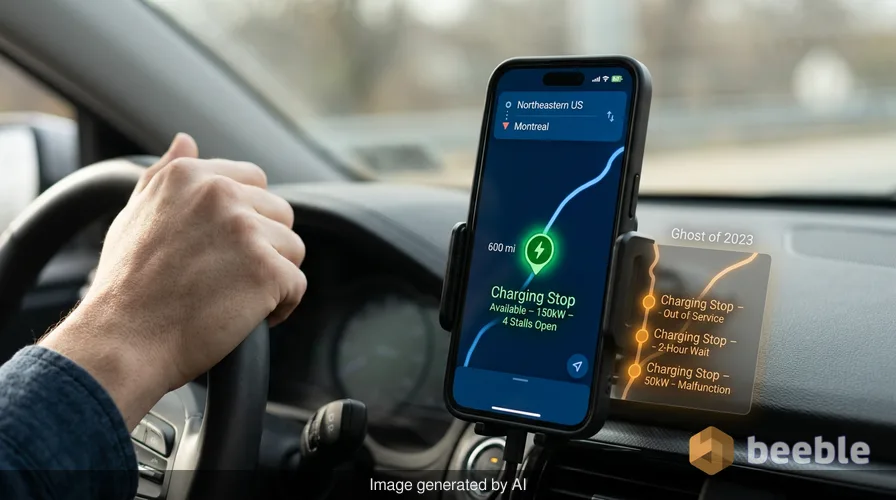
Have you ever postponed a major life upgrade because the world just didn’t seem ready for it? For the last decade, that has been the standard posture for anyone considering an electric vehicle (EV). The fear wasn’t necessarily about the cars themselves—which are often faster, quieter, and more technologically advanced than their combustion cousins—but about the invisible central nervous system that supports them. Specifically, would you be stranded in a New Hampshire parking lot, pleading with a customer service representative while your battery slowly bled out?
For a long time, that fear was perfectly rational. Just three years ago, taking a non-Tesla EV on a long-distance journey was less of a vacation and more of a high-stakes logistics exercise. But after a recent 600-mile trek from the Northeastern U.S. to Montreal, it has become clear that the landscape has undergone a foundational shift. The data confirms what the road now proves: the "dark ages" of EV charging are officially behind us.
A Tale of Two Summers
To understand how far we have come, we have to look back at the systemic frustrations of 2023. Back then, a 350-mile round trip to Maine in an Audi e-tron was a masterclass in volatility. Despite meticulous planning, the journey was plagued by broken hardware and opaque software errors. Chargers would fail mid-session, apps would refuse to communicate with the car, and physical stalls were frequently out of commission. It was a fragmented, frustrating mess that made the simple act of "refueling" feel like a part-time job.
Fast forward to the summer of 2026, and the contrast is startling. Driving that same Audi e-tron—now a seasoned veteran with a modest 220-mile range—on a 600-mile journey should have been more difficult. Instead, it was remarkably mundane. We didn't spend the trip nervously glancing at the battery percentage; we spent it looking for the best coffee in Lebanon, New Hampshire.
Behind the jargon of "kilowatt-hours" and "network uptime," the reality is that the charging experience has finally become background noise. We stopped three times over the course of the week. Each session lasted about 20 minutes—roughly the time it takes to grab a sandwich and stretch your legs. The car was consistently ready before the kids were. For the average user, this is the tipping point where a piece of technology transitions from a hobbyist’s project to a practical tool.
The Numbers Behind the Plug
This isn't just a lucky anecdote. Looking at the big picture, the industrial growth of the charging sector has been unprecedented. In mid-2023, the United States had roughly 32,000 DC fast chargers. While that sounded like a lot on paper, the network was siloed. Tesla’s Supercharger network—the gold standard for reliability—was largely a walled garden, and the remaining public chargers were often decentralized and poorly maintained.
Today, the map looks entirely different. The total number of DC fast chargers has more than doubled, now exceeding 70,000 nationwide. This expansion wasn't just about quantity; it was about a robust improvement in quality. Through a combination of government initiatives like the NEVI (National Electric Vehicle Infrastructure) program and intense private competition, we have seen a streamlined build-out of charging "hubs" rather than isolated plugs.
| Feature | 2023 Status | 2026 Status |
|---|---|---|
| Total DC Fast Chargers | ~32,000 | ~70,000+ |
| Network Interoperability | Fragmented (Tesla vs. Everyone) | High (NACS Standard Adoption) |
| Reliability Index (Paren) | ~85% | 94% - 96% |
| Payment Method | Multiple Apps Required | Universal Credit Card/Plug & Charge |
| Typical Charger Speed | 50kW - 150kW | 150kW - 350kW |
Crucially, the reliability gap has narrowed. According to recent Paren reliability index data, the success rate for charging sessions has climbed from the mid-80s to the mid-90s. While Tesla still leads the pack, other players like the Rivian Adventure Network and Electrify America have stepped up, realizing that a broken charger isn't just a technical glitch—it’s a brand-killing failure.
The Tesla-fication of Everything
One of the most disruptive changes since 2023 has been the near-universal adoption of the North American Charging Standard (NACS). What this means is that the physical plug on your car and the stall at the station finally speak the same language. Historically, EV drivers had to navigate a confusing landscape of adapters and competing plug types (CCS vs. NACS vs. CHAdeMO).
Now, the industry has consolidated. By mid-2026, almost every major automaker has integrated the NACS port into their new vehicles. For those of us driving older models, the availability of reliable, high-speed adapters has turned the once-exclusive Tesla Supercharger network into a public utility. This decentralized access has relieved the pressure on independent networks and ensured that even in rural stretches of the interstate, a working plug is rarely more than 30 miles away.
In everyday life, this has a tangible impact on how we perceive range. When we took the Audi e-tron—a car with a "small" battery by modern standards—we didn't feel the need to "rangemax." We didn't turn off the air conditioning or drive 55 mph to save juice. Because the infrastructure is now a resilient net rather than a few frayed threads, we could drive the car like... a car.
Software as the Invisible Navigator
Under the hood, the software has finally caught up to the hardware. A few years ago, planning a trip required the precision of a NASA launch. You had to check three different apps to see if a charger was actually working, then cross-reference those with a weather app to account for how the cold might sap your battery.
Today, tools like A Better Route Planner (ABRP) have become intuitive extensions of the driving experience. These apps now ingest live data from the vehicle and the charging stations simultaneously. On our Montreal trip, the software accounted for the prevailing winds and the specific degradation of our Audi’s battery pack to tell us exactly where to stop.
Curiously, the best charging experience we had wasn't at a traditional gas station replacement, but at a grocery store hub. While the car pulled 140 kilowatts (its maximum intake), we were able to stock up on supplies for the week. This highlights a shifting paradigm: we no longer "wait" for the car to charge. Instead, the car charges while we do the things we were going to do anyway. It’s a subtle but powerful change in how we spend our time.
The Remaining Gaps
To be fair, the system isn't perfect. We did encounter one hiccup at a station near Montreal where the credit card reader was unresponsive, forcing us to download a regional app and preload it with funds. It was a reminder that while the "big picture" is bright, there are still opaque pockets of the industry that haven't quite mastered the user experience.
Urban charging also remains a challenge for those without home setups. While highway corridors are now robustly served, the "charging desert" in high-density apartment neighborhoods is a systemic issue that requires more decentralized, slow-speed curb-side solutions.
However, from a consumer standpoint, the overarching trend is undeniable. The anxiety that once defined the EV experience has been replaced by a quiet confidence. The micro-failures of the past—the broken screens, the handshake errors, the three-hour detours—have been paved over by a massive influx of capital and a desperate need for companies to stay competitive.
Shifting Your Perspective
Ultimately, the data from this 600-mile journey suggests that the "barrier to entry" for EVs has moved. It is no longer about whether you can get where you're going; it’s about how you choose to integrate the stop into your routine.
If you have been holding out on an electric vehicle because you’re afraid of being stranded, it might be time to observe the digital habits of the drivers around you. The infrastructure is no longer an emerging experiment; it is the invisible backbone of the new American road trip. The next time you see a row of chargers at your local supermarket or rest stop, don't see them as a sign of a complicated future. See them for what they are: the end of the gas station's century-long monopoly.
Sources:
- Joint Office of Energy and Transportation: DC Fast Charging Deployment Reports (2023–2026)
- Paren EV Reliability Index: Annual Infrastructure Performance Review
- AAA Consumer Pulse Survey: EV Adoption Barriers and Trends
- Department of Energy: NEVI Formula Program Progress Dashboard



See you on the other side.
Our end-to-end encrypted email and cloud storage solution provides the most powerful means of secure data exchange, ensuring the safety and privacy of your data.
/ Create a free account
