


The Screening Paradox: Why Poland’s UODO Says Your Doctor Doesn’t Need Your ‘Yes’ to Invite You for a Check-up

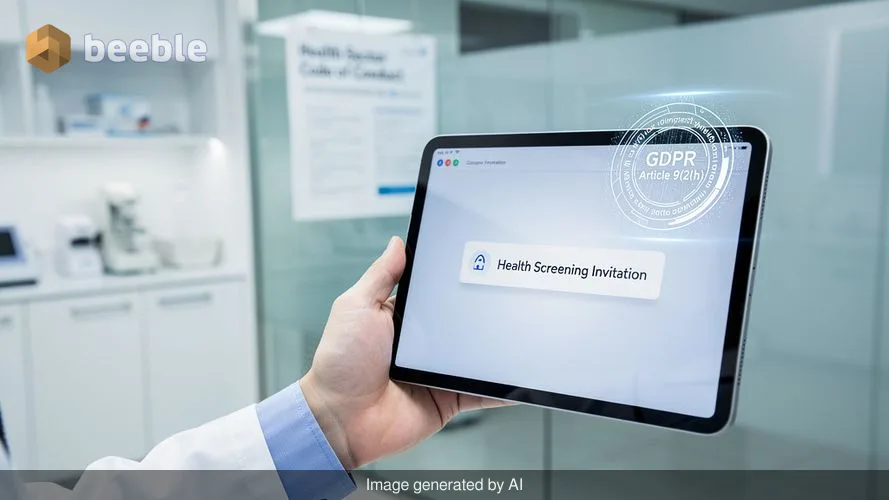
In the world of data protection, health information is often treated like uranium: incredibly valuable for progress, but highly dangerous if it leaks. For years, a common misconception has circulated among patients and providers alike—the idea that under the General Data Protection Regulation (GDPR), nothing can happen without a signature or a clicked box. However, a striking fact recently emerged from the Polish Personal Data Protection Office (UODO): medical entities do not actually need your explicit consent to send you an invitation for a preventive health screening.
This clarification arrives at a time when the tension between individual privacy and public health has never been more nuanced. As a journalist who spends my days as a digital detective, investigating the 'who, how, and why' of data collection, I’ve often seen how the 'consent-first' mentality can actually hinder essential services. In this case, UODO is pointing us toward a more sophisticated understanding of the law, where the right to health and the right to privacy are balanced through a specific legal framework rather than a simple 'on/off' switch of consent.
The Legal Engine: Article 9(2)(h)
To understand this, we have to look under the hood of the GDPR. While Article 9 generally prohibits the processing of sensitive health data, it provides several keys to unlock this restriction. From a compliance standpoint, the UODO highlighted Article 9(2)(h) as the primary engine for screening invitations. This provision allows for the processing of health data when it is necessary for preventive medicine, medical diagnosis, or the provision of health or social care.
Essentially, when a medical facility reaches out to tell you it’s time for a mammogram or a colonoscopy, they aren't 'marketing' to you. They are fulfilling a statutory healthcare purpose. In this regulatory context, requiring granular consent for every preventive notification would be like requiring a pilot to ask every passenger for permission to adjust the flaps during a storm—it’s an inherent part of the safety mission. Consequently, the processing is considered lawful because it serves the overarching goal of public health management.
Aligning with the Healthcare Code of Conduct
This interpretation didn't appear in a vacuum. It aligns seamlessly with the Code of Conduct for the Healthcare Sector, a document that acts as a compass for Polish medical institutions navigating the regulatory maze. This code reinforces the idea that healthcare providers are data controllers with a specific mandate.
In practice, this means that if you are a patient at a clinic, that clinic already has a legitimate, robust reason to manage your health journey. Using your contact details to invite you to a screening is seen as a continuation of that care, not an intrusive breach of your digital boundaries. Curiously, this approach actually strengthens the relationship between patient and provider by removing the bureaucratic friction of constant 'consent-seeking' for actions that are fundamentally in the patient's best interest.
The IKP Hurdle: A Digital Work in Progress
While the legal basis for the invitations is clear, the delivery method is currently facing a systemic bottleneck. Poland’s Internet Patient Account (IKP) is the central nervous system of the country's digital health strategy. However, UODO noted that using the IKP to send mass preventive communications currently requires further legislative amendments.
To put it another way, while the doctor has the 'key' to process the data, the 'door' of the IKP isn't fully built to handle this specific type of automated traffic yet. Legislators need to create a more transparent statutory bridge that allows the state to use these digital portals for preventive outreach without overstepping. Until then, healthcare providers must remain meticulous in how they choose their communication channels, ensuring they don't turn a helpful reminder into a privacy-invasive notification.
Research, Anonymization, and the Toxic Asset Problem
Beyond invitations, the UODO also touched upon the disclosure of medical records for scientific research. This is where the 'data as uranium' metaphor becomes most relevant. Health data is a liability if it’s identifiable. UODO emphasized that for research purposes, anonymization is not just a suggestion—it is a fundamental requirement.
Under this framework, once data is truly anonymized, it is no longer 'personal data' under the GDPR. It becomes a safe, inert resource. However, achieving true anonymization is a sophisticated task. As a digital detective, I’ve seen many cases where 'pseudonymous' data—which still carries a hidden trail back to the individual—was mistakenly treated as anonymous. UODO is signaling that national rules must align with the upcoming European Health Data Space (EHDS) regulations, ensuring that while researchers get the fuel they need, the privacy of the individual remains a non-negotiable foundation.
Practical Steps for Healthcare Providers
For those managing medical entities, this clarification is actionable and should prompt a review of internal protocols. Compliance is not a static checkbox; it is a living process.
- Audit Your Legal Basis: Ensure your privacy policies reflect Article 9(2)(h) for preventive outreach rather than relying solely on consent, which can be withdrawn at any time and complicate public health efforts.
- Monitor Legislative Changes: Keep a close eye on amendments regarding the IKP. The transition to digital-first preventive medicine will happen quickly once the statutory barriers are removed.
- Prioritize Data Minimization: Even when sending invitations, ask: 'Is this the minimum amount of data needed to reach the patient?' Avoid including specific diagnostic details in a simple SMS or email notification.
- Invest in Robust Anonymization: If your facility contributes to research, ensure your 'lead shielding' is up to par. Use modern tools to strip away identifiers so that the data remains a resource, not a liability.
A Final Word on Digital Hygiene
Ultimately, the UODO’s guidance reminds us that privacy laws are not meant to be a barrier to a longer, healthier life. They are meant to ensure that as we move toward a more data-driven medical model, we do so with transparency and respect for the individual.
As a reader and a patient, your call to action is simple: log into your Internet Patient Account (IKP) and review your communication preferences. While the law allows for these invitations, staying informed about how your specific provider intends to contact you is the best way to maintain your own digital hygiene. Privacy is a fundamental human right, but in the hands of a responsible healthcare system, it is also a partner in your well-being.
Sources:
- GDPR Article 9(2)(h) (Processing for health or social care)
- UODO Official Statement on Preventive Screening Invitations (April 2026)
- Code of Conduct for the Healthcare Sector (Poland)
- European Health Data Space (EHDS) Regulation Framework
Disclaimer: This article is for informational and journalistic purposes only. It tracks regulatory trends and official clarifications but does not constitute formal legal advice. For specific compliance strategies, please consult with a qualified legal professional or a Data Protection Officer.



See you on the other side.
Our end-to-end encrypted email and cloud storage solution provides the most powerful means of secure data exchange, ensuring the safety and privacy of your data.
/ Create a free account
