


The Secret Door in the Digital Wall: Why Washington is Letting Nvidia Back Into China

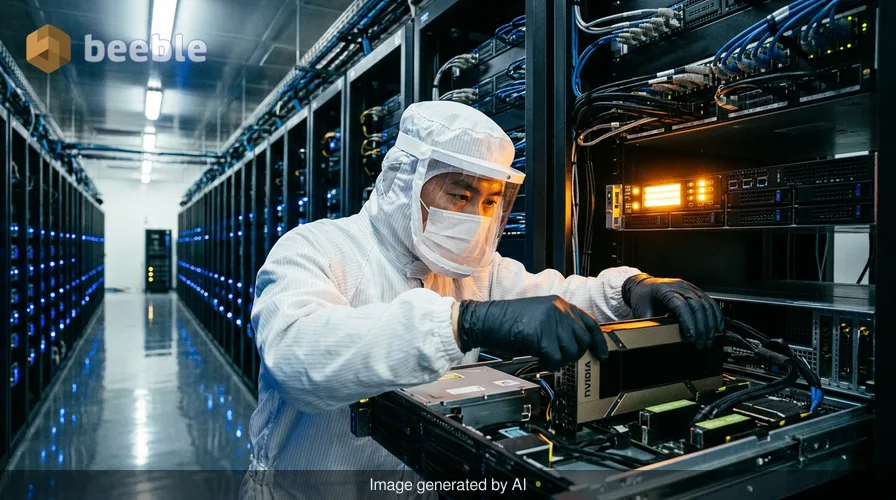
While the common narrative suggests that the United States and China are locked in an inescapable race to sever all technological ties, the reality of the global supply chain is far messier and more interconnected than a simple trade war story suggests. On the surface, the rhetoric from Washington and Beijing sounds like a total divorce. However, the recent decision by the US Commerce Department to clear the sale of Nvidia’s H200 AI chips to ten specific Chinese firms tells a different, more nuanced story. This isn't just a policy tweak; it’s a calculated release valve in a high-pressure system.
Looking at the big picture, this move represents a significant shift in how the "digital crude oil" of our age—high-end semiconductors—is managed on the global stage. For the average user, these geopolitical chess moves might seem distant, but they dictate the cost of your cloud storage, the speed of your digital assistants, and the overall stability of the tech products you rely on daily.
The Hardware at the Heart of the Deal
To understand why this is a major development, we have to look under the hood at the H200 itself. In the fast-moving world of artificial intelligence, the H200 is a foundational piece of equipment. While Nvidia’s newer Blackwell architecture is the current gold standard for the most advanced frontier models, the H200 remains a workhorse for enterprise-level AI.
What makes the H200 special isn't just raw speed; it’s the memory. It was the first chip to utilize HBM3e (High Bandwidth Memory), which essentially widened the "pipes" through which data flows. Think of it like upgrading a tireless intern—the AI—from a single-lane dirt road to a multi-lane highway. This allows the AI to process more complex tasks without hitting a bottleneck.
| Feature | Nvidia H100 (Previous Gen) | Nvidia H200 (Current Clearance) | Nvidia B200 (Blackwell High-End) |
|---|---|---|---|
| Memory Capacity | 80GB HBM3 | 141GB HBM3e | 192GB HBM3e |
| Memory Bandwidth | 3.35 TB/s | 4.8 TB/s | 8.0 TB/s |
| Primary Use Case | Model Training | Large Language Model (LLM) Inference | Frontier Model Training/Inference |
| Current Status | Widely Available | Restricted/Licensed | Strictly Regulated |
In simple terms, by allowing the H200 to reach these ten Chinese firms, the US is permitting them to run and optimize large-scale AI models, even if it is keeping the "top-tier" Blackwell chips behind a tighter lock and key.
Why These Ten Firms Matter
The list of ten firms has not been fully publicized, but industry insiders suggest they represent a mix of cloud service providers and specialized research institutes. Behind the jargon of "export compliance," there is a pragmatic reality at play: the US government understands that a total embargo on AI hardware is nearly impossible to enforce and potentially damaging to the American economy.
By granting these licenses, the Commerce Department maintains a level of transparent oversight. They can see who is buying, how many they are buying, and what they intend to do with them. Conversely, a total ban often pushes the market underground, making the trade opaque and harder to track. For Nvidia, this is a resilient response to a volatile market. The company has seen its China revenue share fluctuate wildly as regulations shifted, and this clearance provides a much-needed stabilizer for their balance sheet.
Jensen Huang’s Breakthrough Strategy
Nvidia CEO Jensen Huang has been vocal about the importance of the Chinese market, not just for sales, but for the global AI ecosystem. For Nvidia, China isn't just a customer; it's a massive laboratory where AI is being applied to everything from heavy industry to autonomous delivery at an unprecedented scale.
To put it another way, if Nvidia is locked out of China, it creates a vacuum that local competitors—like Huawei or Biren Technology—are more than happy to fill. If Chinese firms are forced to develop their own robust software ecosystems around local chips, Nvidia risks losing its foundational dominance in the region forever. By securing these H200 licenses, Huang is fighting to keep Nvidia’s software language, CUDA, as the default operating environment for the next generation of Chinese engineers. It is a classic case of "platform stickiness."
What This Means for the Everyday User
Practically speaking, you might wonder why a server chip sold halfway across the world matters to you. The answer lies in the interconnected nature of the global economy.
First, there is the issue of supply chain stability. When a giant like Nvidia can navigate these regulations successfully, it reduces the systemic risk of a sudden market crash or supply shortage. If Nvidia were forced to suddenly stop all China operations, the resulting financial shock would likely trickle down, affecting tech stocks and, eventually, the price of consumer electronics.
Secondly, AI development is a global relay race. Many of the user-friendly features we enjoy today—from better noise cancellation in your headphones to more intuitive search results—come from research that happens globally. When Chinese researchers have access to robust hardware like the H200, it contributes to the overarching pool of AI knowledge, leading to faster innovations that eventually find their way into your smartphone.
The "So What?" Filter: A Pragmatic View
From my perspective as a journalist who has watched these cycles for years, this news feels like a momentary cooling of an overheated engine. We often treat the tech industry as a series of disruptive explosions, but it is more often a series of quiet, bureaucratic compromises.
The US government is essentially saying, "We will let you have the power to run AI, but we are keeping the power to build the next version for ourselves." It’s a managed competition. For Nvidia, it’s a way to keep their foot in the door while they wait for the next geopolitical shift.
Ultimately, this isn't a sign that the trade war is over. Rather, it is proof that even in an age of intense national rivalry, the sheer utility of advanced technology creates a gravity that pulls even the strongest adversaries toward the negotiating table.
Practical Takeaways for Your Digital Life
- Don’t Expect Price Drops Immediately: While this is good for Nvidia’s stock and supply chain, the high demand for AI chips globally means consumer-grade GPUs and AI-enabled laptops will remain expensive for the foreseeable future.
- Watch the Software, Not Just the Hardware: The real battle isn't just about who has the H200; it’s about whose software (Nvidia’s CUDA vs. open-source alternatives) becomes the global standard. This affects which apps and services will work best on your devices in three to five years.
- Appreciate the Invisible Backbone: Next time your AI assistant gives you a surprisingly human answer, remember the complex web of trade licenses and high-bandwidth memory chips that made that moment possible. Our digital world is built on a foundation of shifting political sands.
Sources:
- US Department of Commerce: Bureau of Industry and Security (BIS) Export Administration Regulations update May 2026.
- Nvidia Investor Relations: Q1 2026 Financial Results and CEO Commentary.
- Reuters Technology News Archive: Semiconductor Export Control Analysis.
- International Strategy and Investment (ISI) Group: Macro-Tech Trends Report May 2026.



See you on the other side.
Our end-to-end encrypted email and cloud storage solution provides the most powerful means of secure data exchange, ensuring the safety and privacy of your data.
/ Create a free account
