


The silent consolidation of the internet's wallet

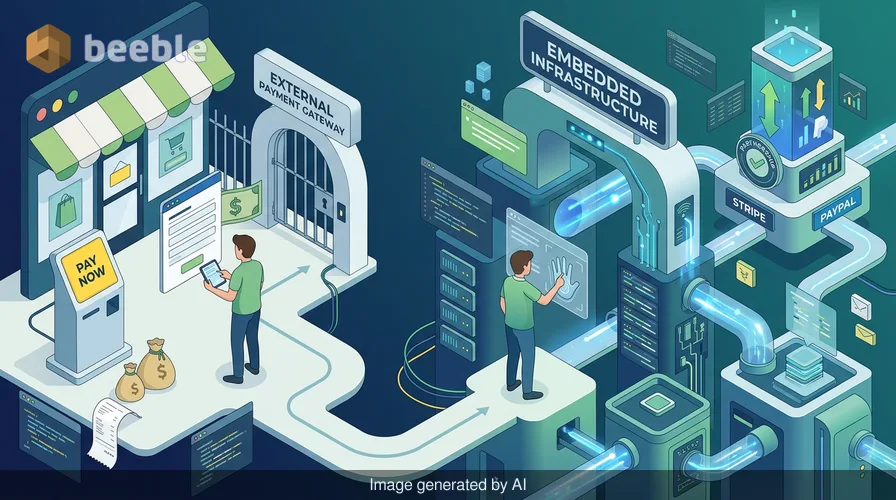
In the early days of the web, paying for something online was a visible, conscious event. You clicked a bright yellow button, left the store's website, and entered the walled garden of a separate service to confirm your identity. Today, the act of payment has faded into the background of our digital lives. We tap a screen or look at a camera, and the transaction happens within the existing interface. This shift reflects a broader change in how we build software; we moved from standalone applications to integrated, invisible infrastructure. The reported talks between Stripe and Advent International to acquire PayPal for $53 billion are the culmination of this trend. If the deal proceeds, the company that defined the first era of online payments will become a subsidiary of the company that built the second.
The transition from consumer apps to invisible rails
Two decades ago, PayPal was the primary face of internet commerce. It was a consumer-facing tool that sat on top of the web, providing a layer of trust for people buying used goods on auction sites. Stripe approached the problem from the opposite direction. Stripe was never meant for the shopper; it was a set of tools for the developer. Historically, engineers had to spend weeks setting up merchant accounts and bank gateways. Stripe replaced that process with a few lines of code. This architectural difference defines the current market.
PayPal is a destination; Stripe is a utility. Users go to PayPal, but developers build on Stripe. Paradoxically, the company with the less recognizable consumer brand is now in a position to buy the industry pioneer. This is because the value in software has shifted from the user interface to the underlying API. When a service is an API, it is harder to replace. It becomes part of the application's nervous system. PayPal tried to modernize by acquiring Braintree and Venmo, yet it remained a collection of separate parts. Stripe is a unified platform. The acquisition would allow Stripe to combine its developer-centric efficiency with PayPal's massive consumer footprint.
Why a fifty billion dollar price tag is a bargain
At $60.50 a share, the proposed $53 billion valuation is a fraction of what PayPal was worth during the market highs of 2021. At its peak, the company had a market value over $300 billion. The decline was the result of increased competition and a bloated product suite that struggled to keep pace with leaner rivals. For Stripe and Advent International, this represents a pragmatic entry point into a massive volume of data. PayPal handles over a trillion dollars in transactions annually. Stripe already processes similar volumes. Together, the combined entity would manage approximately $3.7 trillion in payments every year.
Through this user lens, the price reflects the value of the network. Payments are a scale business. The margins on a single transaction are thin, so the goal is to process as many transactions as possible. By acquiring PayPal, Stripe is not just buying a brand; it is buying a seat at the table of nearly every major online transaction. The deal would make Stripe the de facto infrastructure of the global economy. This level of scale provides a resilient buffer against market volatility. While individual consumer habits change, the need for the underlying plumbing remains constant.
Solving the problem of technical debt
PayPal has spent years grappling with technical debt. In software development, technical debt is the cost of choosing an easy solution now instead of a better one that takes longer. Because PayPal was a first mover, it was built on legacy systems that predated modern cloud architecture. Over time, these systems became a messy closet of interconnected services that were difficult to update. This is why the PayPal checkout experience often feels clunky compared to modern alternatives.
Stripe has a reputation for clean, well-documented code. From a developer's standpoint, integrating Stripe is intuitive because the system was designed with modern principles from the start. Behind the screen, a merger would likely involve a massive refactoring project. Stripe would need to migrate PayPal’s aging infrastructure onto its own streamlined stack. This is a common pattern in the software industry. A younger, more agile company buys an older competitor to gain its customers, then replaces the old code with something more efficient. This process is disruptive but necessary for the long-term survival of the service.
Bypassing the card networks
One of the most profound implications of this merger is the potential to reduce reliance on Visa and MasterCard. Currently, every time you use a credit card online, a small percentage of the sale goes to the card networks. This is the fee for using their established rails. Stripe and PayPal both pay these fees. However, if Stripe owns PayPal and Venmo, it gains a direct link to millions of bank accounts.
Technically speaking, this allows for "closed-loop" transactions. If a customer pays a merchant and both use a Stripe-owned service, the money moves from one account to another without ever touching the traditional credit card networks. This eliminates the middleman. It makes the transaction faster and cheaper for the merchant. For Stripe, it converts an expense into a profit. This is the ultimate goal of fintech: to build new rails that bypass the 20th-century banking infrastructure. Essentially, Stripe is trying to become the network, not just a layer on top of it.
The future of the checkout button
Under the hood, the integration of Venmo and PayPal’s crypto features into Stripe’s product suite would change the checkout experience for everyone. We are moving toward a world of fragmented payment options. Some users want to pay with traditional currency, some with digital assets, and others with social payment apps. For a merchant, managing all these options is a headache. Stripe’s model simplifies this by offering a single integration that handles everything.
In practice, this means the "Pay with PayPal" button might survive as a brand, but its internal logic will be Stripe. This is a form of ecosystem lock-in. When one company controls the infrastructure for all payment types, it becomes the gatekeeper. Users benefit from a seamless experience where their information is saved and their transactions are fast. The trade-off is a loss of choice. As the payment world becomes more interconnected, the barriers to entry for new competitors grow higher. We are witnessing the end of the fragmented fintech era and the beginning of a unified, proprietary payment layer for the entire web.
Digital literacy and the power of the API
When we talk about software, we often focus on the features we can see. We discuss the color of the buttons or the layout of the app. Zooming out to the industry level, the real power lies in the code we never see. The Stripe-PayPal deal is a reminder that the most successful software is often the most invisible. It is the code that runs in the background, making sure that when you click a button, money moves safely from one side of the world to the other.
Ultimately, this merger is a story about the maturity of the internet. The experimental, fragmented web of the early 2000s is being replaced by a robust, professionalized infrastructure. For the average user, the takeaway is simple: pay attention to who owns the rails. As we move more of our lives into digital spaces, the companies that control the flow of money will have the most influence over how those spaces are designed. We should observe our own habits and recognize when convenience comes at the cost of competition. The next time you click "Pay," remember that you are not just buying a product; you are interacting with a complex, global system of code that is becoming more centralized every day.
Sources
- Wall Street Journal: Reports on Stripe and Advent International acquisition talks.
- Reuters: Analysis of Stripe's potential $3.7 trillion payment volume.
- Stripe Developer Documentation: API architecture and integration standards.
- PayPal Holdings: Quarterly earnings reports and historical market valuation data.
- Braintree and Venmo: Technical integration and history of acquisition.



See you on the other side.
Our end-to-end encrypted email and cloud storage solution provides the most powerful means of secure data exchange, ensuring the safety and privacy of your data.
/ Create a free account
