


The Silent Death of the Unclaimed Face: YouTube’s Pivot to Biometric Sovereignty

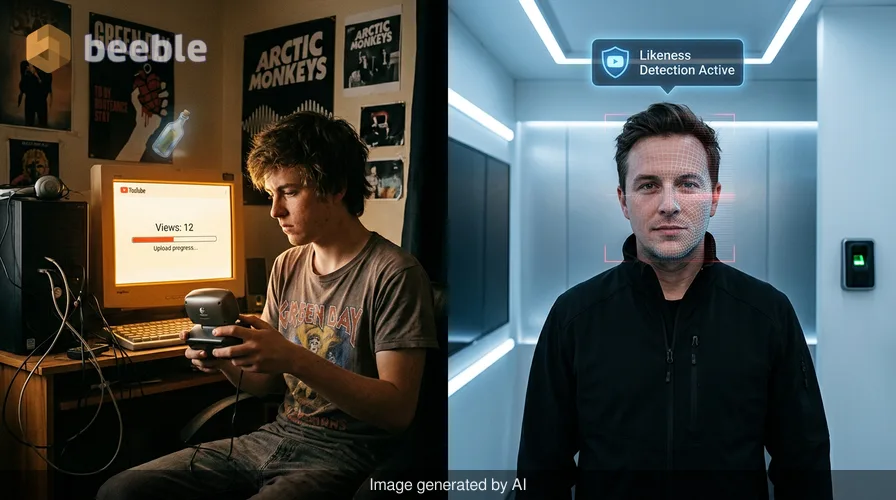
A decade ago, the act of uploading a video to YouTube felt like tossing a message in a bottle into a digital ocean—an anonymous, low-stakes experiment in self-expression where the only real currency was the view count. Today, that same act is a high-stakes legal and technical transaction; it is a declaration of ownership over one’s digital likeness in an era where pixels can be rearranged to speak words you never said.
In the coming weeks, YouTube is making a profound shift in how it manages digital identity. By extending its AI-driven likeness detection tool to all creators aged 18 and older, the platform is transitioning from a repository of user-generated content into a sophisticated biometric gatekeeper. This isn't just a new feature in the YouTube Studio dashboard; it is a fundamental reconfiguration of the relationship between a platform, a person, and the data that represents them.
The Friction of Modern Protection
To the average user, the process of securing one’s digital self might feel ironically intrusive. To access the new tool, a creator must navigate to the "Likeness" tab under "Content detection" in YouTube Studio, scan a QR code with their smartphone, and submit a government-issued ID alongside a video selfie for verification. Historically, we guarded our digital accounts with passwords and secondary email addresses; today, we must offer up our biological fingerprints to prove we are who we claim to be.
This setup process represents a classic case of digital friction. While the tech industry has spent the last decade trying to make every interaction as seamless as possible—think one-click checkouts and biometric logins—this specific tool intentionally reintroduces friction as a security measure. You cannot simply claim a face; you must prove the face belongs to the human behind the screen. It is a pragmatic, if slightly clunky, solution to a problem that didn't exist when the platform was founded: the democratization of deepfakes.
Zooming Out: From Content ID to Identity ID
Under the hood, this tool is the spiritual successor to Content ID, the automated system YouTube developed years ago to identify copyrighted music and movies. However, while Content ID was designed to recognize a static file—a specific recording of a song or a clip from a film—the new likeness detection tool is tasked with something much more multifaceted. It must identify the overarching patterns of a human face across varied lighting, angles, and resolutions.
Technically speaking, this shift reflects a broader industry move from protecting "objects" to protecting "identities." In the early 2010s, software companies were focused on the intellectual property of corporations—the legacy media model. In 2026, the intellectual property of the individual—their voice, their face, their unique mannerisms—has become the new battleground. Paradoxically, to gain the peace of mind that your likeness isn't being used to sell shady crypto-schemes, you must first give a tech giant the very biometric data you are trying to protect.
The Developer’s Standpoint: The Complexity of the Scan
From a developer's standpoint, building a tool that scans billions of minutes of footage for a specific face is a monumental task of software architecture. It isn't as simple as comparing two photos. Deepfake detection requires the system to look for subtle artifacts—tiny inconsistencies in how shadows fall across a cheek or how the edge of a mouth moves—that distinguish a real human from an AI-generated puppet.
YouTube’s tool currently focuses on the face, but the announcement notes that while they ask about voice usage during the removal request process, the tool cannot yet make detections based on voice alone. This highlights a persistent gap in the current AI landscape: visual synthesis has outpaced auditory analysis in terms of automated, at-scale policing. Consequently, the burden of proof for "audio deepfakes" still rests largely on the user’s ears rather than the platform’s algorithms.
The Business Logic Behind the Guardrails
Why is YouTube making this robust protection available to everyone now, rather than keeping it locked behind the Partner Program’s gate? The answer lies in the shifting landscape of digital liability and advertiser confidence. In the past, a platform could claim it was a "neutral pipe," immune to the content flowing through it; currently, a platform is increasingly held responsible for the malicious use of its own generative tools and hosting capabilities.
Advertisers, the lifeblood of the platform, are notoriously risk-averse. They do not want their pre-roll ads appearing on a video that features a deepfaked celebrity—or even a deepfaked "ordinary" person—promoting a scam. By providing these tools to every adult creator, YouTube is essentially cleaning up its digital neighborhood. It is a form of decentralized policing: if every user has the power to flag their own likeness, the platform becomes a hostile environment for bad actors without YouTube having to hire an army of human moderators.
The Paradigm Shift in Ownership
In everyday terms, this tool changes what it means to "be" on the internet. For years, the prevailing wisdom was that once you uploaded a photo or video, it was "out there," effectively part of the public domain in spirit, if not in law. This tool flips that script. It suggests that your likeness is a proprietary asset that you can track, manage, and delete across a platform’s entire ecosystem.
Ultimately, this reflects a move away from the fragmented, "anything goes" web of the early 2000s toward a more structured, resilient, and arguably more transparent digital world. We are moving toward a future where our digital presence is as heavily guarded as our physical property. Just as a homeowner installs a doorbell camera to monitor their porch, the modern creator now installs a biometric guard on their YouTube Studio dashboard.
Reclaiming the Digital Self
As we navigate these changes, it is worth reflecting on the trade-offs we are making. We are gaining a streamlined way to fight back against malicious AI, but we are doing so by deepening our ecosystem lock-in with a single tech provider. We are trading the anonymity of the past for the security of the present.
For the ordinary user, the takeaway isn't just about whether or not to use this specific tool. It’s about recognizing that our digital identities are no longer passive. They are active assets that require maintenance, protection, and a keen eye for how they are being used by others. As the line between the real and the generated continues to blur, the most important tool we have isn't an algorithm—it's our own awareness of where our data goes and who has the right to replicate it.
In practice, this means we should stop viewing software updates like these as mere "new features" and start seeing them for what they are: the new rules of engagement for the digital world. Whether you are a creator with millions of subscribers or a casual uploader, your face is now your most valuable piece of code. It’s time we all started treating it that way.
Sources:
- YouTube Official Blog: "Expanding Likeness Protection Tools for All Creators"
- Team YouTube Community Update (May 2026)
- The Verge: Interview with Jack Malon regarding YouTube Likeness Tool access
- YouTube Studio Developer Documentation: "Likeness and Content Identification Protocols"
- Journal of Digital Rights: "The Evolution of Identity Protection in Generative AI Platforms"



See you on the other side.
Our end-to-end encrypted email and cloud storage solution provides the most powerful means of secure data exchange, ensuring the safety and privacy of your data.
/ Create a free account
