


The silent end of gas fees and the quest for invisible money

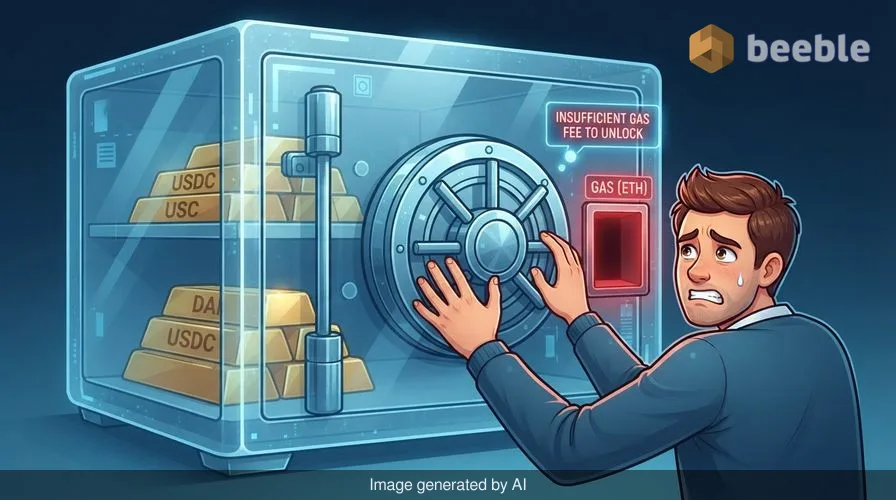
Have you ever stood at a checkout counter with a wallet full of cash only to find the store rejects your specific currency? You have fifty dollars in your pocket. The coffee costs five. The cashier shakes their head. They only accept a specific, rare stamp that you do not own. This is the current reality of the Ethereum network. You hold thousands in stablecoins or digital assets. You want to send a payment. The transaction fails. You lack the native ether to pay the network toll. This friction is a barrier to entry. It creates anxiety for new users. It makes digital finance feel like a chore.
A digital wallet functions under strict constraints. A user signs a message to move funds. The network nodes receive this request. The protocol checks for a specific balance of ether to cover the computational cost. This cost is the gas fee. If the account has zero ether, the transaction remains stuck. This is true even if the account holds a million dollars in other digital tokens. The system is a glass bank vault where everyone can see the money inside, but the owner cannot move it without a specific key made of gas. Ethereum developers are now moving to change this reality through a proposal known as EIP-8141.
The mechanical shift toward native account abstraction
On August 27, 2026, Ethereum core developers reached a consensus during their execution call. They moved EIP-8141, also known as Frame Transactions, from the status of Considered for Inclusion to Scheduled for Inclusion. This change places the proposal in the Hegotá upgrade planned for 2027. The proposal introduces a new type of transaction. It allows the network to handle complex account logic directly at the protocol level. This concept is native account abstraction. It essentially turns every user account into a smart contract.
In everyday terms, this means your wallet becomes smarter. Historically, Ethereum had two types of accounts. One is the simple account controlled by a private key. The other is a smart contract account controlled by code. EIP-8141 merges these ideas. The update allows a third party to pay the gas fee for a user. It also allows a user to pay the gas fee using the same token they are sending. If you send USDC, you pay the fee in USDC. The requirement to hold a separate balance of ether vanishes. This is a fundamental change to how the blockchain operates.
Vitalik Buterin and the road to the Hegotá upgrade
Ethereum co-founder Vitalik Buterin is one of the ten authors of EIP-8141. He recently highlighted the progress on this proposal after months of development. The shift to Frame Transactions is a major part of the broader Ethereum roadmap. This roadmap seeks to make the blockchain invisible to the end user. Most people do not know how the SWIFT banking system works when they send a wire transfer. They simply see the money leave one account and arrive in another. Ethereum aims for this same level of seamless interaction.
Zooming out, the Hegotá upgrade represents a late-stage evolution of the network. Earlier upgrades like Pectra and Fusaka laid the groundwork for scalability. Hegotá focuses on the user experience. By scheduling EIP-8141 now, developers provide a clear path for wallet providers and application builders. They have two years to prepare for a world where the gas fee is no longer a manual hurdle for the retail investor.
Why gas is a psychological barrier for the retail investor
Practically speaking, the current gas system is a primary source of financial anxiety. Behavioral economics shows that friction points, no matter how small, drastically reduce user activity. When a user sees a gas fee, they experience a moment of pain. This is a loss aversion trigger. The user must calculate if the transaction is worth the cost. They must also ensure they have enough ether to cover the fee. If the price of ether is volatile, this calculation changes every minute. This creates a cognitive load that traditional finance avoids.
Inflation is an invisible leak in a wallet, and gas fees are a visible leak in a crypto transaction. The average person does not want to manage multiple asset types just to buy a digital collectible or send money to a friend. They want their money to work without a physics lesson on blockchain mechanics. Consequently, many retail investors keep their assets on centralized exchanges. These platforms hide the gas fees behind a simple user interface. By bringing this simplicity to the decentralized network, EIP-8141 challenges the dominance of these central intermediaries.
The shift from manual tolls to sponsored transactions
Through this economic lens, EIP-8141 introduces the possibility of sponsored transactions. A company could pay the transaction fees for its customers to encourage loyalty. Imagine a digital bookstore that pays the gas for every book purchase. The user sees a price, pays it, and the transaction completes. Behind the scenes of this trend, the blockchain handles the fee through a "paymaster" contract. This paymaster is a digital agent that settles the bill in the background.
On an individual level, this changes how we think about digital ownership. If I do not need ether to move my assets, my assets become more liquid. Liquidity is the ease with which an asset converts into spendable cash. Currently, an ether-less wallet is a frozen asset. After 2027, every wallet is liquid from the start. This transition is a move away from the digital wild west where every traveler must carry their own fuel. It is a transition toward a utility model where the infrastructure stays in the background.
Risks and the future of decentralized convenience
Financially speaking, every convenience has a cost. While EIP-8141 removes the need for ether, it might introduce new forms of central authority. If a user relies on a paymaster to sponsor their transactions, that paymaster has the power to refuse service. This is a subtle shift back toward the gatekeeper model of traditional banking. The decentralized nature of the network remains, but the way we access it might become more fragmented.
Paradoxically, the move to make crypto easier to use might make users less aware of the underlying costs. When fees are hidden or paid in other tokens, the systemic cost of using the network becomes opaque. In traditional finance, "free" trading apps often hide their costs in the spread or by selling order flow. We must watch to see if similar patterns emerge in the world of sponsored gas. The goal is a system that is easy to use without sacrificing the transparency that makes a blockchain valuable.
Reclaiming control over financial friction
Ultimately, EIP-8141 is about removing the obstacles between a person and their money. The technical details of Frame Transactions are complex, but the outcome is simple. It is the death of the "insufficient gas" error message. This is a victory for pragmatism over technical purity. For years, the requirement to hold ether was a symbolic badge of being a crypto native. In the future, this requirement is a relic of an era when digital money was still learning how to be money.
As we approach 2027, take a moment to observe your own financial habits. Notice how often you hesitate because a transaction feels difficult rather than expensive. Friction is a tool that institutions use to keep capital within their walls. By removing friction, Ethereum gives you more freedom to move your assets as you see fit. This is not just a software update. It is a shift in the power dynamic between the system and the individual. You should prepare for a world where your digital wallet finally behaves like the cash in your pocket.
Sources
- Ethereum Foundation: Hegotá Meta EIP documentation and EIP-8141 draft specifications.
- All Core Developers Execution Call: Meeting minutes from August 27, 2026.
- Vitalik Buterin: Public technical research notes and communications regarding Frame Transactions.
- Ethereum Improvement Proposals: EIP-8141 author list and technical requirements.



See you on the other side.
Our end-to-end encrypted email and cloud storage solution provides the most powerful means of secure data exchange, ensuring the safety and privacy of your data.
/ Create a free account
