


The silent shift in your digital wallet and the $53 billion bet on PayPal

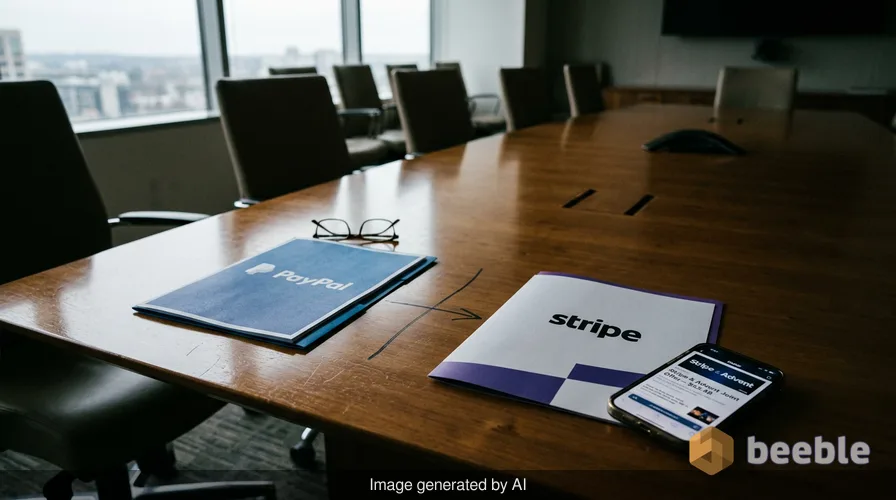
Ten years ago, the PayPal button was the universal symbol of internet trust; today, that same button competes for space against a dozen faster, sleeker alternatives. The familiar blue logo once felt like the only safe way to send money across borders or buy a vintage sweater from a stranger. Now, the checkout screen is a crowded neighborhood where Apple Pay, Google Pay, and invisible credit card processors battle for a second of your attention. This shift in consumer habit is the catalyst for a massive corporate drama. Stripe and the private equity firm Advent International have made a joint offer to buy PayPal Holdings Inc for $60.50 per share. This deal values the payments giant at more than $53 billion.
The proposal follows an initial approach made in early April; the offer represents a 28% premium over the recent closing price. For a company that was once the undisputed heavyweight of digital finance, this offer is a sobering reminder of how quickly the market can revalue a legacy brand. Stripe is a privately held powerhouse recently valued at $159 billion. It represents the new guard of financial plumbing. While PayPal built its reputation on a user-facing wallet, Stripe built its empire on the code that powers other businesses. The two companies now sit on opposite sides of the same coin. Stripe has the technical dominance and a soaring valuation; PayPal has the massive user base and a household name that has lost its luster.
The rise and fall of a payments pioneer
PayPal was the original disrupter of the late 1990s. It survived the dot-com bubble and became the backbone of eBay; it eventually spun off to become a global financial force in its own right. During the pandemic, the company was a primary beneficiary of the sudden migration to online life. Its market capitalization peaked at roughly $360 billion in 2021 as investors bet that the world would never return to physical stores. This optimism was transient. As the world reopened, the competition intensified. Consumers embraced alternative payment methods that were integrated directly into their phone operating systems. The friction of logging into a separate PayPal account became a hurdle rather than a security feature.
Financially speaking, the correction was brutal. The company's market value fell to as low as $36 billion earlier this year. It has lost more than 40% of its market value over the past 12 months. This decline is a symptomatic reflection of a company that stayed static while the world moved toward decentralization and mobile-first experiences. The proposed acquisition by Stripe and Advent suggests that the market believes PayPal is worth more as a private entity than a public one. The deal includes $50 billion in committed financing from banks. This level of backing indicates a deep belief in the underlying plumbing of the company, even if the brand itself is struggling to remain relevant to younger shoppers.
A systemic move toward consolidation
The potential acquisition of PayPal is not an isolated event. It is a part of a broader trend of consolidation in the global payments sector. Buyers are pursuing targets to gain scale amid rapid changes in financial technology. Payment companies seek exposure to faster-growing segments like business-to-business transactions and cross-border transfers. In 2025, Global Payments agreed to acquire Worldpay from FIS and GTCR for $24.25 billion. Nuvei, backed by Advent, recently acquired Payoneer Global for $2.75 billion. These deals show that the industry is moving away from fragmented, specialized services toward massive, interconnected platforms.
At its core, the payments business is a game of margins and volume. Every time you swipe a card or click a button, a tiny fraction of that transaction goes to the processor. When interest rates were zero, companies could afford to focus on growth at any cost. In the current economic environment, efficiency is the only way to survive. PayPal CEO Enrique Lores started a turnaround exercise to simplify the provider and sharpen its focus on growth. The company split its operations into three units: checkout, Venmo, and payments and crypto. These changes aim to eliminate the duplication in workforce layers that slowed the company down for years.
The invisible leak in the digital wallet
From a consumer standpoint, these corporate maneuvers often feel distant from the daily reality of buying groceries. However, the plumbing behind your smartphone screen dictates how much you pay and how your data is handled. Inflation acts as an invisible leak in your wallet; the efficiency of payment systems acts as the sealant. If a company like Stripe can integrate PayPal’s massive network with its own high-speed infrastructure, the cost of moving money could theoretically decrease. Paradoxically, the consolidation of these services often leads to less choice for the end user. When a few giants own the entire ecosystem, they gain significant power over the fees merchants pay, which eventually trickles down to the price of your morning coffee.
Stripe operates like a glass bank vault for the internet. Its systems are transparent to developers but invisible to the people who use them. By acquiring PayPal, Stripe would gain an equal stake alongside Advent International. This partnership would allow them to own the entire transaction lifecycle—from the developer's API to the consumer's Venmo balance. This move signals a shift from the digital wild west of the early 2000s toward a more structured, institutionalized financial reality. The wild growth of the pandemic era has cleared out the dead wood; the remaining players are now building for a decade of stability rather than speculative mania.
Artificial intelligence and the future of trust
Enrique Lores outlined plans to leverage artificial intelligence to streamline operations across PayPal. The company expects these initiatives to save about $1.5 billion over the next few years. These savings will be reinvested to drive new growth in a market where consumers demand instant gratification. In everyday terms, this means your refund might process faster, or your fraud protection might catch a suspicious charge before you even notice it. The use of AI in finance is a multifaceted tool. It can reduce human error and lower costs, but it also creates a systemic reliance on algorithms that most people do not understand.
Ultimately, money is a collective belief system. We use PayPal or Stripe because we trust that the digital numbers will eventually convert into tangible goods. When a company loses $300 billion in market value, it is not just a loss of dollars; it is a loss of collective confidence in that company's future. The offer from Stripe and Advent is a bet that this confidence can be restored through better technology and private management. Whether the deal goes through or not, the message to the market is clear. The era of the simple checkout button is over. The era of the all-in-one financial operating system has begun.
Takeaways for the mindful consumer
- Observe your checkout habits. Take a moment to notice which payment methods you choose and why. Is it out of habit, or is there a genuine difference in speed and security?
- Question the consolidation. As companies like Stripe and PayPal merge, consider how a lack of competition might affect the fees you indirectly pay through merchant markups.
- Revisit your digital footprint. Many people have decade-old PayPal accounts with linked bank information that they no longer use. A change in ownership is a good time to audit your financial privacy.
- Look past the brand. A familiar logo does not always mean the most modern infrastructure. The most reliable financial tools are often the ones you never see working in the background.
Sources
- Company financial reports: PayPal Q1 2026 earnings release
- Market data: Nasdaq and NYSE closing prices for July 2026
- Public filings: Stripe employee tender offer valuation reports (February 2026)
- Economic news: Financial Times report on Mastercard and Vocalink (July 2026)
- M&A database: Recent transactions in the global payments sector 2024-2026



See you on the other side.
Our end-to-end encrypted email and cloud storage solution provides the most powerful means of secure data exchange, ensuring the safety and privacy of your data.
/ Create a free account
