


The Silent Shift of the Mandatory Mobile App

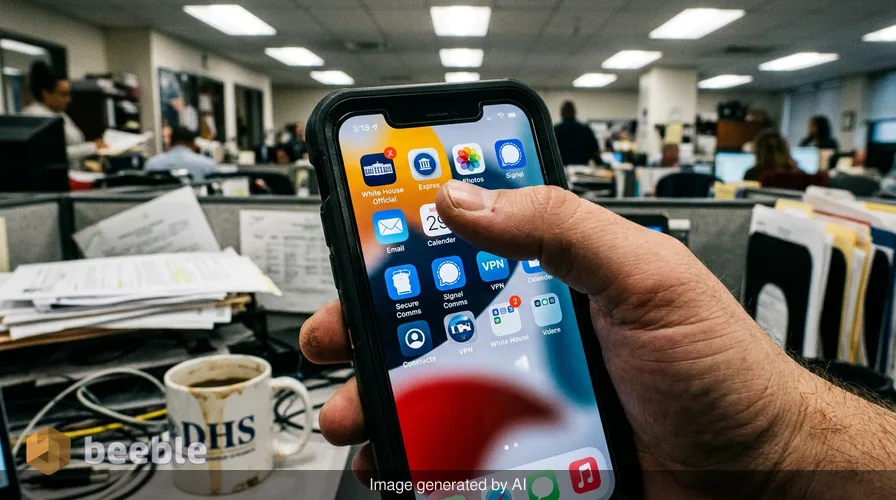
There is a specific, unsettling sensation that occurs when a piece of software appears on your device without your consent. It is the digital equivalent of returning home to find a new piece of furniture in your living room—placed there by someone else, for a reason you weren't consulted on. For thousands of federal employees, this sensation became a professional reality as reports surfaced of the White House app being automatically pushed to government-furnished devices. What began as an opt-in portal for "unfiltered" updates has transformed into a mandatory resident of the home screen, marking a profound shift in how we perceive the boundary between enterprise management and personal digital space.
Historically, the software on a work phone was curated with a focus on utility and security. You had your email client, your encrypted chat app, perhaps a specialized database tool—each one a deliberate choice made by an IT department to facilitate a specific task. To put it another way, these apps were the hammers and screwdrivers of the digital age. Paradoxically, the arrival of a mandatory "official" app that serves primarily as a news feed and a marketing funnel represents a departure from this utilitarian tradition. It signals an era where the hardware itself is no longer just a tool for the worker, but a captive audience for the employer.
The Mechanics of Remote Enforcement
Under the hood, this mass installation is made possible by a technology known as Mobile Device Management, or MDM. In the corporate world, MDM is the invisible infrastructure that allows a company to wipe a lost phone or enforce password complexities. It is a robust system designed for protection, but in practice, it functions as a master key. When an administrator decides to push an app, the MDM server sends a command to the device’s operating system; the OS, recognizing the administrative authority, silently downloads and installs the package without a single prompt appearing for the user.
From a developer's standpoint, this is the ultimate distribution dream. You skip the friction of the App Store discovery process, you ignore the user's personal preference, and you achieve a one-hundred-percent adoption rate overnight. However, this level of control introduces a significant layer of technical debt for the organization. Every line of code added to a device is a potential entry point for a vulnerability. When an app includes location tracking and third-party data sharing—as early security audits of the White House app suggested—the "attack surface" of the government’s mobile fleet expands. What was meant to be a direct line of communication becomes, essentially, a permanent digital shadow.
Bloatware as a Political Statement
Zooming out to the industry level, we can see this trend as the high-stakes version of "bloatware." Most consumers are familiar with the frustration of buying a new phone only to find it pre-loaded with unremovable games or redundant browsers. We have grown to tolerate this as a byproduct of the fragmented Android ecosystem or carrier subsidies. But when the bloatware is proprietary software developed by the executive branch of a government, the stakes shift from minor annoyance to a fundamental question of digital literacy and privacy.
Technically speaking, there is no functional difference between a mandatory weather app and a mandatory political app at the OS level. Both occupy memory, both request permissions, and both can potentially track user behavior. Yet, through this user lens, the intent matters. When an app's primary call to action is to "Text the President"—a feature that leads to a marketing list rather than a constituent service—the software is no longer a tool; it is a campaign asset. The device, which the taxpayer paid for and the employee carries, is de facto transformed into a billboard.
The Illusion of Security in a Walled Garden
One of the most profound ironies of this situation is the justification often used for such measures. Spokespeople frequently claim that pre-installed apps provide value to the employee’s day-to-day work. In a healthy software ecosystem, value is usually proven by adoption. If an app is intuitive, streamlined, and solves a real-world problem, users install it. Forcing the installation suggests a lack of confidence in the app’s intrinsic value, relying instead on the rigid architecture of the "walled garden" provided by government MDM protocols.
In everyday terms, this is like a landlord deciding that every tenant must have a specific brand of television in their apartment, regardless of whether the tenant wants to watch it. The infrastructure of the building—the MDM—allows the landlord to bypass the tenant’s front door. Consequently, the tenant is left to wonder what else that television is doing while the screen is off. Is it listening? Is it reporting back on who enters the room? For federal employees handling sensitive information, these are not just paranoid musings; they are legitimate cybersecurity concerns. A mandatory app that hasn't undergone rigorous, transparent third-party auditing is a liability dressed up as a feature.
The Developer’s Dilemma and User Friction
As someone who has spent years reading dense developer documentation and observing how ordinary people interact with clunky interfaces, I find the UX of mandatory software particularly telling. Most software is designed to minimize friction—to make the path from opening the app to completing a task as seamless as possible. But mandatory software creates a new kind of digital friction: the psychological friction of a forced interaction. When a user is forced to carry an app they didn't ask for, their relationship with the device changes. They become more hesitant to use it for anything other than the most basic tasks; they start to treat the hardware with a level of suspicion that is counterproductive to an efficient workplace.
Through this lens, the "unfiltered, real-time" promise of the app is revealed as a one-way street. Real communication in a digital age is bidirectional and voluntary. When it is forced, it ceases to be communication and becomes a broadcast. From a software architecture perspective, we are seeing the repurposing of administrative tools into influence tools. It is a pivot that the tech industry at large has been flirting with for years—think of how social media platforms use "notifications" that are actually ads—but seeing it implemented at the federal level gives it a weight that is hard to ignore.
Reclaiming the Screen
Ultimately, the story of the mandatory White House app is a cautionary tale about the power of the platforms we inhabit. We often think of our phones as our most personal devices, but for those in the workforce, they are increasingly the property of the entity that manages the license. The shift from work-utility to mandatory-messaging is a subtle one, often buried in the fine print of an employment agreement or a technical policy update. It serves as a reminder that in the world of software, "managed" is often a polite word for "controlled."
We must ask ourselves what we want our digital tools to be. Should a device be a neutral platform for the user’s agency, or should it be a curated experience dictated by the current administration? As we move further into an era where software and policy are inextricably linked, the transparency of the code—and the ethics of its distribution—will become as important as the laws written on paper. For now, the appearance of an unwanted icon on a home screen remains a small but significant signal: a reminder that the hand that holds the device is not always the hand that controls it.
Key Takeaways for the Digital Citizen
- Understand MDM Power: If you use a work-issued device, recognize that your organization has the technical capability to install, monitor, and remove software without your direct interaction. This is a feature of the "managed" ecosystem, not a bug.
- Audit Your Permissions: Even if an app is mandatory, you can often still review its permissions in the system settings. Be aware of what a forced app is asking for—location, contacts, or microphone access—and question why those permissions are necessary for its stated function.
- The Utility vs. Engagement Divide: Learn to distinguish between software that helps you perform a task (utility) and software that seeks to capture your attention (engagement). Mandatory software is almost always the latter.
- Digital Sovereignty: Consider the importance of maintaining a "personal" digital life on hardware you own and control, rather than relying on enterprise-managed devices for private communication or news consumption.
Sources
- Government Executive: Report on White House App Installation
- Engadget: Technical Analysis of Executive Branch Mobile Policy
- Cybersecurity Research Quarterly: MDM Vulnerabilities and Privacy Risks
- White House Official Press Release: Launch of the White House Mobile Application



See you on the other side.
Our end-to-end encrypted email and cloud storage solution provides the most powerful means of secure data exchange, ensuring the safety and privacy of your data.
/ Create a free account
