


The Silicon Great Wall: DeepSeek V4 and the Rise of Sovereign AI Infrastructure

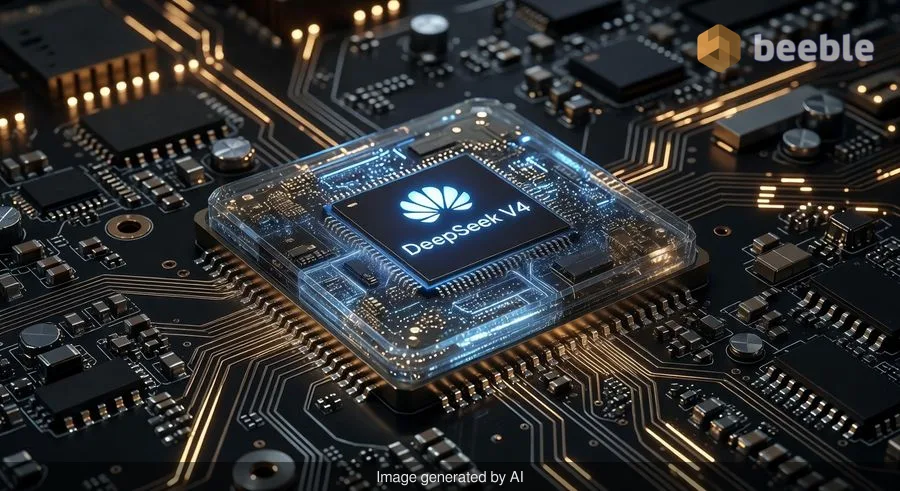
Despite the global dominance of a single American chipmaker over the last three years, the architecture of the digital world is quietly fracturing into two distinct hemispheres. The recent report from The Information regarding DeepSeek’s upcoming V4 model running on Huawei’s latest silicon is more than just a corporate hardware swap; it is a profound observation of how the global supply chain is being rewired in real-time.
For the uninitiated, DeepSeek has recently emerged as a disruptive force in the artificial intelligence sector, known for building high-performance models with a fraction of the traditional budget. Their decision to marry their next-generation V4 model with Huawei’s upcoming chips—and the news that tech giants like Alibaba and Tencent are ordering hundreds of thousands of these units—suggests that the era of hardware monoculture is coming to an end.
Under the Hood: The Art of Optimization
Transitioning an AI model from one chip architecture to another is not as simple as moving a file from a thumb drive to a laptop. Looking at the big picture, it is more akin to translating a complex novel into a language with entirely different grammatical rules. DeepSeek has reportedly spent months working alongside Huawei and Cambricon Technologies to rewrite the underlying code of V4.
In simple terms, they are tailoring the software to the specific physical pathways of the Chinese-made chips. This level of foundational collaboration is necessary because AI models are essentially massive mathematical engines. If the engine isn't tuned to the specific fuel—in this case, the processing logic of Huawei’s Ascend series—it won't run efficiently. By optimizing for domestic silicon, DeepSeek is ensuring that their tireless intern can work at full speed without relying on restricted Western hardware.
The Invisible Backbone of Your Digital Life
To the average user, the brand of chip sitting in a data center thousands of miles away might seem irrelevant. However, heavy industry is the invisible backbone of modern life, and these hardware shifts eventually trickle down to your smartphone screen. When companies like ByteDance (the parent of TikTok) or Tencent place bulk orders for domestic chips, they are building a resilient ecosystem that is less vulnerable to volatile international trade relations.
What this means is that the AI services you use—from real-time translation to personalized content feeds—are becoming decoupled from the global relay race of the traditional semiconductor supply chain. This shift toward sovereign infrastructure ensures that even if global trade faces systemic shocks, the digital services that power modern society remain operational. It is a move toward a more decentralized technological world, where different regions develop their own full-stack solutions from the sand up to the software.
Comparing the Architectures
While technical specifications are often opaque to the public, the following table illustrates the shifting landscape of the AI hardware market as we enter mid-2026.
| Feature | Legacy Western Approach (Nvidia-Centric) | Emerging Domestic Approach (Huawei/DeepSeek) |
|---|---|---|
| Primary Hardware | Nvidia H200 / B200 (Blackwell) | Huawei Ascend Series / Cambricon |
| Software Layer | CUDA (Industry Standard) | CANN / Custom DeepSeek Optimization |
| Supply Chain | Globalized, high-interdependence | Localized, vertically integrated |
| Primary Goal | Peak raw performance | Resilience and cost-efficiency |
| Consumer Impact | High-cost premium AI services | Accessible, localized AI integration |
The Bottom Line for Consumers
Historically, when a new technology is optimized for specific hardware, the result is a more streamlined user experience. For the average user, the launch of DeepSeek V4 on local chips likely means lower latency and potentially lower costs for AI-driven applications. When a company doesn't have to pay a massive premium for imported hardware, those savings—at least in a competitive market—eventually find their way to the consumer’s wallet.
Furthermore, DeepSeek is reportedly working on two additional V4 variants, each optimized for different capabilities. This suggests a shift toward a more modular AI future. Instead of one giant, expensive model trying to do everything, we are seeing the rise of specialized tools designed for specific tasks, much like a digital Swiss Army knife where every blade has been sharpened for a different purpose.
A New Market Cycle
Zooming out, we are witnessing a classic cyclical shift in the tech industry. We are moving away from a period of extreme centralization and toward a more fragmented, yet robust, global landscape. While the geopolitical implications are often the focus of headlines, the practical reality is that this competition drives innovation.
When multiple players are forced to build their own foundations, they often find more efficient ways to solve old problems. DeepSeek’s ability to achieve high performance with less power and cheaper hardware has already forced the rest of the industry to rethink its "bigger is better" philosophy. This new partnership with Huawei is the next logical step in that journey.
Practical Foresight: Shifting Your Perspective
As we look toward the launch of V4 in the coming weeks, it is worth reflecting on how our own digital habits are supported by these massive industrial movements. We often view AI as a nebulous cloud-based magic, but it is grounded in tangible silicon and copper.
Ultimately, the rise of domestic AI stacks in China serves as a reminder that the tech world is rarely static. As a consumer, you don't need to understand the nuances of chip lithography to appreciate the result: a more competitive market that challenges monopolies and pushes the boundaries of what software can do on any hardware. In the coming months, pay attention to the performance of the apps on your devices; the silent transition to new silicon might be the reason your "tireless intern" suddenly feels a lot more capable.
Sources:
- The Information: Report on DeepSeek V4 and Huawei Chip Integration (April 2026)
- Reuters: Industry Analysis of Chinese AI Chip Procurement Trends
- DeepSeek Technical Documentation: Optimization Strategies for Heterogeneous Computing
- Huawei Technologies: Ascend AI Processor Roadmap and Ecosystem Updates



See you on the other side.
Our end-to-end encrypted email and cloud storage solution provides the most powerful means of secure data exchange, ensuring the safety and privacy of your data.
/ Create a free account
