


The Slow Death of the Plastic Disc and the Dawn of Permanent Leasing

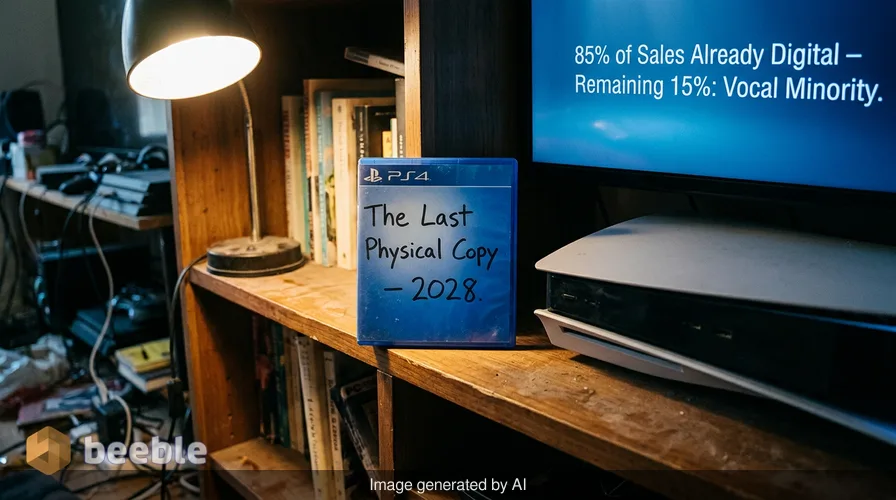
We used to measure our gaming history in shelf space. A decade ago, a shelf of blue cases was a trophy room that displayed the hours we spent in digital worlds. Now, we measure our history in terabytes and download queues. Sony announced this week that it will stop producing physical PlayStation game discs in January 2028. This move is a final step in a decade-long migration toward an all-digital ecosystem. The transition is a response to a world where 85% of full-game sales on PlayStation 4 and PlayStation 5 are already digital downloads. This leaves the remaining 15% of physical buyers as a vocal minority in a landscape that has moved on.
Behind the scenes, the logistics of physical media have become an expensive burden for platform holders. Every disc requires a factory, a truck, and a retail shelf. By removing the disc, Sony removes the middleman. This change represents the final collapse of the traditional retail model for video games. For the average player, the convenience of a midnight download often outweighs the tactile satisfaction of a plastic case. However, this convenience hides a fundamental shift in how we relate to the media we buy.
The plastic ritual of the launch day haul
There was once a specific rhythm to a major game launch. You waited in a line outside a store, felt the weight of the box in your hand, and read the manual on the car ride home. This ritual gave the digital experience a physical anchor. It turned a software purchase into a tangible possession. Today, that manual is a digital PDF and the disc is often just a license key that triggers a 100-gigabyte download. The announcement of the 2028 cutoff date simply formalizes a reality that has been true for years.
We used to own our games. Now, we license them. When you buy a game on the PlayStation Store, you do not own a copy of the code. You own a temporary permission to access that code as long as Sony keeps the servers active. This distinction is invisible until it is not. The recent announcement regarding the PlayStation 3 and PlayStation Vita stores shows how fragile this arrangement is. When those stores close, the ability to buy new games for those systems vanishes forever. Digital libraries are convenient until the platform holder decides the cost of maintenance is too high.
The quantitative shift toward the invisible library
Sony reported that physical sales accounted for only 15% of software revenue in the last quarter of fiscal year 2025. This number is a death sentence for the disc. In the business of mass-market entertainment, a 15% share is rarely enough to justify the overhead of global manufacturing and distribution. This data point shows that the consumer base has already made its choice. The convenience of a digital library matches the way we consume other media.
We scroll through the PlayStation Store the same way we scroll through Netflix on a Friday night. We look at thumbnails and wait for progress bars. The friction of swapping a disc has become a barrier for an audience accustomed to instant gratification. Consequently, the hardware has adapted. The PlayStation 5 Pro and subsequent revisions have prioritized digital-first designs. The disc drive has moved from an essential feature to an optional peripheral. By 2028, even the option will disappear for new releases. This change is a response to the clear preference of the majority.
Retail ghosts and the vanishing game store
GameStop has closed over 1,300 stores in the past two years. This is not a coincidence. The decline of the physical game disc has hollowed out the business model of specialized retail. These stores functioned as community hubs and trade-in centers. They allowed players to treat games as currency. You bought a game for $70, played it for a week, and traded it back for $30 toward your next purchase. This circular economy made gaming more affordable for millions of people.
Without a physical disc, the used game market ceases to exist. There is no way to trade a digital license to a friend or sell it back to a store. Every purchase is a one-way transaction between the consumer and the platform holder. This gives Sony and other publishers total control over pricing and availability. The loss of the used market is a significant blow to the affordability of the hobby. It forces every player into a closed economy where the seller sets the rules without competition.
The code in the box as a hollow monument
Grand Theft Auto 6 fans recently expressed frustration over the news that the physical edition of the game would contain a download code rather than a disc. This practice has become common in the industry. It provides the illusion of a physical product without the utility of one. For collectors, the box is a piece of memorabilia. For the actual player, it is an empty shell. This trend proves that publishers have been ready to abandon discs for a long time.
Gaming history is full of these hollow monuments. We see them in special editions that include statues and art books but no physical media. These products cater to a sense of nostalgia while pushing the player toward a digital future. Paradoxically, the people who value these physical objects are the ones most affected by the 2028 deadline. They are the guardians of a media culture that values permanence. When the disc disappears, the ability to play a game decades from now without an internet connection disappears with it.
Store closures and the fragile state of digital memory
Sony is shutting down the PlayStation Store on the PS3 and Vita in select markets this year. This decision highlights the primary risk of an all-digital future. When the storefront goes dark, the history of that platform becomes inaccessible to new players. While previously purchased games remain available for download, this is a finite promise. There is no guarantee that these servers will remain active in 2040 or 2050.
Physical discs are a decentralized backup of gaming history. As long as a working console exists, the game can be played. Digital media is centralized and dependent on corporate longevity. If a publisher loses a music license or a developer goes bankrupt, digital games can vanish from storefronts without warning. This is a common occurrence in the mobile game market and it is now the standard for home consoles. We are trading the permanence of the disc for the ease of the download. This trade has long-term consequences for the preservation of video games as an art form.
Reclaiming the intentional library
The end of the PlayStation disc in 2028 is a milestone in the commodification of play. It turns games into a service rather than a product. To the industry, this is a streamlined success. To the audience, it is a loss of agency. We are moving toward a future where our access to our favorite stories is managed by a subscription or a cloud server. This shift requires us to be more intentional about how we value our media.
We can no longer assume that a digital purchase is forever. The era of the all-digital console asks us to accept a role as permanent lessees. In everyday terms, this means we must appreciate the games we have while we have them. It also means supporting efforts for digital preservation and consumer rights. The plastic disc was more than just a way to load data. It was a physical claim on a piece of culture. As we move toward 2028, we must find new ways to ensure that our digital history does not become a collection of broken links and closed stores.
Sources:
Sony Interactive Entertainment Financial Results Q4 FY2025.
Sony Official Press Release on Physical Media Production 2028.
GameStop Annual Fiscal Reports 2024-2025.
PlayStation Support Documentation on PS3 and Vita Store Closures.



See you on the other side.
Our end-to-end encrypted email and cloud storage solution provides the most powerful means of secure data exchange, ensuring the safety and privacy of your data.
/ Create a free account
