


The Steel and the Soul: Why Henry Cavill’s Highlander Reboot is More Than Just ‘John Wick With Swords’

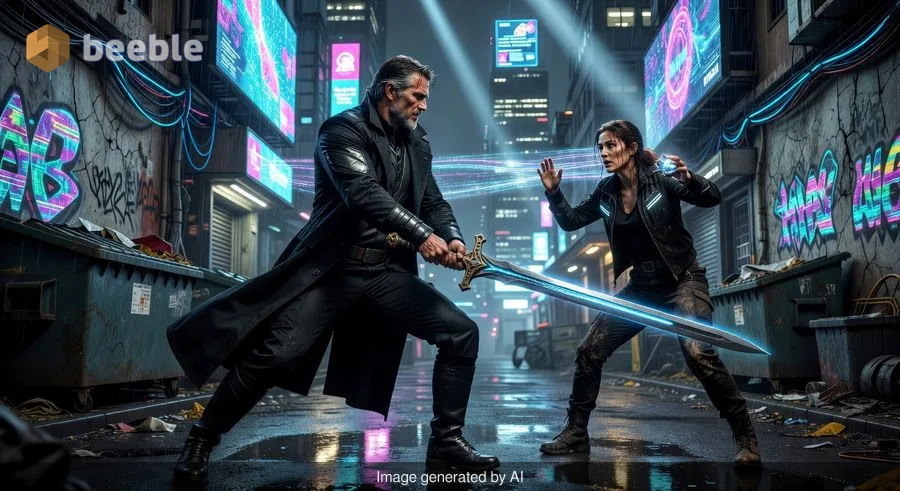
The sound of steel meeting steel has a specific, resonant frequency that cuts through the white noise of a crowded cinema. For fans of the 1986 cult classic Highlander, that sound is inseparable from the neon-soaked streets of New York and the mist-covered Highlands of Scotland. We remember the clunky but charming practical effects, the Queen soundtrack, and the sheer audacity of a premise that asked us to believe a Frenchman was Scottish and a Scotsman was Egyptian-Spanish. But as we approach the 2026 release of the long-awaited reboot, the conversation has shifted from nostalgic curiosity to a pragmatic examination of how modern action is built.
Behind the scenes, the project is being helmed by Chad Stahelski, the architect of the John Wick franchise. With Henry Cavill stepping into the boots of Connor MacLeod, the production is promising something 'insane' in terms of choreography. Recently, co-star Siobhán Cullen, who plays Brenda, teased that the film is 'definitely one for the fans,' while highlighting a significant departure in her character’s narrative arc. This isn’t just a simple retread; it’s a structural overhaul of a fragmented franchise that has spent decades wandering in the creative wilderness.
The Architecture of a Modern Legend
To understand why this reboot feels different, we have to look at world-building as an architectural foundation. In the original film, the lore was a bit like a beautiful, crumbling gothic cathedral—stunning to look at, but full of drafty corridors and shaky pillars. The rules of the 'Quickening' and the 'Gathering' were evocative but often opaque. Zooming out to the industry level, we see a shift in how studios handle these legacy IPs. They are no longer content with derivative sequels; they want to build a seamless, interconnected universe that can support multiple entries without collapsing under its own weight.
Stahelski’s approach seems to be one of 'home renovation.' He isn't tearing down the house, but he is replacing the plumbing and reinforcing the beams. By casting Cavill—an actor whose career has become a conversation between performer and fan-culture—the production gains a lead who understands the 'ludo-narrative' of swordplay. Cavill doesn't just swing a prop; he inhabits the mechanics of the weapon, a skill honed during his tenure as Geralt of Rivia. In everyday terms, it’s the difference between a kid playing pretend and a master craftsman showing you how the tool is actually used.
The Audience’s Eyes: Brenda’s Evolution
One of the most telling updates comes from Siobhán Cullen’s description of her character, Brenda. In the 1986 original, Brenda Wyatt was a NYC forensic scientist, a professional whose skepticism was her defining trait. In the new iteration, Cullen describes her as 'totally different,' a mortal who gets 'swept up' in the world of immortals. Narratively speaking, this shift transforms Brenda into the 'eyes of the audience.'
This is a classic storytelling trope, but its application here is telling. In an era of 'lore creep,' where cinematic universes become as intimidating to newcomers as a sprawling city without a map, the audience needs a guide. By placing Brenda in a position where her entire understanding of humanity and time is upended, the film allows us to rediscover the wonder of immortality alongside her. Paradoxically, by making her less of a specialized professional and more of an Everyman (or Everywoman), the story becomes more immersive. We aren't just watching a scientist study a specimen; we are feeling the vertigo of a mortal realizing that history is alive and holding a katana.
The John Wick-ification of Fantasy
There is a certain irony in describing a fantasy epic as 'John Wick with swords.' It suggests a streamlined, almost clinical approach to violence. However, from a creator's standpoint, this is exactly what the Highlander franchise needs. The original sequels were notoriously bloated and tonally inconsistent, often losing the thread of what made the first film resonant. Stahelski’s involvement implies a commitment to 'tactile' action—stunts that feel heavy, dangerous, and earned.
| Feature | 1986 Original | 2026 Reboot (Projected) |
|---|---|---|
| Action Style | Theatrical, stylized brawling | Precision 'Sword-Fu,' high-intensity |
| Protagonist | Connor MacLeod (Christopher Lambert) | Connor MacLeod (Henry Cavill) |
| Brenda's Role | Forensic Scientist / Skeptic | Mortal Audience Surrogate / 'In Trouble' |
| Setting | 1980s NYC / 1500s Scotland | Beyond Present-Day NY & Hong Kong |
| Tone | Romantic Fantasy / Camp | Gritty Action / Epic World-Building |
Through this audience lens, the 'insane' fight scenes Cullen mentions aren't just about spectacle. They represent a shift in the 'action-reaction' logic of blockbusters. We’ve grown tired of the 'digital buffet' of weightless CGI battles. We want to see the fatigue on the hero's face; we want to see the 500 years of training reflected in a single parry. Cavill’s Connor MacLeod is being framed as a true master of martial arts, someone who has lived through the evolution of combat itself.
Navigating the Walled Garden of Nostalgia
Ultimately, the Highlander reboot sits at the intersection of two major industry trends: the resilient power of nostalgia and the demand for high-fidelity action. We live in a time of 'franchise fatigue,' where the radio is constantly playing overplayed pop songs in the form of endless sequels. Yet, curiously, there is still a profound hunger for stories that deal with the weight of time and the cost of eternal life.
On an individual level, our media consumption often feels like a search for that one 'resonant' moment—a scene or a character that makes the price of the streaming subscription feel worth it. For many, Henry Cavill is that anchor. He represents a bridge between the 'indie' spirit of dedicated fandom and the 'AAA' scale of global blockbusters. Whether he can successfully carry the burden of the MacLeod clan remains to be seen, but the ingredients—a director who respects the craft of the stunt, a lead who respects the source material, and a narrative that prioritizes the audience's emotional journey—are all present.
As we wait for the first trailer to drop, perhaps we should ask ourselves: what are we actually looking for in a reboot? Is it just a shiny new coat of paint on an old memory, or are we looking for a story that finally has the technical tools to match its original ambition? In the case of Highlander, the 'Quickening' might just be the jolt of electricity this dormant legend needs to live forever once again.
Key Takeaways for the Cultural Consumer:
- Observe the Surrogate: Notice how Brenda’s character change affects your entry into the world. Does an 'audience surrogate' make complex lore easier to digest, or do you miss the specialized perspective of the original's forensic scientist?
- The Quality of Action: Pay attention to the 'weight' of the swordplay. In an era of CGI-heavy battles, does Stahelski’s 'tactile' approach change how you perceive the stakes of the story?
- The Cavill Factor: Reflect on why certain actors become 'safe' choices for reboots. Is it their acting range, or their perceived 'authenticity' within fan communities?
Sources:
- Deadline: Interview with Siobhán Cullen regarding Highlander and Brenda's character evolution (2024/2025).
- The Hollywood Reporter: Chad Stahelski on the 'John Wick with swords' vision for Highlander (2023).
- Variety: Production updates on Henry Cavill's Highlander and filming locations in Hong Kong (2025).
- Lionsgate: Official press releases regarding the Highlander reboot production timeline.



See you on the other side.
Our end-to-end encrypted email and cloud storage solution provides the most powerful means of secure data exchange, ensuring the safety and privacy of your data.
/ Create a free account
