


The Transmedia Arms Race and the Rise of the Interactive Cinematic Universe

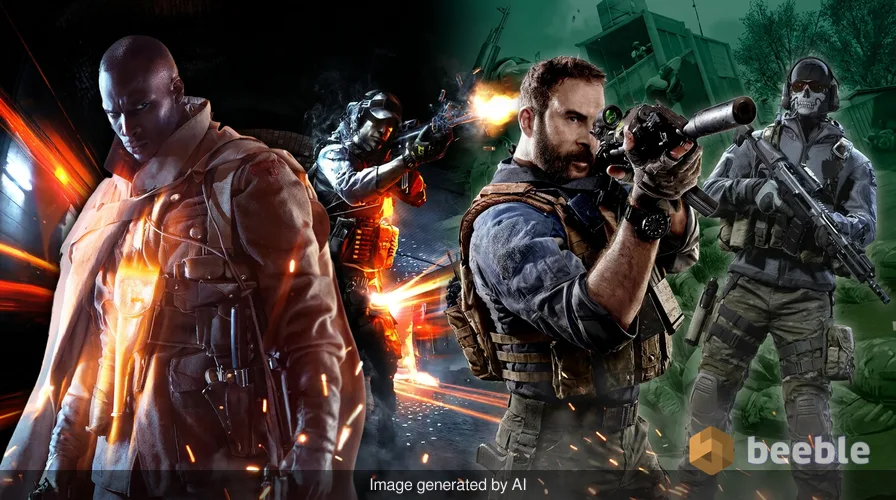
We used to define the rivalry between Battlefield and Call of Duty by the tactile feedback of a controller and the frame rates on our monitors. Now, we define it by the star power of their leading men and the depth of their streaming deals. For decades, these two titans of the first-person shooter genre engaged in a digital cold war, vying for the same slice of the tactical-action pie. But as the entertainment industry pivots away from original scripts and toward the safety of established intellectual property, the battleground has shifted from the console to the multiplex.
Behind the scenes, the mechanics of this competition have fundamentally changed. It is no longer enough for a franchise to exist solely within the confines of a game engine; it must now become a sprawling city of content, an interconnected ecosystem that spans films, television series, and social media. This shift marks a profound evolution in how we consume military fiction. We used to spend our Friday nights perfecting a loadout for a virtual skirmish. Now, we find ourselves scrolling through digital buffets, deciding which cinematic interpretation of war feels the most immersive.
The Architecture of the Sandbox vs. The Scripted Rollercoaster
Historically, Battlefield and Call of Duty offered two diametrically opposed philosophies of play. Battlefield was built on the architectural foundation of the sandbox—a massive, destructible environment where the narrative was something the player created through emergent chaos. A building collapsing on a tank wasn't a scripted event; it was a consequence of systemic design. Call of Duty, by contrast, was the quintessential scripted rollercoaster. It relied on tight, linear pacing and Hollywood-inspired set pieces to deliver a curated, high-octane experience.
In everyday terms, this creates a fascinating challenge for filmmakers. Translating Call of Duty to the big screen is, in many ways, a redundant exercise. The games already utilize motion-captured actors like Gary Oldman and Kit Harington, directed with a cinematic flair that rivals Michael Bay. To turn Call of Duty into a movie is to essentially take a movie and remove the interactive elements. Conversely, a Battlefield movie must find a way to bottle the lightning of its chaotic, unscripted multiplayer moments. It must translate the feeling of a sixty-four-player skirmish into a coherent narrative without losing the sense of scale that defines the brand. Beyond the screen, the success of these films will depend on whether they can provide something the games cannot: a reason to stop playing and start watching.
The Transmedia Gold Rush and the Content Walled Garden
We are currently witnessing the aftermath of the successful "Prestige Gaming" era, spearheaded by titles like The Last of Us and Fallout. These adaptations proved that audiences are hungry for resonant, character-driven stories set within gaming worlds. Consequently, every major publisher is now scrambling to turn their digital assets into cinematic universes. This isn't just about ticket sales; it’s about the Content Walled Garden.
Amazon’s acquisition of the Battlefield film and TV rights is a strategic play to keep users within their Prime ecosystem. If you play the game on your PC, watch the show on your TV, and buy the merchandise on the same app, you are no longer just a customer—you are a permanent resident of their franchise. Paradoxically, while this offers fans a more multifaceted way to engage with their favorite worlds, it also risks creating a sense of fragmented exhaustion. When a story is spread across three different mediums, keeping up with the lore starts to feel less like a hobby and more like a second job. Through this audience lens, the "winner" of the movie battle won't necessarily be the film with the highest Rotten Tomatoes score, but the one that feels like a seamless extension of the player's experience rather than a clunky cash-in.
The Silent Protagonist and the Problem of Empathy
One of the most difficult hurdles in adapting these specific games is the "Silent Protagonist" trope. In a game, the main character is often a hollow vessel designed for the player to inhabit. We don’t need the character to have a complex backstory or a nuanced emotional arc because we are the ones providing the motivation. In a film, however, that vacuum becomes glaringly obvious.
From a creator's standpoint, this requires a delicate balancing act. If the film gives the protagonist too much personality, it might alienate fans who have a different mental image of their soldier. If they give them too little, the audience has no reason to care about their survival. We used to be satisfied with generic, gravelly-voiced heroes who barked orders over a radio. Now, we expect the same level of psychological depth we find in indie dramas or prestige television. This is where Call of Duty holds a slight advantage with its established roster of characters like Captain Price and Ghost. These aren't just skins; they are nostalgic icons with decades of brand equity. Battlefield, which has historically struggled to create memorable individual characters, must build its emotional core from the ground up, a task that is as risky as it is necessary.
Navigating the Ethics of the Modern War Spectacle
We must also consider the cultural context in which these movies are arriving. In 2026, the global landscape is increasingly sensitive to the portrayal of modern warfare. In the early 2000s, military shooters were often derivative, flag-waving fantasies that prioritized spectacle over substance. Today, audiences are more skeptical of glorified violence. There is a growing demand for stories that examine the human cost of conflict, the ambiguity of morality in the field, and the psychological toll of the "infinite war" cycle.
At its core, this is where the real competition lies. Which franchise can move past the clichéd "Oorah" bravado to tell a story that feels relevant to a contemporary audience? If Call of Duty leans too hard into its Michael Bay roots, it risks feeling like a relic of a simpler, more naive era of entertainment. If Battlefield focuses solely on the scale of its destruction, it might come across as hollow and opaque. The film that emerges victorious will be the one that manages to bridge the gap between the visceral thrill of combat and a profound, resonant narrative.
Shifting the Perspective: From Player to Witness
As we look toward the release dates of these two heavyweights, it is worth reflecting on our own media consumption habits. We are moving toward a future where the lines between playing, watching, and living within a franchise are increasingly blurred. This ubiquity of content offers us more choice than ever, yet it also threatens to turn our leisure time into an algorithmic chore.
When you sit down in that theater—or, more likely, hit play on your streaming service—ask yourself what you are truly looking for. Are you there to see a faithful recreation of a map you’ve memorized? Or are you looking for a story that justifies the hundreds of hours you’ve spent in that digital world? The real victory won't be found in the box office numbers or the player counts. It will be found in whether these films can make us feel something more than the simple satisfaction of a successful headshot. In an era of infinite content, the most valuable thing a franchise can offer us isn't more to do—it's a reason to care.
Sources:
- Box Office Mojo: Analysis of Video Game Adaptation Trends (2023-2025).
- IGN: Amazon/MGM Battlefield Film Development Reports (2024).
- The Hollywood Reporter: The Rise of Transmedia Strategy in AAA Gaming (March 2026).
- Newzoo: Global Games Market Report - The Shift Toward Cross-Media Engagement (2025).



See you on the other side.
Our end-to-end encrypted email and cloud storage solution provides the most powerful means of secure data exchange, ensuring the safety and privacy of your data.
/ Create a free account
