


The UK government cannot demand a key that does not exist

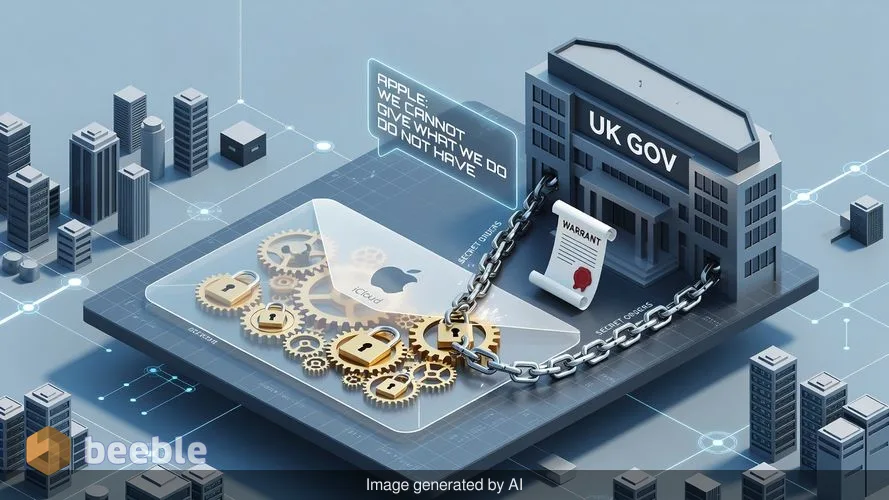
In the physical world, we expect a letter inside a sealed envelope to remain private until it reaches its destination. If a government official demands to read the mail, they must present a warrant to the person holding the letter. Digital reality is different. The UK government is currently asking Apple to provide a master key to the digital envelopes of millions of citizens. Apple says that this key does not exist and building one would put every user at risk.
This dispute escalated in August 2026 as Apple filed a formal legal challenge against the UK government. The conflict involves secret orders that demand access to encrypted iCloud data. These orders target a specific security feature called Advanced Data Protection. This system uses end-to-end encryption to ensure that only the user can access their files, photos, and backups. Apple is clear in its position: it cannot give what it does not have.
The mechanism of secret surveillance orders
The UK government relies on the Investigatory Powers Act to issue what is known as a technical capability notice. A technical capability notice is a legal instruction that requires a communication provider to build new surveillance functions into its products. In simple terms, it is a government demand for a backdoor. These notices are often issued in secret and companies are usually forbidden from discussing them publicly.
Security services argue these notices are necessary to investigate serious crimes. They maintain that law enforcement must have a way to access communications when a threat to national security exists. However, Apple argues that these notices are an overreach of statutory power. The company states that the law cannot force a private entity to compromise the fundamental security architecture of its global products. The current legal case asks a basic question about sovereignty and security: can one government force a company to make its customers less safe?
Why advanced data protection changes the game
For years, cloud storage was like a hotel safe where the manager had a spare key. If the police arrived with a warrant, the manager could open the safe. Apple’s Advanced Data Protection changed this model. It moved the keys from the manager's desk to the guest's pocket. This is end-to-end encryption. In this environment, even if a technician at Apple wanted to see your photos, they would see only scrambled, unreadable code.
Because of this design, Apple is no longer a data controller in the traditional sense for this specific information. It is a blind host. The UK government finds this unacceptable. The technical capability notice issued to Apple demands that the company find a way to circumvent this encryption. Apple responds that doing so would require a complete rewrite of its software. This rewrite would introduce a permanent vulnerability that hackers or foreign intelligence services could eventually exploit.
A history of escalating tensions
The tension between Silicon Valley and London is not new. In February 2025, Apple withdrew the Advanced Data Protection feature for new UK users. The company stated at the time that it was disappointed by the regulatory environment. This withdrawal was a direct result of the UK government’s demands for access. While US customers continued to enjoy the highest level of security, UK customers were left in a precarious position.
The UK government recently withdrew a demand that would have affected US customers, narrowing the scope to the UK. This suggests a strategic move to avoid a diplomatic row with Washington while still exerting pressure on Apple’s local operations. Apple’s legal challenge is a response to this narrowed but still intrusive demand. The company is now fighting to prevent the UK from setting a global precedent that encryption is a privilege the state can revoke at will.
The high cost of digital backdoors
Privacy groups like Liberty and Privacy International are watching this case with concern. They argue that a backdoor for the government is a backdoor for everyone. Once a vulnerability exists, it is only a matter of time before a malicious actor finds it. Data is like a toxic asset; the more of it you hold in an accessible way, the greater the damage if it leaks. A single breach of a master key system would be like an oil spill in the digital ecosystem. It would pollute the security of banks, hospitals, and private individuals for years.
Ruth Ehrlich of Liberty explains that encryption protects more than just private chats. It secures bank details and health records. If the government forces Apple to build a backdoor, the government is essentially asking for a copy of the key to every citizen’s house. There is no such thing as a key that only the "good guys" can use. In a digital environment, a key is just a piece of code. Once that code is out, the security of the entire system is gone.
The legal battle for digital sovereignty
Apple is not just defending a product feature. It is testing the limits of the Investigatory Powers Act. The legal challenge questions whether the government has the power to demand the removal of security features that are already in place. Most tech regulations focus on what companies must do to protect data. The UK government is doing the opposite by demanding that a company actively weaken its data protection.
This case has extraterritorial implications. If the UK succeeds, other nations will likely issue similar notices. Apple operates in dozens of countries with varying levels of commitment to human rights. If Apple builds a surveillance tool for the UK, it will be hard-pressed to refuse a similar request from a more authoritarian regime. The company is positioning itself as a defender of a global standard for privacy that does not change based on geographic borders.
Practical steps for your digital hygiene
While the lawyers argue in court, you can take steps to manage your own data risk. Privacy is not a one-time setting but a continuous practice. If you are concerned about the security of your information, consider these actions:
- Audit your cloud backups and determine if you are storing sensitive information that does not need to be there.
- Use physical security keys for your most important accounts to prevent unauthorized access.
- Review the privacy policies of the apps you use and look for clear statements on end-to-end encryption.
- Support organizations that advocate for digital rights and challenge mass surveillance orders.
- Regularly delete old data that you no longer need, as information that does not exist cannot be stolen or seized.
The outcome of Apple’s challenge will define the relationship between tech giants and state power for the next decade. For now, the best defense is to minimize the amount of data you leave exposed in the first place.
Sources:
- Investigatory Powers Act 2016, Section 253 (Technical Capability Notices)
- Apple Statement on Advanced Data Protection (February 2025)
- Liberty and Privacy International Public Briefings on Surveillance (2025-2026)
- Data Protection Act 2018
Disclaimer: This article is for informational and journalistic purposes only. It does not constitute formal legal advice regarding compliance with the Investigatory Powers Act or data protection regulations.



See you on the other side.
Our end-to-end encrypted email and cloud storage solution provides the most powerful means of secure data exchange, ensuring the safety and privacy of your data.
/ Create a free account
