


TikTok Rejects End-to-End Encryption: Prioritizing Safety Over Absolute Privacy

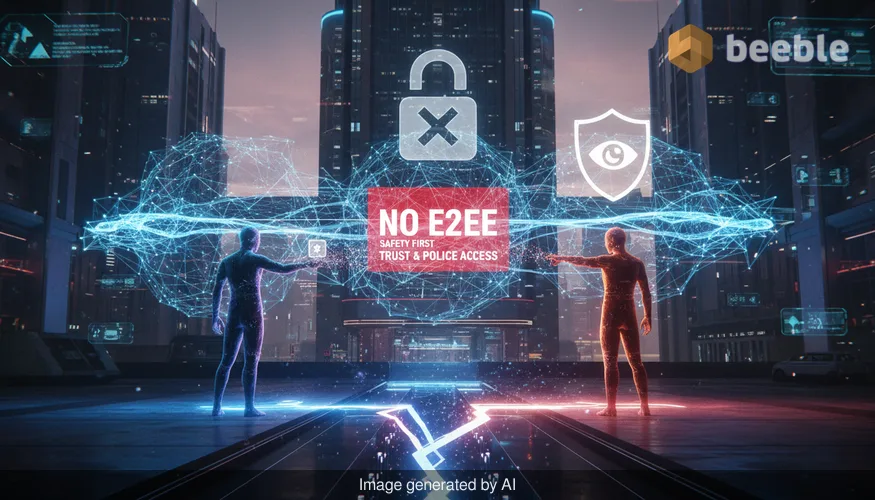
The landscape of digital privacy is shifting, but TikTok is choosing a different path than its competitors. According to a recent report from the BBC, the social media giant has decided against implementing end-to-end encryption (E2EE) for its direct messaging service. This move marks a significant departure from the industry trend led by Meta and Apple, sparking a renewed debate over the balance between user privacy and platform safety.
A Deliberate Departure from the Norm
For years, the tech industry has moved steadily toward a default-encrypted world. WhatsApp, iMessage, and more recently, Facebook Messenger, have all adopted E2EE to ensure that only the sender and recipient can read a message. In an E2EE environment, even the service provider cannot access the content of the communication.
TikTok, however, is drawing a line in the sand. The company told the BBC that its decision to forgo E2EE is a deliberate strategy to distinguish itself from rivals. By maintaining the ability to access and scan direct messages, TikTok argues it can better protect its massive user base—particularly the younger demographic that defines the platform's culture.
The Safety Argument: Protection vs. Privacy
TikTok’s primary justification for this decision centers on safety and law enforcement cooperation. The company contends that E2EE creates a "black box" that shields bad actors. Without the ability to monitor messages, TikTok’s safety teams would be unable to proactively detect grooming, harassment, or the distribution of illegal content.
"End-to-end encryption would make our users less safe," a TikTok spokesperson noted, emphasizing that the technology prevents police and internal safety teams from accessing messages even when a serious crime is suspected.
For a platform where a significant portion of the audience is under 18, the stakes are high. TikTok relies on automated scanning tools and human moderators to flag suspicious behavior. If the platform were to encrypt DMs, these tools would effectively be blinded, leaving the company reliant solely on user reports to identify harm.
Comparing the Messaging Landscape
To understand the weight of TikTok's decision, it is helpful to see how it stacks up against other major communication platforms. While some prioritize absolute privacy, others maintain a more moderated approach.
| Platform | End-to-End Encryption (DMs) | Primary Focus |
|---|---|---|
| Signal | Yes (Default) | Maximum Privacy |
| Yes (Default) | Secure Communication | |
| Messenger | Yes (Default) | Private Social Interaction |
| TikTok | No | Safety & Content Moderation |
| Optional / Rolling Out | Hybrid Approach | |
| X (Twitter) | Optional (Paid) | Public Discourse |
The Technical Trade-off
From a technical perspective, TikTok’s current system uses "encryption in transit" and "encryption at rest," but not end-to-end encryption. This means that while your messages are protected from hackers intercepting them on public Wi-Fi, the keys to decrypt those messages are held by TikTok.
This architecture allows TikTok to run server-side algorithms that can identify patterns of predatory behavior or specific keywords associated with self-harm. In an E2EE setup, these checks would have to happen on the user's device (client-side scanning), a technology that is both controversial and technically difficult to implement without compromising the very privacy E2EE is meant to provide.
The Privacy Implications for Users
While the safety argument is compelling, the lack of E2EE has clear privacy downsides. Because TikTok retains the ability to read messages, that data is theoretically accessible to:
- Internal Employees: Though restricted by policy, the technical capability for staff to view messages exists.
- Government Requests: TikTok can be legally compelled to turn over message logs to government agencies or law enforcement.
- Data Breaches: If TikTok’s internal servers were compromised, the stored messages could be exposed in a way that E2EE messages would not be.
For the average user, this means that TikTok DMs should not be considered a secure channel for sensitive personal, financial, or political information.
Practical Takeaways: How to Stay Safe and Private
If you are a regular TikTok user, it is important to adjust your behavior based on this policy. Here is how to navigate the platform’s messaging system:
- Assume Visibility: Never share sensitive information (passwords, addresses, or private photos) via TikTok DMs. Treat the chat as a semi-public space.
- Use Secondary Apps for Privacy: If you need to have a truly private conversation, move the discussion to an encrypted platform like Signal or WhatsApp.
- Audit Your Privacy Settings: Go to Settings and Privacy > Privacy > Direct Messages to restrict who can message you. Setting this to "Friends" or "No one" can significantly reduce the risk of unwanted contact.
- Report Suspicious Activity: Since TikTok can review messages, reporting a harasser is highly effective on this platform. The safety team can actually see the evidence you are reporting.
The Road Ahead
TikTok’s decision places it at the center of a global debate. Governments in the UK, US, and EU have frequently criticized E2EE, claiming it hinders the fight against child exploitation. By siding with this perspective, TikTok may avoid some regulatory heat that Meta and Apple currently face. However, it also risks alienating users who view privacy as a fundamental digital right.
As the platform continues to evolve, the tension between "safe" and "private" will likely remain its biggest challenge.
Sources
- BBC News: TikTok says it won't encrypt messages to keep users safe
- TikTok Safety Center: Our Approach to Messaging
- Electronic Frontier Foundation: The Importance of End-to-End Encryption



See you on the other side.
Our end-to-end encrypted email and cloud storage solution provides the most powerful means of secure data exchange, ensuring the safety and privacy of your data.
/ Create a free account
