


Uber is shrinking its expansion map to grow its European empire

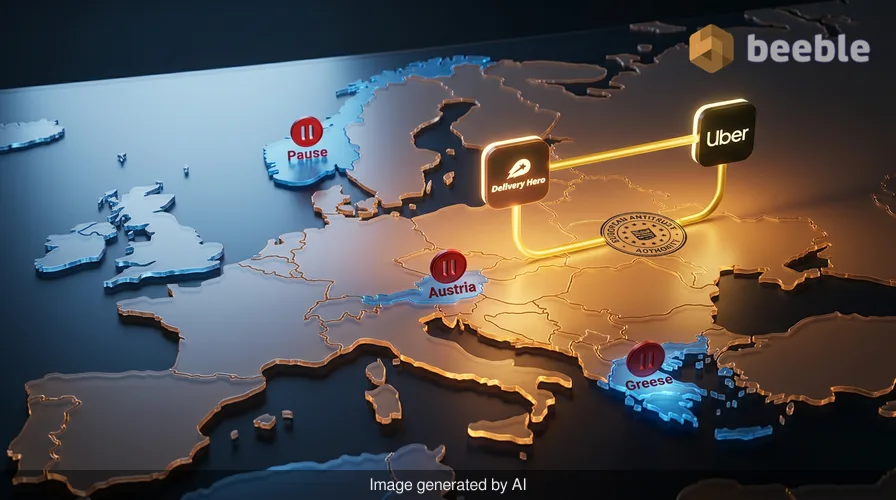
The Uber app on your phone relies on a network of local drivers who navigate city streets to meet demand. These drivers need a stable regulatory environment to operate profitably. This environment is currently under scrutiny because Uber wants to buy a company called Delivery Hero. This acquisition requires approval from European antitrust authorities who look at market dominance in the food and transport sectors. To reduce this dominance, Uber is pausing its entry into new countries like Austria, Norway, and Greece.
The logistics of a corporate retreat
In February, the plan for Uber was growth. The company announced it would enter seven new European markets by the end of 2026. This was a bold move for a firm that already has a presence in most major global cities. By July, the strategy shifted. Five of those seven launches are now on hold. This change affects millions of potential users in Vienna, Oslo, and Athens who expected a new way to get home or order dinner.
This decision is a direct result of the financial and legal pressure involved in a ten billion euro takeover. Uber made a bid for Delivery Hero in May. Delivery Hero is a massive European player that owns several delivery brands. They rejected the initial offer. Instead of walking away, Uber is clearing the path for a second attempt. The logic is simple — the fewer markets Uber enters right now, the less power it seems to have in the eyes of government regulators. If Uber is not yet in Austria, regulators cannot argue that buying Delivery Hero in Austria creates a monopoly.
Why existing markets are winning the budget
Uber is not just saving money for a potential purchase. It is also looking at the data from its recent successes in Finland and Denmark. In these countries, the company found that putting more resources into a smaller number of cities led to better results. For the average user, this means the app works better. There are more drivers available, wait times are shorter, and the pricing is more predictable.
When a company spreads itself too thin, the quality of service drops. Drivers wait longer for fares and passengers wait longer for rides. Uber calls this its momentum. Practically speaking, this means the company is choosing to be the best option in Copenhagen rather than a mediocre option in Athens. This is a common cycle in the tech world. A company grows until it hits a wall of complexity, then it shrinks to fix its core service before it tries to grow again.
The invisible hand of antitrust regulation
Antitrust law is like a referee in a professional football game. Its job is to make sure no single player becomes so big that they can ignore the rules or hike prices without consequence. When Uber tries to buy Delivery Hero, the referee looks at the map. If Uber and Delivery Hero are the only two options in a city, the referee will likely blow the whistle and stop the deal.
By pausing its expansion into countries where Delivery Hero is already strong, Uber is trying to keep the referee on the sidelines. This is a tactical move. It suggests that Uber values the long-term goal of owning the delivery infrastructure of Europe more than the immediate goal of having its logo on cars in Vienna. For the consumer, this corporate chess match has tangible effects. If you live in a city where the launch is paused, you continue to rely on local taxis or existing delivery apps. You do not get the benefit of new competition, but you also do not see a single giant take over your local economy.
The ten billion euro gamble
To understand why Uber is willing to wait, look at the price tag. Ten billion euros is a massive amount of capital. It represents years of profit and investor confidence. Uber has historically been a company that loses money to gain market share. Now, it is a company that has money and wants to buy its competitors. This is a sign of a maturing industry.
| Country | Status of Uber Launch | Delivery Hero Presence |
|---|---|---|
| Austria | Paused | Strong |
| Norway | Paused | Moderate |
| Greece | Paused | Strong |
| Finland | Active | Minimal |
| Denmark | Active | Minimal |
The table shows a clear pattern. Uber is active in places where it does not clash with the company it wants to buy. It is pausing in places where a merger would create a dominant force that regulators would block. This is a systemic approach to growth. It is not about a lack of interest in the Greek or Austrian markets. It is about the math of a merger.
What this means for your next trip
If you are a traveler or a resident in the affected countries, the immediate impact is a lack of choice. You will not see the Uber app become active in your local area this year. You will continue to use the services that are already there. On the market side, this pause might keep prices stable. When a new giant enters a market, they often offer discounts to attract users, which forces local companies to lower their prices too. Without Uber's entry, that price war is not happening.
For those in existing markets like Denmark or Finland, the news is better. You will likely see more features and more drivers. Uber is moving its engineers and its marketing budgets to these successful zones. This makes the app a more reliable tool for your daily life. The company is treating its current territory like a well-tended garden, removing the weeds and making sure the existing plants have enough space to grow.
The reality of the gig economy
The gig economy is a volatile environment. It depends on thousands of individual workers choosing to log into an app every day. These workers want to know that the company they work for is stable. By focusing on a few key markets, Uber can offer better incentives to its drivers. A driver in Helsinki is more likely to stay with Uber if the app is busy and the company is not distracted by five new launches in other time zones.
Ultimately, this story is about the transition from a startup mindset to an industrial mindset. Startups want to be everywhere at once. Mature industrial giants want to own the most profitable parts of the supply chain. Uber is moving toward the latter. It wants to be the invisible backbone of urban movement and food delivery in Europe. If that means staying out of Greece for another year to secure a ten billion euro deal, that is a trade the company is happy to make.
Practical foresight for the digital consumer
As a user, you should observe how your local apps change when big mergers are in the air. Often, service quality improves just before a deal as companies try to prove their value. After a deal, prices usually rise as the need for competition disappears. Watch your delivery fees in the coming months. If Uber succeeds in buying Delivery Hero, the variety of apps on your home screen might decrease, but the efficiency of the ones that remain might increase.
We are moving into an era where three or four giant platforms handle everything from your ride to work to your grocery list. This consolidation is a global trend. It is the digital equivalent of the massive shipping lanes that keep the world economy moving. You can see this shift every time a company like Uber decides that staying still is the fastest way to move forward.
Sources: Financial Times, Uber Technologies Investor Relations, Delivery Hero SE Annual Report 2025.



See you on the other side.
Our end-to-end encrypted email and cloud storage solution provides the most powerful means of secure data exchange, ensuring the safety and privacy of your data.
/ Create a free account
