


We Finally Have Every Show on One Screen Yet the Choice Has Never Felt Smaller

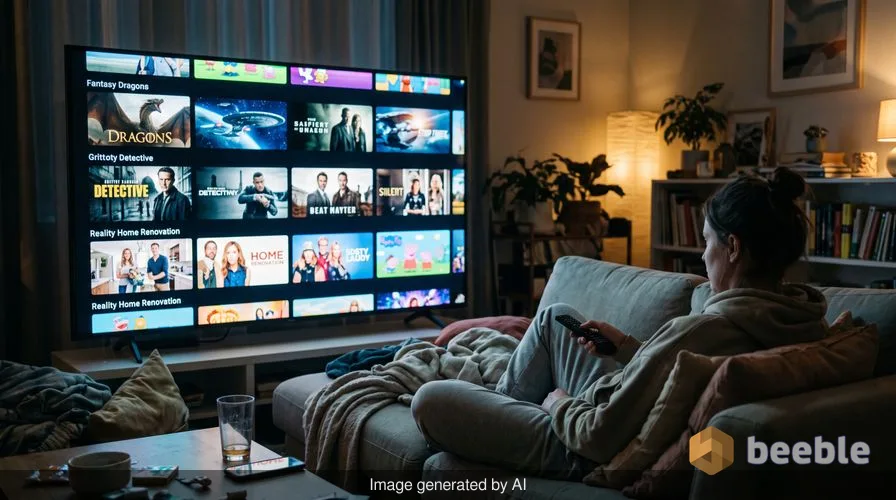
You sit on the sofa after a long day and open the app. The library stretches across the screen like a digital ocean of possibilities where prestige dramas about dragons sit next to reality shows about home renovations and archival cartoons from your childhood. You scroll through rows of thumbnails that promise a world of variety and depth. The interface feels endless and inviting as you swipe past icons for starships and detective stories.
You keep scrolling until the choices blur together. You look for a specific tone except every category has the same generic titles. You realize the algorithm guides your thumb toward the cheapest content to stream. You are in a walled garden where one company owns every gate. You have everything available at once until you realize you have nothing to watch.
The digital buffet becomes a single plate
Skydance is now the architect of this new reality. David Ellison’s company completed the $111 billion acquisition of Warner Bros. Discovery today. This news ends a chaotic period that began with a failed Netflix bid and concluded with the birth of a media giant. Skydance now owns CBS, CNN, HBO Max, Paramount+, and Discovery+. The company plans to unify these three primary streaming services into one single platform. This decision reflects a desperate need for efficiency in an industry that was once too crowded with individual apps.
In everyday terms, this means the distinction between a high-budget HBO drama and a Discovery+ home improvement show is gone. For years, audiences complained about the fragmentation of streaming. You needed one app for Star Trek and another app for The Last of Us. You paid separate bills to access Sesame Street and SpongeBob SquarePants. The promise of unification sounds like a solution to this fatigue. It is a return to a simpler era where all your entertainment lived in one place. Behind the scenes, however, this consolidation is a corporate retreat from the experimental era of the 2010s.
How the Skydance merger rewrites the rules
The math behind the $111 billion merger is simple. Operating three separate streaming services is expensive. Each service requires its own technical infrastructure, its own marketing team, and its own customer support. By unifying HBO Max, Paramount+, and Discovery+, Skydance reduces these overhead costs. The company can now track your viewing habits across a wider range of genres. If you watch a documentary on CNN, the algorithm can immediately suggest a related prestige drama from HBO or a news special on CBS.
This unification helps the company's bottom line but changes the nature of the content itself. Historically, HBO was a destination for elite, appointment television. It was a brand that meant something specific to a specific audience. Discovery+ was a service for background viewing and comfort television. When you put them in the same bucket, the brand identity of each becomes diluted. The prestige of a show like Succession is now neighbors with the fast-paced reality of 90 Day Fiancé. To a corporate executive, this is a diverse portfolio. To a viewer, it is a digital landfill where quality is harder to find.
The identity crisis of the mega-app
One of the most curious aspects of this merger is the fate of rival brands. Skydance now owns both Cartoon Network and Nickelodeon. These two networks were rivals for decades. They represented different philosophies of children’s entertainment. Now, they are under the same roof. Skydance has not said if it will combine them. If the company merges their libraries into one section of the new app, the unique culture of each brand will likely fade.
We see a similar tension in news. CNN and CBS News are now sister companies. Skydance announced an Editorial Independence Board to keep these newsrooms separate. This is a rare admission that corporate consolidation can be dangerous for journalistic integrity. When one company owns the most influential news platforms, the diversity of perspectives in the national conversation is at risk. Even with an independence board, the pressure to share resources and cut costs is always present.
Why efficiency is a code word for higher bills
Casey Bloys, the content chief for the new streaming effort, previously pointed to the success of bundles. He suggested that putting different services together makes sense for the consumer. Paradoxically, these bundles often lead to higher prices. When you subscribe to a single service that has everything, you pay for everything. You might only want to watch HBO dramas, but your subscription fee now supports the licensing costs for NFL games on CBS and reality shows on Discovery.
Licensing costs are growing. As Skydance pays more to keep high-profile sports and movies on its platform, it will inevitably pass those costs to you. The era of the $7 streaming app is over. We are moving toward a reality where a single "super app" costs as much as a traditional cable package. The industry calls this synergy. The audience calls it a price hike. This shift proves that the streaming revolution was not about giving you more for less. It was about rebuilding the cable model in a digital format.
The illusion of discovery in a crowded library
Beyond the screen, the user experience of a unified app is a double-edged sword. A single platform simplifies your tech stack. You only have one password to remember and one billing date to track. A unified app allows for better technical features like seamless 4K streaming or improved offline downloads. However, the sheer volume of content makes organic discovery almost impossible.
When you have 50,000 titles in one app, the algorithm becomes the editor. You only see what the system wants you to see. This results in a feedback loop where you only watch shows that are similar to what you already like. The joy of stumbling upon a weird, niche documentary is lost. Instead, you are fed a steady diet of franchises and spin-offs. Skydance owns Star Trek and the DC Universe. The incentive is to keep you inside those worlds rather than letting you wander into something new.
Navigating the ghost of the cable bundle
The completion of the Skydance and Warner Bros. Discovery merger marks the end of an era. The gold rush of individual streaming services has failed. The market cannot support ten different $15-a-month apps. Consequently, we are returning to a centralized system. The names are different, but the mechanics are familiar. We are back to a world of media conglomerates that control everything from the morning news to the late-night movie.
Through this audience lens, we must become more conscious of our consumption. When the walls of the garden grow higher, we must look harder for the exits. You can choose to support independent creators who exist outside these mega-apps. You can choose to buy physical media to ensure your favorite shows do not disappear when a licensing deal expires. You can choose to cancel a service when the value no longer matches the price. The $111 billion merger is a fact of the industry, but your attention is still yours to give.
Sources:
- The Hollywood Reporter: Bloomberg 2026 Screentime event coverage
- Skydance Media: Official merger completion announcement
- Warner Bros. Discovery: Q3 2026 financial reports
- Bloomberg News: Analysis of the Skydance-WBD deal



See you on the other side.
Our end-to-end encrypted email and cloud storage solution provides the most powerful means of secure data exchange, ensuring the safety and privacy of your data.
/ Create a free account
