


When Family Curiosity Becomes a Crime: The Nurse Who Faced Prison for a Quick Look at Medical Records

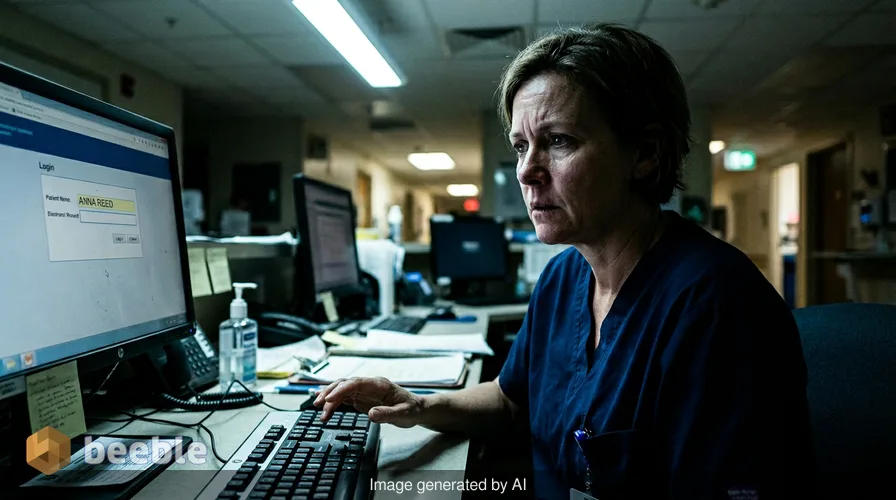
Imagine sitting at your workstation in a quiet hospital ward. The hum of the cooling fans is the only sound as you stare at the login screen. You have the credentials, the authority, and the technical means to open any file in the system. Suddenly, a name flashes through your mind—a sister-in-law, a neighbor, or perhaps an ex-partner. You aren't looking to sell their data or post it on social media; you’re just curious. You want to know if they are okay, or perhaps you’re looking for a bit of leverage in a family dispute.
In that moment, the keyboard feels like a tool of your trade. But in the eyes of the Spanish legal system, those few keystrokes can transform into a set of digital handcuffs.
A recent landmark ruling by the High Court of Justice of Castilla-La Mancha (TSJCLM) has sent a clear, resounding message across the Spanish healthcare sector: the privacy of a patient is a sanctuary, and those who breach it without a strictly professional reason will face the full weight of criminal law.
The Case That Crossed the Line
The story begins in the province of Ciudad Real, where a nurse decided to peek into the medical history of her sister-in-law. There was no medical emergency, no shared clinical task, and certainly no consent. Over several instances, the nurse accessed the private health records of her relative, navigating through sensitive diagnoses, treatment histories, and personal notes that were never intended for her eyes.
When the matter came to light, the defense argued that the harm was minimal. After all, the information wasn't broadcast to the public. However, the Spanish judiciary took a different view. The Provincial Court of Ciudad Real initially handed down a conviction, which was subsequently appealed to the High Court of Castilla-La Mancha.
The High Court did not flinch. It upheld the sentence: one year, three months, and one day of imprisonment. But for a healthcare professional, the secondary punishment is often more devastating than the time served. The nurse was also disqualified from working in any healthcare role for over three years. This is what we call a professional death sentence—a robust reminder that the privilege of access comes with a binding duty of discretion.
Why the Law Views Your Health Data as a 'Sacred Vault'
In our digital age, we often feel like our privacy is a precarious thing, easily eroded by cookies, trackers, and social media algorithms. However, under Spanish jurisdiction, medical data sits in a specialized, highly protected category. Think of your medical record as a digital diary kept inside a vault. The law acts as the vault's heavy door, and only specific keys—professional necessity or explicit consent—can legally open it.
Under Article 197.2 of the Spanish Criminal Code, the act of accessing, modifying, or using someone’s personal data without authorization is classified as a crime of "Discovery and Revelation of Secrets."
You might wonder: If she didn’t tell anyone what she saw, where is the crime?
This is where the law becomes nuanced. The crime isn't just about the "revelation" (telling others); it is also about the "discovery" (the act of looking). The mere fact that an unauthorized person gained knowledge of sensitive health data is enough to trigger a criminal response. The law recognizes that the psychological impact of knowing a stranger—or worse, a family member—has crawled through your medical history is a form of actionable harm. It is a violation of the fundamental right to privacy.
The "Professional Justification" Litmus Test
One of the most common questions I receive as a legal navigator is: "How do the courts decide what is 'unauthorized' if the person is a nurse or a doctor?"
The courts apply a stringent litmus test called professional justification. In the Castilla-La Mancha case, the High Court looked for a clinical bridge—a reason why this specific nurse needed to see this specific patient's file to provide care.
| Type of Access | Legal Status | Legal Justification Required |
|---|---|---|
| Direct Clinical Care | Legal | The professional is actively treating the patient. |
| Administrative Necessity | Legal | Access is required for billing, scheduling, or legal compliance. |
| Personal Curiosity | Illegal | No clinical relationship exists; curiosity is never a defense. |
| Family Relationship | Illegal | Being a relative does not grant access rights without consent. |
| Research/Audit | Legal | When conducted under strict institutional protocols and anonymization. |
In this case, the bridge was non-existent. The nurse was not part of the sister-in-law's care team. Consequently, every click was a fresh violation. The court noted that health data is "especially sensitive," and its protection is an overarching principle of a democratic society.
The Steep Price of an Unauthorized Click
The sentence handed down in Castilla-La Mancha wasn't just a symbolic slap on the wrist. It carries multifaceted consequences that serve as a deterrent for others:
- Imprisonment: While a sentence of 15 months may sometimes be suspended for first-time offenders in Spain, the threat of a criminal record remains a heavy backpack to carry for life.
- Professional Disqualification: For three years and one day, this nurse cannot step foot in a clinical setting as an employee. In a specialized field, a three-year gap can make a career recovery nearly impossible.
- Financial Damages: The court ordered the payment of €1,000 to the victim. While this might seem small, it serves as a formal recognition of the moral harm caused.
- The Systemic Impact: Beyond the individual, these cases force hospitals to implement more rigorous audit trails, ensuring that every time a file is opened, a digital fingerprint is left behind.
How to Protect Your Own Medical Privacy
If you are a patient, you might feel vulnerable in a world where your entire history is stored on a server. However, you are not defenseless. The law is a shield you can use to protect your digital sanctuary.
- Right to Access Logs: Under the GDPR (General Data Protection Regulation) and Spanish law (LOPDGDD), you have the right to know who has accessed your data. Most regional health services in Spain allow you to request an "access log."
- Report Suspicious Knowledge: If a relative or acquaintance mentions a medical detail they shouldn't know, it is a red flag. You can file a formal complaint with the hospital’s Data Protection Officer (DPO).
- The Power of Consent: Remember that even within a hospital, access should be on a "need-to-know" basis. You have the right to question why certain staff members are viewing your files if they are not part of your direct care team.
Final Thoughts: Privacy Is Not a Luxury
We often treat our medical records as just another set of documents, but they are perhaps the most intimate reflection of our lives—our vulnerabilities, our struggles, and our physical realities. The High Court of Castilla-La Mancha has reaffirmed that this data is not a buffet for the curious.
Whether you are a professional or a patient, understanding the boundaries of the law is essential. For the professional, the lesson is clear: your credentials are a tool for healing, not a skeleton key for private lives. For the patient, know that the legal system is increasingly vigilant in guarding your digital borders.
Ultimately, the law seeks to ensure that when you walk into a hospital, the only thing being examined is your health—not your privacy.
Take Action:
- Check Your Records: If you live in Spain, use your digital certificate or Cl@ve to access your regional health portal and check your "Historia Clínica."
- Review Permissions: If you are a healthcare worker, ensure you understand your center's specific protocols regarding data access and never share your passwords.
- Consult a Professional: If you suspect your privacy has been breached, document your concerns and seek advice from a lawyer specializing in data protection or patient rights.
Sources:
- Spanish Penal Code (Código Penal), Article 197.2.
- Organic Law 3/2018 on the Protection of Personal Data and Guarantee of Digital Rights (LOPDGDD).
- General Data Protection Regulation (GDPR) - EU Regulation 2016/679.
- Castilla-La Mancha High Court of Justice (TSJCLM) Case Law (Sentencia del Tribunal Superior de Justicia de Castilla-La Mancha).
Disclaimer: This article is provided for informational and educational purposes only and does not constitute formal legal advice. Laws and judicial interpretations can change, and the specifics of every case are unique. If you are facing a legal issue regarding data privacy or medical records, please consult with a qualified attorney in your jurisdiction to discuss your specific situation.



See you on the other side.
Our end-to-end encrypted email and cloud storage solution provides the most powerful means of secure data exchange, ensuring the safety and privacy of your data.
/ Create a free account
