


Where the money and the founders go when a crypto exchange collapses

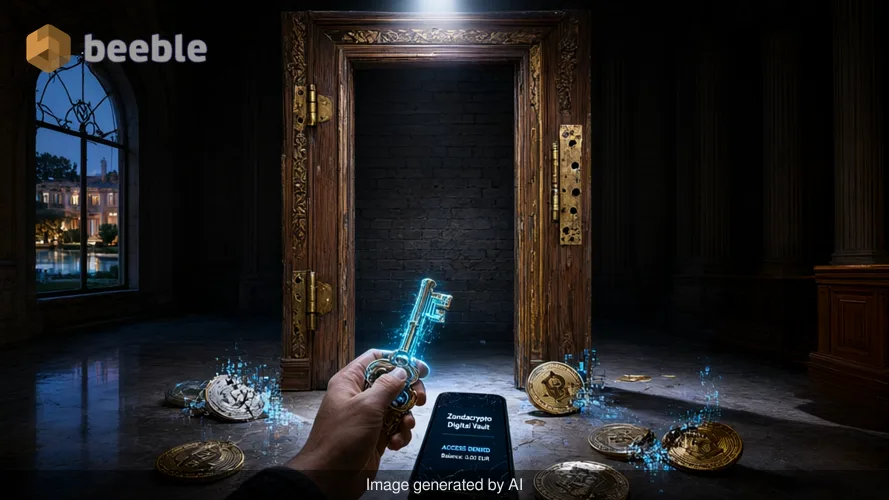
Imagine waking up to find your digital wallet is a door with no handle. You have the key, but the door itself has vanished. This is the reality for 1.3 million users of Zondacrypto, a once-dominant exchange that left its customers in the dark. For years, investors believed their assets were secure in a digital vault. Recent events in a Katowice courtroom suggest that vault was actually a stage for a long-running disappearance act.
On Monday, Prosecutor General Waldemar Żurek confirmed that a fifth suspect is now in custody. A Polish court approved the pretrial detention of Roman Ż. on charges that include membership in an organized criminal group and computer fraud. This development is the latest chapter in a saga that features two missing chief executives, millions of euros in diverted funds, and a trail of luxury real estate in France.
The fifth suspect and the mechanism of fraud
Roman Ż. was detained by police in Silesia over the weekend. Prosecutors allege he was part of a group that manipulated the exchange data to misappropriate user funds. The specific charges involve the unauthorized addition, deletion, and alteration of computer data. In the eyes of the law, this is more than just a technical glitch. It is a systematic attempt to redirect at least 7.8 million złoty from the people who owned that money.
Under the Polish Penal Code, computer fraud is a serious offense that carries a sentence of up to 10 years. During his initial hearing, Roman Ż. denied the charges and provided a statement. However, the court found the evidence sufficient to warrant pretrial detention. This legal tool keeps a suspect in custody while the investigation continues, often because there is a risk of flight or a danger that the suspect might interfere with the evidence.
Two vanished leaders and a frozen exchange
The history of Zondacrypto is a study in how a financial platform can drift away from its regulatory anchors. The exchange began in Katowice in 2014 under the name BitBay. Its founder, Sylwester Suszek, was a prominent figure in the Polish crypto scene. In 2020, the platform moved its registration to Estonia and rebranded as Zondacrypto under a parent company named BB Trade Estonia.
The trouble became a crisis in March 2022 when Suszek disappeared. His successor, Przemysław Kral, took the helm and attempted to reassure the public. He claimed the exchange held 4,500 Bitcoin but insisted that only Suszek had the keys to unlock them. This created a situation where the money was technically there, but legally and practically unreachable.
In April 2024, the situation worsened. Kral himself vanished from public view. Shortly after his disappearance, the exchange froze all withdrawals and its website went dark. When a financial entity stops communicating with its clients while its leaders are nowhere to be found, the law views this as a red flag for systemic insolvency or fraud.
Following the paper trail to France
Investigators are not just looking for missing people; they are chasing the money. The prosecution alleges that the group used exchange funds as a personal piggy bank. In October last year, nearly €8 million left the operator’s account to purchase property in France. These transactions occurred while thousands of Polish users were unable to access their savings.
Other charges against the detained suspects include:
- Recording a €2.9 million loan as repaid when no payment was ever made.
- Transferring two properties in Katowice worth a combined 1.5 million złoty without receiving any payment.
- Laundering 7.5 million złoty through a series of fictitious real estate deals.
One suspect, Anna P., faces additional charges for allegedly obstructing the investigation into the disappearance of Sylwester Suszek. Prosecutors claim she removed a hard drive from a CCTV recorder at a filling station to hide evidence. This highlights how the legal system often treats the cover-up as a crime just as significant as the initial fraud.
The Estonian regulatory failure
Zondacrypto operated under an Estonian license for several years, which gave it a veneer of European legitimacy. However, that shield evaporated on June 29, 2024, when Estonia’s Financial Intelligence Unit revoked the license of BB Trade Estonia. The revocation followed an audit that revealed the company did not meet the stringent transparency and security standards required for crypto providers.
For the everyday user, this meant the bridge between their digital assets and the regulated financial system had collapsed. Without a license, an exchange cannot legally process transactions or hold client funds. This regulatory action is often the final bell for a failing exchange, leaving users to fight for their money in civil and criminal courts.
What victims should do next
If you are one of the 1.3 million clients affected by the Zondacrypto shutdown, you are part of a massive group of creditors. The Katowice regional prosecutor's office has already received thousands of complaints. To protect your rights, you must move from passive observation to active documentation.
| Action Step | Why it Matters |
|---|---|
| Gather Screenshots | You need proof of your account balance and transaction history. |
| Preserve Emails | Any correspondence regarding frozen withdrawals is evidence of a breach of contract. |
| File a Notice | Submit a formal notification to the Katowice Prosecutor's Office as an injured party. |
| Join Class Actions | Group litigation can lower the cost of legal fees and increase your collective leverage. |
In many cases of crypto fraud, the burden of proof acts as a heavy backpack that the victim must carry. You must be able to show exactly how much you deposited and when the exchange denied you access. While the criminal case against Roman Ż. and others proceeds, users may also need to pursue civil claims to recover what remains of the exchange’s assets.
The law as a shield for consumers
The detention of a fifth suspect shows that the wheels of justice are turning, even if they move slowly. The Polish justice system is treating this not just as a business failure, but as a coordinated criminal enterprise. For the victims, the focus now shifts to asset recovery. When a court seizes properties bought with stolen funds, those assets can eventually be used to compensate the victims.
This case serves as a warning that the "standard contract" of a crypto exchange is often a field of legal landmines. Users must be aware that when an exchange holds their private keys, they are essentially handing a stranger a blank check. As the Zondacrypto investigation unfolds, it will likely provide a blueprint for how authorities across Europe handle the collapse of digital asset platforms.
Sources
- Polish Penal Code (Kodeks Karny), Articles 258 and 287.
- Estonian Money Laundering and Terrorist Financing Prevention Act.
- Official statements from the Katowice Regional Prosecutor's Office.
- Directives on the Protection of Consumers in Financial Services.
Disclaimer: This article is for informational and educational purposes only. It does not constitute formal legal advice. If you are a victim of the Zondacrypto exchange collapse or any other financial fraud, you should consult a qualified attorney in your jurisdiction to discuss your specific case and legal options.



See you on the other side.
Our end-to-end encrypted email and cloud storage solution provides the most powerful means of secure data exchange, ensuring the safety and privacy of your data.
/ Create a free account
