


Why a Digital ID Check is the New Front Door to the Internet

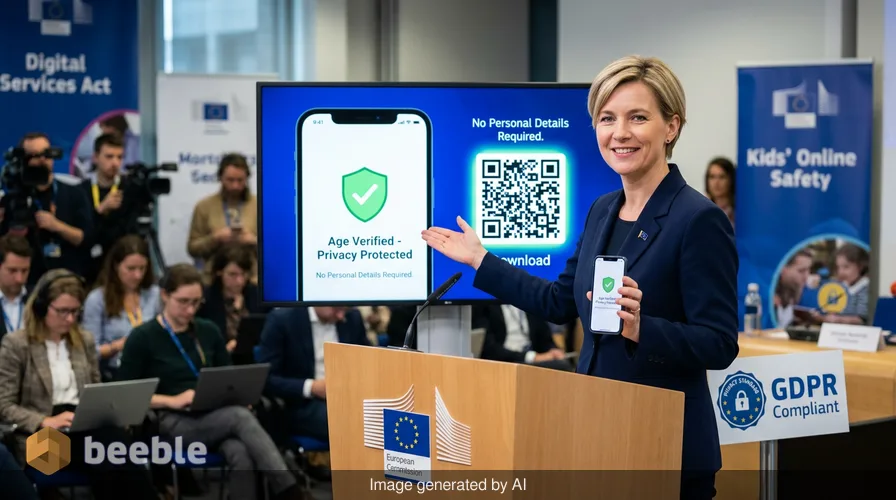
You tap the screen. The camera blinks. A green checkmark appears. No name is shared. No address is leaked. No credit card number is transmitted. Just a binary, silent "Yes." This is the immediate reality of the European Commission’s newly announced digital age verification app, a tool designed to solve one of the internet's oldest and most persistent failures: protecting children without turning the web into a surveillance state.
For decades, age verification on the web has been a farce. We have all encountered the "honesty box"—that clunky, easily bypassed pop-up asking if you were born before 2005. Historically, the only alternative was to hand over a credit card or a scan of a driver’s license to a private company, a trade-off that felt like giving a stranger the keys to your house just to prove you were old enough to enter a bookstore. The EU’s new initiative aims to replace this fragmented, insecure mess with a streamlined, sovereign digital identity.
The Mechanism: How the Digital Handshake Works
Under the hood, the app functions through a series of sophisticated cryptographic steps that feel like magic but are grounded in rigorous engineering. First, the user downloads the app and performs a one-time setup by scanning a physical passport or national ID card. Simultaneously, the app uses the smartphone’s Near Field Communication (NFC) reader to verify the authenticity of the document’s embedded chip. Behind the scenes, the software creates a secure, encrypted link between the user’s biometric data and their verified age.
If a website requires age verification, the app acts as a secure intermediary. To put it another way, it functions like a restaurant waiter who checks your ID at the door and then tells the bartender you are of age, without the bartender ever seeing your name or where you live. Technically speaking, if the service requests proof of age, then the app generates a unique, one-time token. This token confirms the user is over 18 (or 13, depending on the requirement) without ever revealing the actual date of birth. This is the essence of a "zero-knowledge proof," a robust privacy standard where one party can prove to another that a statement is true without revealing any information beyond the validity of the statement itself.
Zooming Out: The Shift Toward Sovereign Identity
Zooming out to the industry level, this app represents a profound shift in how we think about digital existence. For the last twenty years, our digital identities have been proprietary, owned and managed by social media giants and search engines. We didn't own our "login"; we borrowed it from a platform in exchange for our data. The EU's move toward a centralized, yet privacy-preserving, age verification tool is a direct challenge to this status quo.
At its core, this is an attempt to build a public infrastructure for the internet, much like a city's water pipes or electrical grid. Historically, we relied on private companies to build these bridges, which led to the "walled garden" effect where your identity was locked into a specific ecosystem. By providing a government-backed, open-standard tool, the Commission is attempting to create a more resilient and interconnected web where safety doesn't require a sacrifice of anonymity.
The Paradox of Friction and Safety
Through this user lens, we must acknowledge a curious tension: the paradox of digital friction. As a software analyst, I often see "friction"—any extra step in a user's journey—as the enemy of good UX. We want things to be seamless and intuitive. However, in the context of child safety, friction is often a feature, not a bug.
By requiring a physical ID and a biometric scan, the EU is intentionally slowing down the process of accessing restricted content. This isn't just about technical debt or a clunky interface; it is a pragmatic design choice. It forces a moment of intentionality. For parents, this app provides a robust shield, but it also requires a shift in behavior. We are moving away from the "set it and forget it" mentality of parental controls toward a more active, verified engagement with our children's digital lives.
From Developer Logic to Human Impact
From a developer's standpoint, building this kind of app is a nightmare of edge cases and security requirements. How do you ensure the app isn't being spoofed? How do you handle legacy ID cards that lack NFC chips? The Commission’s statement suggests they have opted for a high-security baseline, prioritizing correctness over universal compatibility at launch. This is a bold move in an industry that usually follows the "move fast and break things" mantra.
In practice, the success of this app won't be measured by its download count, but by its ubiquity across third-party platforms. If major social media sites and gaming hubs integrate this API, it could effectively end the era of predatory data collection under the guise of "safety checks." Paradoxically, by making our age verification more formal, the EU might actually be making our personal lives more private.
Reclaiming the Digital Threshold
Ultimately, the arrival of this digital age verification app asks us to reconsider our relationship with the screens in our homes. We have grown used to a web that is either a lawless frontier or a series of corporate fiefdoms. This tool offers a third way: a transparent, regulated, and user-centric approach to safety.
As parents and guardians, the invitation to use this app is more than just a security recommendation; it is an opportunity to reclaim control over the digital threshold. We should observe our own reactions to this new layer of technology. Do we find the setup process intrusive, or does the knowledge that our data isn't being harvested provide a sense of relief? By choosing to use tools that prioritize privacy-by-design, we aren't just protecting our children—we are voting for the kind of internet we want to inhabit.
Key Takeaways for the Digital Citizen
- Privacy as a Default: The app uses zero-knowledge principles to verify age, meaning you never have to share your actual ID document with a website.
- Sovereign Identity: This marks a shift away from "Logging in with Social Media" toward a government-verified, user-controlled identity.
- Intentional Friction: The setup process is a one-time effort that creates a long-term safety barrier, proving that the most "seamless" experience isn't always the safest.
- Industry Standards: This app sets a new benchmark for how platforms should handle sensitive user data, potentially forcing global tech giants to adopt similar privacy-first protocols.
Sources
- European Commission: Official Statement on Digital Age Verification and Child Safety.
- eIDAS 2.0 Framework: Technical Specifications for the EU Digital Identity Wallet.
- GDPR Article 25: Data Protection by Design and by Default.
- European Union Agency for Cybersecurity (ENISA): Reports on Biometric Authentication and NFC Security.



See you on the other side.
Our end-to-end encrypted email and cloud storage solution provides the most powerful means of secure data exchange, ensuring the safety and privacy of your data.
/ Create a free account
