


Why a Simple Release Time Chart Reveals the Fragmented Heart of Modern Gaming

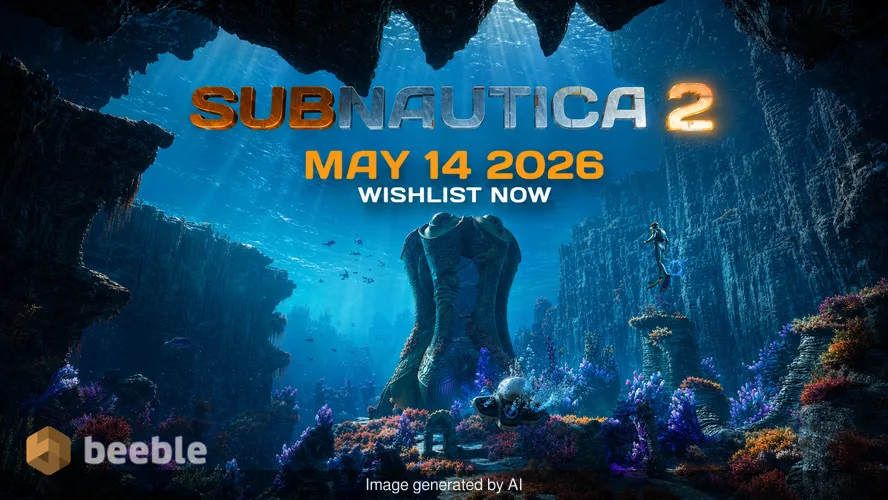
You are sitting in a darkened room, the blue light of your monitor washing over your face as the clock ticks toward an arbitrary number. Your thumb hovers over the refresh button. On the screen, a digital storefront tells you that a world you have been waiting years to revisit is currently unavailable, despite it being technically tomorrow in London and still yesterday in Los Angeles. This is the modern ritual of the digital launch. It is a moment defined by a paradoxical mix of hyper-connectivity and profound isolation, where millions of players across the globe are united by the singular, frustrating act of waiting for a server to flip a switch.
Behind the scenes, this synchronized dance is less about magic and more about cold, hard infrastructure. First, developers at Unknown Worlds must coordinate with platform holders like Microsoft and Valve to ensure that the deployment is global and simultaneous, preventing the digital equivalent of a stampede. Next, Content Delivery Networks (CDNs) must be primed to handle the massive influx of data as thousands of players attempt to download several dozen gigabytes of high-fidelity ocean floor. Consequently, the release of Subnautica 2 is not just a creative milestone; it is a logistical feat that highlights how the gaming industry has moved away from the physical shelf toward a centralized, yet fragmented, digital cloud.
The Logistics of the Deep: When Exactly Can You Dive?
For those prepared to return to the depths of an alien ocean, the specifics of the Subnautica 2 launch are finally set in stone. The game is scheduled for a simultaneous global release across PC (via Steam and the Epic Games Store) and Xbox Series X|S. Unlike the staggered midnight launches of the past, where New Zealanders enjoyed a twenty-hour head start on the rest of the world, Unknown Worlds has opted for a unified 'Global Unlock.'
In everyday terms, this means that while players in New York can begin their descent at 1:00 PM ET on launch day, those in London will have to wait until 6:00 PM BST. Through this audience lens, the concept of a 'release date' becomes fluid—a moving target dictated by your time zone rather than the calendar. Paradoxically, this attempt at fairness often creates a new kind of friction. The worker in California finds the game launching in the middle of their shift, while the student in Tokyo discovers it unlocks at three in the morning.
This rigid adherence to a single global moment is a direct response to the era of spoilers. In a world where a narrative twist can be meme-ified and broadcast on social media within minutes of a game’s release, developers are increasingly desperate to ensure everyone starts at the same starting line. They are, in essence, trying to preserve the 'unspoiled' nature of their architectural foundation, knowing that one leaked screenshot of a late-game leviathan can ruin the sense of discovery for thousands.
The Game Pass Effect and the Illusion of Choice
Zooming out to the industry level, the presence of Subnautica 2 as a Day One title on Xbox Game Pass tells a larger story about how we consume media today. Historically, buying a game was a definitive choice—a financial and emotional investment in a single piece of software. Now, for millions of subscribers, the barrier to entry has vanished. The game is simply there, another tile in an endless digital buffet, nestled between a hundred-hour RPG and a five-minute indie puzzle game.
This shift transforms the player’s relationship with the experience. When a game is 'free' with a subscription, the conversation between player and developer changes. There is less pressure to justify a sixty-dollar price tag, but there is also a higher risk of the 'flicker effect'—the tendency to drop a game the moment a mechanic feels clunky or the narrative pace slows down. For a game like Subnautica 2, which relies on a slow-burn sense of dread and the meticulous gathering of resources, the Game Pass model is a double-edged sword. It guarantees a massive day-one audience, but it also places the game in direct competition with the dopamine-heavy loops of live-service shooters.
Narratively Speaking: The Weight of the Silent Protagonist
At its core, the Subnautica franchise has always been about the profound tension between beauty and terror. It is an immersive sim that treats the environment not just as a backdrop, but as the primary antagonist. While many modern titles suffer from 'bloated' map design, filled with repetitive icons and busywork, the first Subnautica was resonant because of its restraint. It gave you a vast ocean and almost no instructions, forcing you to learn the ecosystem through trial and error.
Subnautica 2 carries the weight of these expectations. The move to Unreal Engine 5 promises a more seamless transition between biomes and more intricate lighting, but the true challenge lies in the narrative structure. How do you expand a story about isolation while introducing the much-requested co-op functionality? From a creator's standpoint, adding other players is like adding a second voice to a solo. It can create harmony, but it can also shatter the specific, lonely atmosphere that made the original a cult classic. The developer must ensure that the multiplayer mechanics do not become a derivative addition that undermines the core philosophy of survival.
The Death of the Midnight Launch and the Rise of the Pre-Load
There is a certain nostalgia for the physical midnight launch—the shivering in a parking lot outside a GameStop, the camaraderie of strangers sharing a niche interest, the tactile feeling of a plastic case. That era is de facto over. In its place, we have the 'Pre-load.'
This practice allows players to download the encrypted game files days in advance, essentially turning their consoles into ticking time bombs of content. It is a streamlined process, yet it feels strangely opaque. We no longer own the disc; we own a license to decrypt data at a time specified by a server three thousand miles away. This transition from physical ownership to digital access is one of the most disruptive shifts in the history of the medium. It has made gaming more ubiquitous than ever, yet it has also made our libraries feel more fragmented and temporary.
Reclaiming the Experience in an Algorithmic Age
As we look at the release schedule for Subnautica 2, it is easy to get lost in the technical specs and the countdown clocks. But beyond the screen, the act of playing a game like this is a rare opportunity to reclaim our attention. In an age of algorithmic curation, where our entertainment is often fed to us by a machine that thinks it knows what we want, a survival game requires a conscious choice. It requires us to pay attention to the sound of a distant roar, to manage our oxygen, and to map out a world that does not care if we succeed or fail.
Ultimately, the release times are just numbers on a chart. Whether you dive in at 10:00 AM or midnight, the value of the experience lies in the willingness to be submerged. As the countdown hits zero, perhaps we should worry less about being the first to see the ending and more about the quality of the journey into the dark. After all, the ocean doesn't have a clock; it only has the tide.
Sources
- Official Unknown Worlds Development Blog (2025-2026 Archive)
- Xbox Wire: Game Pass Upcoming Additions May 2026
- Steamworks Distribution Global Policy Guidelines
- Industry Analysis: The Evolution of Global Unlock Schedules (Entertainment Weekly Analytics)



See you on the other side.
Our end-to-end encrypted email and cloud storage solution provides the most powerful means of secure data exchange, ensuring the safety and privacy of your data.
/ Create a free account
