


Why Apple's trade secret lawsuit against OpenAI might fall apart

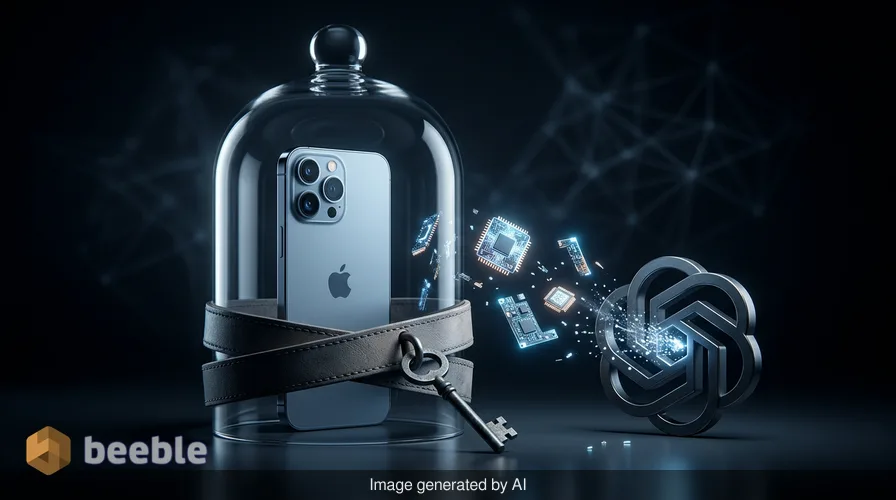
Behind the glass walls of Silicon Valley, a legal strategy exists that most people never see. When a major tech company loses its best engineers to a fast-moving rival, the legal department often reaches for a specific tool: the trade secret lawsuit. These cases are less about justice and more about stopping the flow of talent. Apple recently used this tactic against OpenAI, the creator of ChatGPT. Apple alleged that two former employees helped OpenAI steal confidential information to build a new AI-powered hardware device. OpenAI filed a motion to dismiss these claims on Wednesday, and the arguments reveal a lot about how trade secret law actually works in the real world.
OpenAI told a U.S. judge that Apple is using the legal system to cover up its own failures. The lawyers for OpenAI argue that Apple has no specific evidence of theft. Instead, they claim Apple is simply upset that OpenAI is attracting top talent and moving faster in the world of artificial intelligence. This case is a battle over the future of the devices we carry in our pockets. If OpenAI builds a phone that replaces the need for traditional apps, the iPhone becomes much less valuable. To prevent this, Apple is attempting to use the law as a shield to protect its market share.
The requirement for specific secrets
In the eyes of the law, a company cannot just say that someone stole a general idea. A trade secret is a very specific piece of information that has economic value because it is not public. It might be a chemical formula, a unique algorithm, or a specific list of suppliers that no one else knows. To win a lawsuit, a company must describe these secrets with enough detail so the court knows what is at stake. OpenAI argues that Apple failed this basic test. Apple pointed to broad categories like product development and supplier relationships, but OpenAI claims these are too vague to count as legal trade secrets.
Imagine a chef who leaves a famous restaurant to start their own bistro. The old restaurant can sue if the chef takes a secret recipe for a signature sauce. However, the restaurant cannot sue just because the chef knows how to cook or knows which local farmers have the best tomatoes. General knowledge and professional skills belong to the worker, not the employer. OpenAI is essentially telling the court that Apple is trying to claim ownership over the general skills and industry knowledge of its former employees. This is a common conflict in high-tech industries where the line between a company secret and a worker's expertise is thin.
The mechanism of a motion to dismiss
A motion to dismiss is a standard legal maneuver used at the very beginning of a case. It is a way for a defendant to say that even if everything the plaintiff says is true, there is no legal basis for a trial. It acts as a filter to remove cases that lack substance before they consume years of time and millions of dollars. In this instance, OpenAI is asking the judge to throw the case out because Apple's complaint is legally insufficient. If the judge agrees, the case ends immediately. If the judge disagrees, the case moves into a phase called discovery, where both companies must turn over internal emails and documents to each other.
OpenAI is taking a aggressive stance by calling the lawsuit pretextual. This means they believe Apple is using the lawsuit for a hidden purpose, such as intimidating other employees who might want to leave. Litigation is a marathon, and the cost of defending a lawsuit is enough to scare many smaller companies or individual workers into submission. Because OpenAI has deep pockets and a high market valuation, it is in a position to fight back against a giant like Apple. The company is using this motion to signal that it will not be bullied by Apple's legal department.
Protecting the right to switch jobs
Under this jurisdiction, the law generally favors the ability of workers to move between jobs. This concept is vital for innovation. If every time a worker left a job they faced a massive lawsuit, no one would ever start a new company. Apple's complaint alleges that OpenAI systematically recruited its staff to gain an unfair advantage. OpenAI counters that it is simply building something entirely new and different. They claim they have no use for Apple's secrets because they are not trying to build an iPhone clone. They are building a new category of device that functions differently from anything Apple currently offers.
For the average professional, this case is a reminder of how dangerous vague employment contracts are. Many workers sign non-disclosure agreements (NDAs) without realizing how companies use them later. An NDA is a bridge between an employer's need for privacy and an employee's right to work. When that bridge is used to block a worker from ever using their skills elsewhere, it becomes a legal trapdoor. OpenAI is arguing that Apple is trying to turn a standard NDA into a permanent ban on competition, which is usually not allowed under modern labor laws.
The hardware war and AI devices
The tension between these two companies is high because the stakes are enormous. Apple dominates the current era of mobile technology with the iPhone and the App Store. However, artificial intelligence is changing how we interact with machines. New AI devices might not need an App Store at all. They might just listen to your voice and perform tasks across different services automatically. This represents a fundamental threat to Apple's business model. If OpenAI succeeds in building a popular AI device, the iPhone might become as obsolete as the iPod.
Apple's lawsuit focuses on former employees who worked on hardware and supplier relationships. In the tech world, knowing which factories can produce specialized components at a low cost is a major advantage. Apple considers this information a trade secret. OpenAI argues that this information is part of the general business environment and is not something Apple can own forever. The court must now decide if Apple provided enough detail to prove that specific, protectable secrets were actually taken.
What this means for everyday workers
While this is a battle between billion-dollar corporations, the outcome will influence how trade secret law applies to everyone. If the court allows Apple's broad claims to proceed, it gives employers more power to sue former staff members. If the court dismisses the case, it reinforces the idea that companies must be very specific about what they own. For now, the case is a clear example of how legal disputes are used as a form of competition by other means.
If you are transitioning between roles in a competitive industry, there are steps you can take to protect yourself. Companies are watching what you do during your final weeks of employment. The digital trail you leave is often the primary evidence in these lawsuits. Understanding your rights and the limits of your employer's power is the best way to avoid being caught in the middle of a corporate war.
Practical steps for protecting your career
- Review your non-disclosure agreement before you give notice at your current job.
- Do not download personal files or company data to a private drive before leaving.
- Keep a clear record of the skills and knowledge you had before you started your current role.
- Consult an employment attorney if your new role is with a direct competitor of your old employer.
- Avoid discussing your new project or company with former colleagues until you have officially started.
Sources
- Defend Trade Secrets Act of 2016 (DTSA)
- Uniform Trade Secrets Act (UTSA)
- Federal Rules of Civil Procedure, Rule 12(b)(6)
- OpenAI v. Apple, U.S. District Court, Northern District of California (2026)
This article provides general information about legal procedures and trade secret law. It is for educational purposes only and is not formal legal advice. If you are facing a legal dispute or have questions about an employment contract, you should consult a qualified attorney in your area.



See you on the other side.
Our end-to-end encrypted email and cloud storage solution provides the most powerful means of secure data exchange, ensuring the safety and privacy of your data.
/ Create a free account
