


Why Big Tech’s Billion-Dollar Infrastructure Bets Are Hitting a Financial Wall in Africa

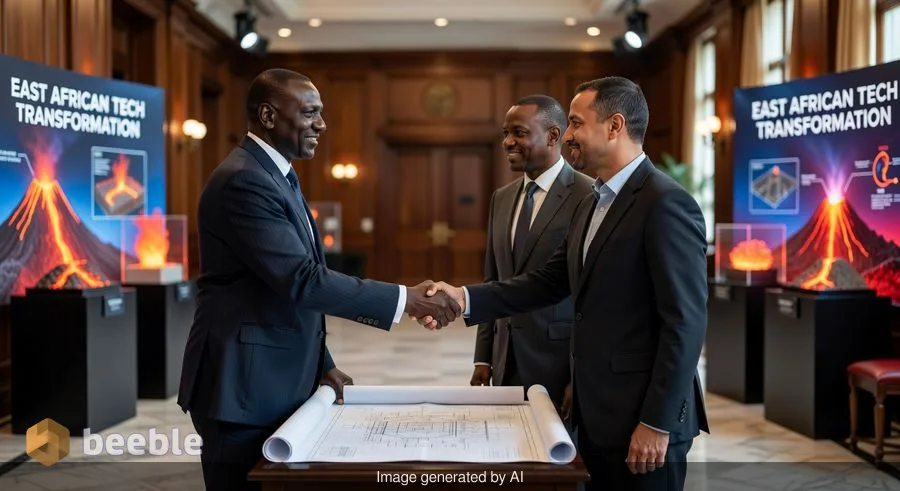
One billion dollars is a figure that usually commands silence in a boardroom, yet in the high-stakes world of global cloud infrastructure, it is merely the opening ante. When Microsoft and the UAE-based AI firm G42 announced a joint $1 billion investment in a Kenyan data center back in May 2024, it was hailed as a transformative moment for East African technology. The project, blessed by high-level diplomacy during President William Ruto’s state visit to Washington, promised to turn the Kenyan soil into a digital powerhouse fueled by the earth’s own volcanic heat.
Fast forward to May 2026, and the ground remains largely unbroken. The roadblock isn’t a lack of engineering talent or a shortage of geothermal steam; it is a fundamental disagreement over who carries the financial risk when the lights stay on but the servers stay quiet. Looking at the big picture, this standoff reveals a shifting tension between multinational tech giants and sovereign nations that are increasingly wary of signing blank checks for digital progress.
The Take-or-Pay Dilemma: A Subscription No Government Wants
Behind the jargon of project finance lies a concept that essentially functions like a mandatory gym membership for an entire nation. Microsoft and G42 reportedly asked the Kenyan government to commit to a guaranteed payment for a specific amount of data center capacity every year. In the industry, this is often called a "take-or-pay" agreement.
To put it another way, imagine a city building a massive new reservoir. To fund the construction, the builders demand that the city pays for 10 million gallons of water every month, regardless of whether the citizens actually turn on their taps. If the city only uses 5 million gallons, they still pay for 10. For a company like Microsoft, this guarantee provides the robust financial security needed to justify a billion-dollar expenditure. It ensures that even if local businesses are slow to adopt cloud services, the investment remains profitable.
From the Kenyan government’s perspective, however, this request is systemic risk disguised as infrastructure. Committing to fixed payments in a volatile global economy is a heavy burden, especially for a nation balancing debt obligations with the need for basic services. When the talks slowed, it wasn't because of a lack of vision, but because the price of a "guaranteed" future felt too high for the present reality.
Geothermal Steam: The Digital Crude Oil of the Rift Valley
Kenya possesses a unique industrial advantage that makes it an irresistible target for tech giants: the Great Rift Valley. This geological wonder provides a foundational source of geothermal energy, a form of power that is both renewable and, unlike wind or solar, remarkably consistent. For a data center, which acts as the digital refinery of the modern world, consistent power is the lifeblood of operations.
Microsoft’s plan was to run the entire facility on this volcanic steam. This wasn't just an environmental PR move; it was a practical strategy to decouple the data center from the volatile prices of imported fossil fuels. Historically, data centers have been criticized for their massive carbon footprints, but the Kenyan project offered a path toward a transparent, green-energy model that could be scalable across the continent.
Curiously, even with the earth providing the energy, the human-made financial structures are what proved fragile. While the steam is free and endless, the turbines, fiber cables, and server racks are not. The deadlock suggests that even the most resilient natural resources cannot overcome an opaque or lopsided financial agreement.
Why the Average User Should Care About Latency
For the everyday user in Nairobi or Mombasa, a data center might seem like an invisible backbone of modern life that has little to do with their daily commute. However, the location of these servers directly impacts the digital experiences we take for granted.
When you open a banking app, stream a video, or use an AI tool, your request travels to a data center. If that data center is in Dublin or Marseille, the signal must travel thousands of miles through undersea cables, creating a delay known as latency. In everyday life, this manifests as a spinning loading icon or a stuttering video call.
| Feature | Local Data Center | Remote Data Center (Overseas) |
|---|---|---|
| Latency (Speed) | Ultra-fast (milliseconds) | Noticeable lag |
| Data Sovereignty | Local laws apply | Subject to foreign jurisdictions |
| Business Growth | High (enables local startups) | Limited to consumers only |
| Reliability | High (less dependent on sea cables) | Vulnerable to cable cuts |
If Microsoft scales back this project, the dream of an "Azure East Africa" region becomes a fragmented reality. For the average consumer, this means that the cutting-edge AI tools and cloud services we use will continue to feel like they are being "borrowed" from another continent, rather than being built and hosted at home.
The So-What Filter: A Shifting Power Dynamic
Zooming out, this situation is a textbook example of the emerging power struggle between Big Tech and the Global South. For decades, tech companies entered markets on their own terms, often with governments offering massive tax breaks and guarantees to lure them in. But the world is becoming more decentralized and cautious.
Kenya’s refusal to meet Microsoft’s exact demands is a disruptive signal. It suggests that while developing nations are hungry for the interconnected benefits of the digital age, they are no longer willing to sign onto lopsided deals that socialize the risk while privatizing the profit. The bottom line is that Microsoft needs Africa’s growing market as much as Africa needs Microsoft’s infrastructure.
Ultimately, this delay is a symptom of a maturing market. It is a sign that the "move fast and break things" era of tech expansion is being replaced by a more pragmatic, albeit slower, era of negotiation. The data center may still be built, but it will likely be a more streamlined, phased version that aligns more closely with the actual demand of the region rather than the optimistic projections of a corporate spreadsheet.
Practical Foresight for the Digital Citizen
As we observe these invisible industrial mechanics from the outside, it is worth shifting our perspective on how we view "the cloud." We often imagine it as a weightless, ethereal entity, but as the Kenyan situation shows, it is a physical, heavy industry rooted in local politics, energy grids, and hard-nosed debt negotiations.
For those of us using these tools, the lesson is clear: our digital habits are tethered to the physical world. The next time your favorite app feels a little sluggish, remember that it might not be your Wi-Fi—it might be a billion-dollar disagreement over a geothermal steam vent thousands of miles away. Instead of waiting for a single corporate giant to save the day, we should look toward the rise of local infrastructure providers who are increasingly filling the gaps left by these stalled mega-projects. The future of the internet isn't just global; it's increasingly, and stubbornly, local.
Sources:
- Bloomberg News: Report on Microsoft-G42 Kenya Data Center Delays (May 2024/Updated 2026)
- Kenyan Ministry of Information, Communications and the Digital Economy: Official Statements by PS John Tanui
- Microsoft Investor Relations: Cloud Region Expansion Strategy Documentation
- International Monetary Fund (IMF): Kenya Economic Outlook and Debt Sustainability Analysis



See you on the other side.
Our end-to-end encrypted email and cloud storage solution provides the most powerful means of secure data exchange, ensuring the safety and privacy of your data.
/ Create a free account
