


Why Coding the Human Cell Is Not as Simple as Building a New App

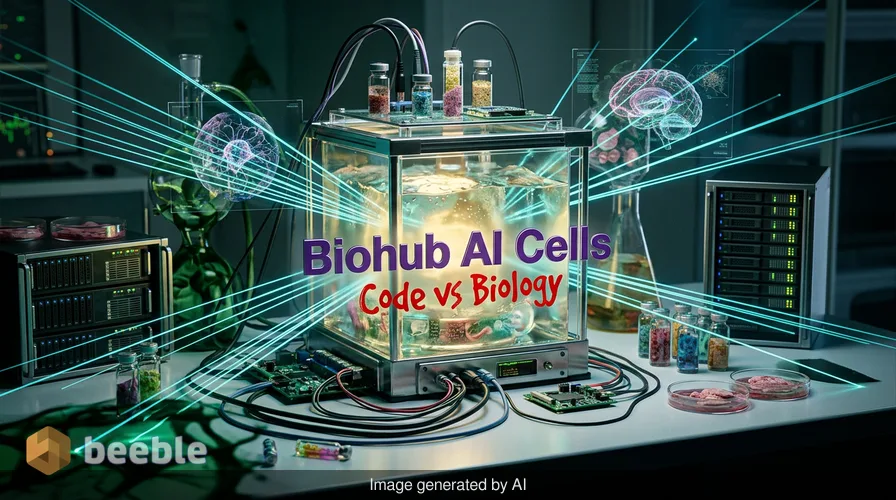
For years, the tech elite has approached the human body with the same mindset they apply to a malfunctioning social network or a buggy operating system. The narrative is enticingly simple: if we can map the code, we can fix the bugs. In this world, cancer is just a logic error, and aging is a memory leak. While this perspective has fueled billions in investment, the reality of biology is far messier than any Silicon Valley server farm.
Mark Zuckerberg and Priscilla Chan’s Biohub is the latest and perhaps most ambitious attempt to apply this computational logic to the living world. By committing $500 million to build AI models of human cells, they aren't just looking for a new drug; they are attempting to build a digital simulation of life itself. But behind the jargon of “predictive modeling” and “large-scale computing infrastructure,” we have to ask: can software really master the shifting, volatile nature of human biology?
The Digital Twin: Building a Virtual Human
To understand what Biohub is trying to do, we need to look under the hood of how modern AI works. We are all familiar with Large Language Models (LLMs) like ChatGPT, which are trained on trillions of words to predict the next sentence. Biohub’s initiative essentially treats the cell like a language. Instead of words, the “vocabulary” consists of gene sequences, protein structures, and chemical signals.
By feeding vast amounts of biological data into massive NVIDIA-powered supercomputers, researchers hope to create a “virtual cell.” In simple terms, this would be a digital simulator where a scientist could say, “What happens if we introduce this chemical to a lung cell?” Instead of spending three years in a laboratory with petri dishes, the AI would run millions of simulations in seconds. This is the decentralized future of medicine—moving the heavy lifting of discovery from the physical lab to the digital cloud.
However, there is a fundamental hurdle. While the internet provided a ready-made dataset for AI to learn English, biological data is famously opaque. We currently lack the high-fidelity sensors needed to watch a cell live its life in real-time at a molecular level. As Alex Rives, Biohub’s head of science, pointed out, we need orders of magnitude more data than currently exists. We aren't just building the AI; we are having to invent the microscopes and sensors to feed it.
The Industrial Race for Biological Supremacy
Biohub isn't the only player in this space. We are witnessing a systemic shift where big tech is effectively absorbing the pharmaceutical industry. Looking at the big picture, the race to model the cell has become the new Space Race, with major players staking out different territories:
| Player | Core Strategy | Key Advantage |
|---|---|---|
| CZ Biohub | Open-source data and foundational cell models | Massive single-cell datasets and non-profit collaboration |
| Isomorphic Labs (Google) | AI-driven drug discovery using AlphaFold | Deepest expertise in protein folding and structure |
| Microsoft Health AI | Large-scale medical imaging and clinical records | Integration with existing hospital systems and genomics |
| NVIDIA (BioNeMo) | The "Digital Crude Oil" provider | Providing the specialized chips and platform for others to build on |
For the average user, this competition is a double-edged sword. On one hand, it accelerates the pace of discovery. On the other, it creates a volatile landscape where the future of our health data is increasingly managed by the same companies that manage our emails and social feeds.
Why Biology Isn't Binary
Historically, the tech industry has struggled with the concept of "biological entropy." In a computer, 1 + 1 always equals 2. In a human body, a drug that saves one person might be toxic to another because of a minute variation in their gut microbiome or a stressful week at work. Biology is not a static blueprint; it is a resilient, interconnected web that reacts to its environment.
This is where the "cure all diseases" rhetoric meets its toughest challenge. Practically speaking, even a perfect model of a cell doesn't account for the chaotic nature of the whole human organism. Using AI as a tireless intern to sort through billions of protein combinations is disruptive and foundational for science, but it isn't a magic wand.
To put it another way, having a perfect map of every brick in a building doesn't necessarily tell you how the city’s traffic flows. Biohub is focusing on the "bricks"—the cells. Understanding how those trillions of bricks interact to create the "traffic" of human health is a much larger, more systemic problem that data alone may not solve.
The "So What?" Filter: What This Means for You
While Zuckerberg’s goal of curing all disease by the end of the century sounds like sci-fi, the tangible impacts are already starting to trickle down to the consumer level. Here is how this shift from the lab to the laptop will likely change your life in the coming decade:
- The End of the "Guess and Check" Prescription: Currently, many treatments for conditions like depression or hypertension involve a trial-and-error period. AI cell models will allow doctors to simulate how your specific cells will react to a drug before you ever take a pill.
- Compressed Timelines for Rare Diseases: Historically, pharmaceutical companies ignored rare diseases because the R&D was too expensive. When simulations replace 80% of physical lab work, the cost of developing specialized drugs drops, making “orphan” diseases economically viable to treat.
- Privacy vs. Progress: To make these models robust, Biohub and its peers need your data—your genome, your blood markers, your lifestyle habits. The bottom line is that the next generation of medicine requires a level of biological transparency that many might find invasive.
Beyond the Hype
Ultimately, we should view Biohub’s $500 million investment not as a guarantee of a disease-free future, but as the construction of a more sophisticated set of tools. We are moving away from an era where medicine was a series of educated guesses toward an era where it is a high-resolution simulation.
From a consumer standpoint, the most important thing to watch isn't the headline-grabbing "cure all disease" quotes, but the way this technology is integrated into the healthcare supply chain. If these AI models work, they should theoretically lower the cost of drugs by reducing the 90% failure rate in clinical trials. If prices don't drop, we’ll know the efficiency gains are being captured by the corporations rather than the patients.
As we look ahead to 2026 and beyond, the intersection of AI and biology remains the most exciting—and most complex—frontier in tech. It reminds us that while we can build machines that think, the machines we inhabit—our bodies—are still the most intricate technology on the planet. The goal isn't just to patch the code; it’s to finally understand the language in which it was written.
Sources:
- Chan Zuckerberg Initiative: Official Research Announcements 2024-2025
- NVIDIA Life Sciences: BioNeMo Platform Specifications
- Nature Biotechnology: The Rise of Predictive Cell Modeling
- Alphabet/Isomorphic Labs: Annual Progress Report on AlphaFold 3



See you on the other side.
Our end-to-end encrypted email and cloud storage solution provides the most powerful means of secure data exchange, ensuring the safety and privacy of your data.
/ Create a free account
