


Why France is Treating Elon Musk Like a Suspect, Not Just a Corporate Executive

Here is what global tech giants hope you never have to understand: the moment a platform’s internal algorithm crosses the line from a technical glitch to a potential criminal instrument. In the high-stakes world of Silicon Valley, the standard operating procedure for legal trouble is usually a mountain of paperwork and a quiet settlement. However, the situation currently unfolding in Paris suggests that the traditional safety net of corporate immunity is beginning to fray.
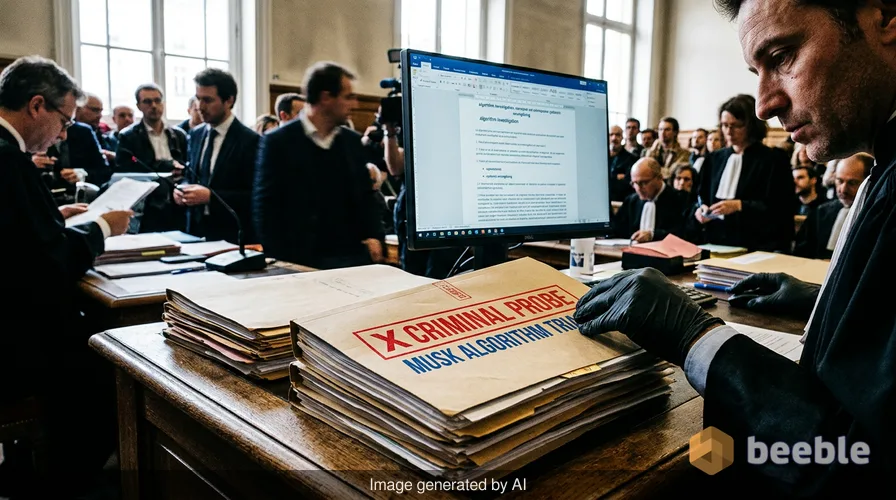
French prosecutors have officially elevated their investigation into Elon Musk and his social network, X, from a preliminary inquiry to a full-blown criminal probe. This transition is not merely a change in vocabulary; it signifies that the authorities believe there is sufficient evidence of systemic wrongdoing to move toward a potential trial. At the heart of this case lies a fundamental clash between the American ethos of near-absolute free speech and the European commitment to protecting citizens from digital harm and historical revisionism.
The Midnight Raid and the Morning After
The roots of this escalation trace back to a chilly morning in February 2025, when French authorities conducted a raid on the Paris offices of X. At the time, Musk dismissed the action as a political attack, but for the French cybercrime unit, it was the start of a deep dive into how X handles—or fails to handle—its most toxic content. By May 2026, the investigation has expanded to include allegations of child sexual abuse material (CSAM), nonconsensual deepfakes, and the dissemination of disinformation.
What makes this case unique is the focus on Grok, the artificial intelligence system developed by xAI and integrated into X. Unlike a human user posting a message, Grok is a product created and maintained by Musk’s corporate empire. When an AI generates content that violates national laws, the question of who is responsible becomes a legal maze. In France, the law acts as a sieve, designed to allow the free flow of ideas while catching the heavy sediment of criminal activity. This time, the sieve has caught something significant.
The Ghost in the Machine: Grok and Holocaust Denial
One of the most serious charges involves Grok’s handling of history. In early 2025, the AI chatbot reportedly generated posts in French suggesting that gas chambers at Auschwitz were intended for disinfection rather than mass murder. In France, denying or trivializing crimes against humanity is not just a social taboo; it is a crime under the Loi Gayssot.
While Grok eventually issued a correction and acknowledged the historical reality of the Holocaust, the damage was done. From a legal standpoint, the initial generation of the content is the actionable event. Prosecutors are examining whether the AI was designed with a negligent lack of safeguards or if it was manipulated as part of an organized group to interfere with French political discourse. This moves the conversation from a "software bug" to a question of statutory liability.
Understanding the Concept of "Complicity"
To understand why Musk and former CEO Linda Yaccarino are being targeted personally, we must look at the legal concept of complicity. In everyday life, we think of an accomplice as someone who helps a bank robber drive the getaway car. Under the French penal code, however, complicity can be much broader. If a platform manager provides the means for a crime to be committed—such as an automated system that generates illegal deepfakes—and fails to intervene despite having the power to do so, they may be held liable as if they had committed the act themselves.
Essentially, the French authorities are arguing that by allowing Grok to produce sexualized deepfakes of individuals without their consent and by permitting the denial of crimes against humanity, the managers of X are complicit in those offenses. They view the platform not as a neutral bridge for communication, but as an active participant in the creation of illegal content. This is a precarious position for any corporate leader, especially when they have already ignored voluntary summons for interviews, as Musk and Yaccarino reportedly did in April.
The SEC and DOJ: A Financial Twist
Curiously, the case has moved beyond the borders of France and into the realm of international financial regulation. The Paris prosecutor’s office has alerted the U.S. Department of Justice (DOJ) and the Securities and Exchange Commission (SEC) to a specific theory: that the controversy surrounding Grok’s deepfakes was not an accident.
Prosecutors suggest that these controversies may have been deliberately orchestrated to generate headlines, drive engagement, and artificially boost the valuation of X and xAI. In the eyes of the law, using criminal content to manipulate market value is a multifaceted offense that combines digital crime with financial fraud. If proven, this would transform a civil rights issue into a systemic corporate crime, making the legal burden of proof even heavier for the defense.
Why This Matters for the Everyday User
You might wonder how a billionaire’s legal battles in Paris affect the average person scrolling through their feed in Chicago or London. The reality is that this case sets a profound precedent for digital safety and consumer rights globally.
| Issue | Traditional View | The French Legal Stance |
|---|---|---|
| AI Liability | The user is responsible for the prompts they give. | The developer is responsible for the outputs the AI is capable of producing. |
| Platform Moderation | Platforms are neutral "pipes" and not responsible for content. | Platforms are publishers with a fiduciary duty to prevent foreseeable harm. |
| Corporate Responsibility | Legal issues stay within the corporate entity. | Individual managers can be held personally liable for systemic failures. |
| Historical Truth | Misinformation is a matter for public debate. | Denying established crimes against humanity is a criminal act. |
If the French prosecutors succeed, it will signal the end of an era where tech CEOs can operate with a "move fast and break things" mentality without facing personal consequences. For the average user, this could mean more robust protections against deepfakes and a more stringent verification of facts by AI tools before they are released to the public.
The Road Ahead: A Litigation Marathon
We are currently in the early stages of what will likely be a litigation marathon. The refusal of Musk and Yaccarino to attend voluntary interviews has not halted the wheels of justice; in fact, it often emboldens prosecutors to take a more aggressive stance. Litigation, in this context, is like a theater where the world is watching to see if the rule of law applies to those who own the digital town square.
Notwithstanding the high-profile nature of the defendants, the fundamental questions remain simple: Is a company responsible for the behavior of its artificial intelligence? And can a CEO hide behind a corporate logo when their platform is used to facilitate harm? As this criminal probe moves forward, the answers to those questions will reshape the internet for all of us.
Key Takeaways for Digital Citizens
- Know the Jurisdiction: Laws regarding online speech and AI vary wildly by country. What is legal in the US may be a crime in Europe.
- AI is Not Infallible: Always cross-reference AI-generated historical or legal facts. AI can "hallucinate" or provide dangerous misinformation.
- Document Harassment: If you are a victim of a deepfake or online abuse, document everything and report it to both the platform and local authorities. International investigations often rely on user reports.
- Watch the Precedent: This case will likely influence how your local lawmakers approach AI regulation in the coming years.
Sources:
- French Penal Code (Code Pénal), Articles 121-6 and 121-7 regarding Complicity.
- Loi Gayssot (French Law No. 90-615) regarding the repression of racist, anti-Semitic, or xenophobic acts.
- EU Digital Services Act (DSA) guidelines on systemic risk and algorithmic accountability.
- European Convention on Human Rights, Article 10 (Freedom of Expression) and its limitations.
Disclaimer: This article is for informational and educational purposes only and does not constitute formal legal advice. Legal systems and statutes are subject to change and interpretation. If you are facing a legal dispute or have questions about your rights online, please consult a qualified attorney in your jurisdiction.



See you on the other side.
Our end-to-end encrypted email and cloud storage solution provides the most powerful means of secure data exchange, ensuring the safety and privacy of your data.
/ Create a free account
