


Why is Norway pulling the plug on classroom AI and tablets?

In 2010, the launch of the iPad felt like the arrival of a digital savior for the Norwegian education system. Schools across the country rushed to swap heavy backpacks for thin aluminum slabs, believing that instant access to the internet would naturally lead to smarter students. This was the peak of a digitization wave that started in the 1990s when computers first became classroom fixtures. Today, the pendulum is swinging back with systemic force. Norway has decided that the digital classroom has reached a breaking point, and the government is now reclaiming the physical desk from the virtual world.
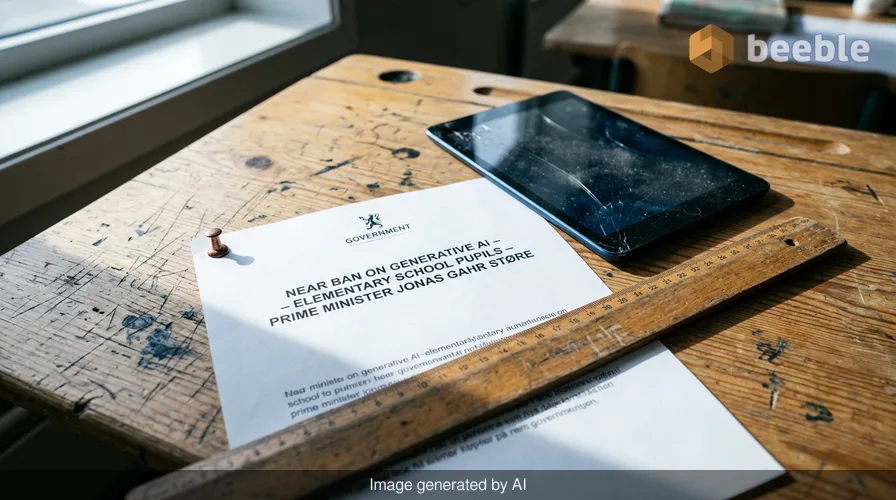
Prime Minister Jonas Gahr Stoere recently made a move that sounds like a localized glitch in the global tech narrative. Norway is imposing a near ban on generative AI for elementary school pupils. This decision is the latest step in a broader strategy to scrub the classroom of distractions and return to foundational learning. It follows a 2024 ban on smartphones and a renewed focus on teacher-led discipline. For a country that was once the poster child for the digital revolution, this is a resilient shift toward the analog past.
Putting the tireless intern in the corner
Generative AI functions like a tireless intern. It can summarize long texts, solve equations, and draft essays in seconds. While this speed is a boon for a corporate office, it is a liability for a developing brain. Prime Minister Stoere noted that using AI increases the risk that young children skip important steps in their education. When a seven-year-old uses a chatbot to solve a math problem, the child misses the neural struggle required to understand the logic behind the numbers. The government wants to ensure that children first master the basics of reading, writing, and arithmetic before they touch a prompt box.
Under the new standards, pupils from first through seventh grade—children aged 6 to 13—are generally prohibited from using AI in school. The policy shifts as students get older. Those in lower secondary school, aged 14 to 16, can use these tools cautiously but only under the direct supervision of a teacher. This isn't a total rejection of the technology. It is a controlled introduction. By the time students reach upper secondary education at ages 17 to 19, the government expects them to learn how to use AI appropriately. At that stage, AI is a tool for productivity rather than a substitute for basic cognition.
This tiered approach recognizes that AI is here to stay in the workforce. However, it treats the technology as a finish line rather than a starting block. The Norwegian government is betting that a teenager who knows how to think without AI will be more effective at using AI than one who has relied on it since kindergarten.
The return of the tangible page
The move away from AI is accompanied by a massive reinvestment in physical books. For over a decade, tablets and laptops were the primary medium for Norwegian students. The result was a steady decline in reading comprehension and standardized test scores. To reverse this trend, the government is proposing legislation to fund the purchase of more printed books, effectively turning back the clock on the tablet era. This is a recognition that the digital medium often encourages scanning and scrolling rather than deep reading.
Handwriting is also making a comeback. Research has shown that the physical act of writing letters with a pen engages parts of the brain that typing on a keyboard simply ignores. By moving back to books and paper, Norway is attempting to restore the friction that is necessary for long-term memory. In a digital environment, everything is streamlined and frictionless. While that is great for ordering groceries, it is detrimental to learning. Learning is supposed to be hard work, and the Norwegian government believes that computers have made it too easy to avoid the struggle.
Locking the digital gate for social media
Norway is not just worried about what happens inside the classroom. The government also announced plans to ban children from using social media until they turn 16. This policy follows a trend seen in Australia and other nations where the negative mental health impacts of algorithmic feeds have become impossible to ignore. For the average user, social media is a harmless distraction, but for a developing brain, it is a volatile source of dopamine that competes with the focus required for school.
| Age Group | AI Access Policy | Primary Learning Tool |
|---|---|---|
| Ages 6-13 | Near total ban | Physical books and handwriting |
| Ages 14-16 | Restricted use under teacher supervision | Mixed media with focus on analog |
| Ages 17-19 | Professional training and appropriate use | Integrated digital and analog |
This social media ban is the external wall of the new education policy. By restricting access to TikTok, Instagram, and other decentralized platforms, the state is trying to lower the background noise in children's lives. The goal is to create a generation that can sit with a book for an hour without feeling the urge to check a notification. It is an ambitious attempt to reclaim human attention from the trillion-dollar attention economy.
The industrial side of education tech
Looking at the big picture, this shift is a warning shot to the EdTech industry. For decades, companies like Apple, Google, and Microsoft have viewed public school systems as a foundational market. Once a student is locked into an ecosystem in elementary school, they are likely to remain a customer for life. Norway's move to prioritize books over screens is a disruptive event for these tech giants. If other wealthy nations follow this lead, the market for classroom tablets and educational software subscriptions could shrink significantly.
Big Tech often markets its products as essential tools for the modern age, but the Norwegian government is applying a skeptical lens to these claims. From a consumer standpoint, we are seeing the first major cracks in the narrative that more technology is always better for children. Parents who once felt pressured to buy the latest iPad for their third-grader may now see a stack of paperbacks as the more premium educational investment. This reflects a shifting sentiment where digital luxury is being replaced by the luxury of being offline.
The so what filter for parents
What this means for you is a necessary shift in perspective regarding your digital habits and those of your family. If a nation as tech-literate and wealthy as Norway is sounding the alarm on classroom AI and tablets, it is worth observing how these tools are being used in your own home. The bottom line is that technology is a powerful supplement but a poor foundation. The Norwegian model suggests that the best way to prepare for a high-tech future is to master low-tech skills first.
Ultimately, this is about the difference between being a user and being a thinker. A user knows which buttons to press to get an answer. A thinker knows why that answer is correct. By stripping away the digital layers, Norway is trying to ensure its citizens remain thinkers. As we move further into the age of AI, the most valuable skill will not be the ability to generate a prompt. It will be the ability to judge the quality of the result using a brain that was trained on the tangible, difficult, and beautiful friction of the real world.
Sources:
- Norwegian Ministry of Education and Research Press Release
- Office of the Prime Minister of Norway, June 2026 Statement
- PISA (Program for International Student Assessment) 2024-2025 Data Reports
- Norwegian Directorate for Education and Training Annual Report



See you on the other side.
Our end-to-end encrypted email and cloud storage solution provides the most powerful means of secure data exchange, ensuring the safety and privacy of your data.
/ Create a free account
