


Why Spain Just Slammed the Door on Global Prediction Markets

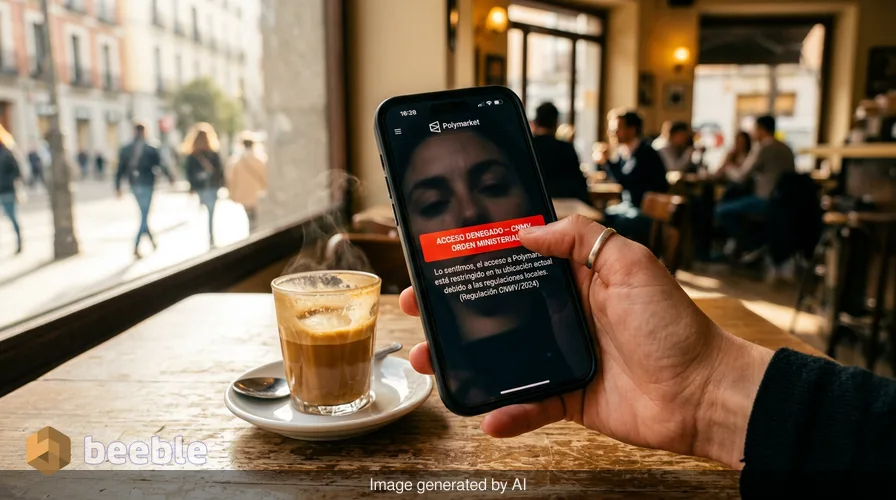
In the fast-moving world of digital finance, we often treat new platforms like high-tech toys, marveling at their ability to forecast elections or predict the next big tech breakthrough. In the eyes of the law, however, these platforms are often viewed through a much older, more stringent lens. On Tuesday, the Spanish official state gazette revealed a significant shift in this landscape: the Consumer Rights Ministry has temporarily blocked Polymarket and Kalshi, two of the world’s largest prediction markets, from operating within the country.
To many users, these platforms feel like a sophisticated blend of a newsroom and a stock exchange. To the Spanish government, they look like unlicensed casinos operating without a seatbelt. This move isn't just about red tape; it’s a fundamental assertion of consumer protection in an era where the line between investing and wagering has become increasingly thin.
The Legal Reality of the "Wisdom of the Crowd"
Prediction markets operate on a fascinating premise: the collective knowledge of many people is more accurate than the opinion of one expert. Users buy and sell shares on the outcome of future events—everything from the winner of the next Oscar for Best Picture to the likelihood of a central bank raising interest rates. If you are right, your shares pay out; if you are wrong, they become worthless.
While this might feel like a new form of data science, Spanish authorities have categorized it under a much older legal definition: gambling. Under this jurisdiction, when you place money on an uncertain future outcome for the chance of a financial gain, you are participating in a game of chance. Consequently, any platform offering these services must hold a specific statutory license issued by the Directorate General for the Regulation of Gambling (DGOJ).
Polymarket and Kalshi, both based in the United States, have grown into multi-billion-dollar entities by capturing the public's imagination, particularly during the 2024 U.S. election cycle. However, their global expansion has hit a significant roadblock in Madrid. By operating without mandatory administrative authorization, these companies are now liable for breaching local rules designed to keep the digital betting environment safe and transparent.
The Missing Safety Net: Why Licenses Matter
It is easy to view government licensing as a bureaucratic hurdle, but for the average consumer, a license acts as a vital safety net. When a platform operates outside the regulatory perimeter, it lacks the technical and regulatory safeguards that we have come to expect from modern financial institutions. The Ministry’s probe specifically highlights several areas where these platforms are allegedly falling short.
First, there is the issue of identity verification. In a licensed environment, platforms must perform robust checks to ensure that the person behind the screen is who they say they are. This isn't just to stop fraud; it’s to prevent money laundering and to ensure that the person is of legal age. Without these systems, the door is left wide open for minors to participate in high-stakes wagering, a scenario that Spanish law is designed to prevent at all costs.
Second, Spain maintains a national registry of people who have voluntarily chosen to be banned from gambling—often individuals struggling with addiction who are seeking to protect themselves. Licensed operators are legally bound to check this list and deny access to anyone on it. By operating without a license, unauthorized platforms essentially bypass this protection, leaving vulnerable individuals without their most important shield.
A Precarious Position for Users
If you are a user in Spain who currently has funds sitting in a Polymarket or Kalshi account, this ban puts you in a nuanced and somewhat precarious position. The three-to-four-month suspension is intended to allow the gambling watchdog to complete its investigation, but in the meantime, access to these sites is being restricted.
When a company operates outside the law, your legal recourse is significantly limited. If a licensed Spanish betting site refuses to pay out your winnings, you can file a formal complaint with the DGOJ. If an unlicensed offshore platform does the same, you are often left with no clear path to recovery. Essentially, you are playing a game where the rules are written by the house, and the house is outside the reach of your local police and courts.
| Feature | Licensed Operator (Spain) | Unlicensed Prediction Market |
|---|---|---|
| Legal Recourse | Protected by Spanish Consumer Law | Very difficult; requires foreign litigation |
| Identity Verification | Mandatory and stringent | Often minimal or self-reported |
| Minor Protection | Strict access controls | Precarious or non-existent |
| Self-Exclusion | Integrated with national databases | Usually ignored or unavailable |
| Tax Reporting | Automatic or simplified | User's sole responsibility |
The "Behind the Curtain" Reality of Tech Regulation
This ban reveals a hidden mechanism in how modern states deal with "borderless" internet companies. For years, many tech platforms have operated under the philosophy of "move fast and break things," assuming that if they grow large enough, regulators will simply adapt to them. Spain’s action suggests the opposite: the law is a paved road, and if you want to drive your business on it, you must follow the established traffic signals.
Prediction markets argue that they are providing a public service by offering accurate data on public opinion. They see themselves as a bridge between information and financial markets. However, the Spanish Ministry is reminding them that a bridge must still be built to code. Whether the outcome is a political election or a football match, the underlying mechanism—betting money on a future uncertainty—triggers the same legal obligations.
What Happens Next?
As the probe continues over the next few months, we will likely see a period of negotiation. The companies may choose to apply for the necessary licenses, which would involve a comprehensive audit of their technical systems and a significant overhaul of their user onboarding processes. Alternatively, they may choose to exit the Spanish market entirely, joining a list of other tech services that found the cost of local compliance too high.
Ultimately, this situation serves as a reminder that in the digital age, the burden of proof for safety and legality rests on the platform, not the consumer. As users, we must remain skeptical of any financial service that claims to be "revolutionary" while bypassing the basic protections that have governed fair play for decades.
Protecting Your Rights: A Practical Checklist
If you participate in online trading, betting, or prediction markets, here is how you can ensure you are staying on the right side of the law and protecting your wallet:
- Look for the Seal: In Spain, authorized gambling sites are required to display the "Juego Seguro" (Safe Play) logo on their homepage. If you don't see it, the platform is likely operating without oversight.
- Check the DGOJ Registry: You can search the official website of the Spanish Directorate General for the Regulation of Gambling to see if a company holds a valid license.
- Beware of VPN Workarounds: While it might be tempting to use a VPN to bypass the ban, doing so can violate the platform's own terms of service and give them a legal reason to freeze your funds without recourse.
- Withdraw Excess Funds: If you have access to funds on a platform currently under investigation, consider moving them to a regulated bank account while the legal situation is being resolved.
- Report Unfair Practices: If you feel your consumer rights have been violated by an unlicensed platform, contact the Spanish Consumer Rights Ministry or a local consumer protection agency like OCU or FACUA.
Sources:
- Spanish Law 13/2011 on the Regulation of Gambling (Ley de Regulación del Juego).
- Official State Gazette (Boletín Oficial del Estado - BOE) announcements regarding the Ministry of Consumer Rights probe, May 2026.
- Directives from the Directorate General for the Regulation of Gambling (DGOJ) on unauthorized operators.
- European Union Consumer Rights Directive.
Disclaimer: This article is for informational and educational purposes only and does not constitute formal legal advice. Laws regarding gambling and financial markets are complex and vary significantly by region. If you are facing a specific legal issue or financial dispute, please consult with a qualified attorney licensed in your jurisdiction.



See you on the other side.
Our end-to-end encrypted email and cloud storage solution provides the most powerful means of secure data exchange, ensuring the safety and privacy of your data.
/ Create a free account
