


Why the chips in your favorite AI apps are suddenly a custom-made luxury

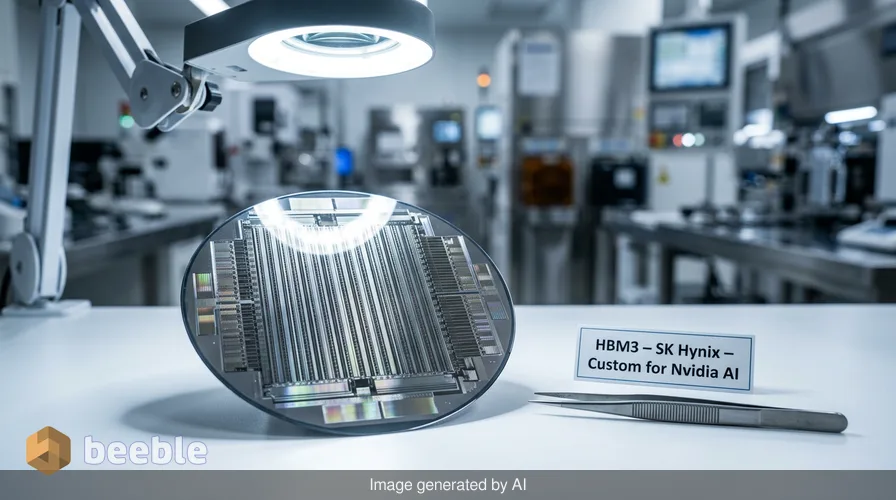
Every time you ask an AI to summarize a long document or generate an image, a specific material chain springs into action. The journey begins with high-purity silicon and ends in massive server farms, but the most important stop is currently in South Korea. Nvidia CEO Jensen Huang recently spent several days in Seoul, not just for the local barbecue and soju, but to secure the physical components that keep the AI boom from stalling. This trip resulted in a series of agreements with industrial giants like SK Group, LG, and Doosan. These deals indicate that the technology inside your favorite apps is moving away from generic parts toward highly specialized, custom-made hardware.
The shift from digital crude oil to bespoke components
For decades, memory chips were the commodity of the tech world. They were like digital crude oil—standardized, interchangeable, and bought in bulk. If a computer needed more memory, any brand of chip usually did the job. The AI era changed this math. Modern AI models require a specific type of hardware called High Bandwidth Memory, or HBM. These chips are stacked like a skyscraper to move data at speeds that traditional memory cannot match.
Looking at the big picture, Nvidia is the primary buyer of this specialized oil. During his visit, Huang confirmed that SK Hynix will remain Nvidia's largest memory partner through a new multi-year agreement. This is a practical necessity. As Nvidia expands its reach into robotics and supercomputers, its demand for HBM is outstripping what the current market can provide. By signing a multi-year deal, Nvidia ensures it has a reserved seat at the table, while SK Hynix gets the guaranteed revenue needed to build expensive new factories. This partnership marks the moment memory stopped being a generic part and became a tailored component designed specifically for Nvidia's AI processors.
Why cooling is the next industrial bottleneck
AI chips are notoriously hot. A single data center filled with Nvidia’s latest Blackwell chips consumes as much electricity as a small city and generates an immense amount of heat. If the chips get too hot, they slow down or fail. This is where LG Group and Doosan enter the story. While LG is famous for televisions and washing machines, Nvidia is interested in their industrial cooling and power delivery systems.
In everyday life, we think of cooling as a simple fan inside a laptop. For a giga-watt scale AI data center, cooling is a complex engineering feat. Nvidia and LG are now working together on the architecture of future data centers, focusing on liquid cooling and advanced power delivery. Practically speaking, the software you use in the cloud depends on these heavy industrial systems to stay online. Doosan is also contributing to this physical backbone by providing materials for the circuit boards in Nvidia’s most powerful chips. This move shows that the AI race is no longer just about clever code. It is about the physical infrastructure—the wires, fans, and power blocks—that prevents the digital world from overheating.
The stock market as a global mood ring
On the market side, the reality of these deals contrasts sharply with recent stock performance. While Nvidia was busy signing long-term contracts in Seoul, the South Korean stock market experienced a volatile day. The Kospi index, which tracks major Korean companies, fell nearly 9% on Monday. This drop happened because of broader economic data from the United States, which made investors nervous about interest rates.
Shares in Samsung and SK Hynix both saw significant price drops during early trading. However, Huang dismissed these fluctuations. He noted that the drop allows investors to buy stock at a lower price while the long-term outlook for AI remains bright. To put it another way, the stock market often acts as a global mood ring, reflecting short-term fears that have little to do with the actual factories and contracts being built. The factory floors in Korea are busier than ever, regardless of what the ticker tape says on a Monday morning.
From cloud servers to humanoid robots
Nvidia is also looking beyond the data centers that power chatbots. The deals with LG and SK Telecom include plans for physical AI and humanoid robots. This means the AI that currently lives in your phone or browser is preparing to move into the physical world. LG’s expertise in mechanical systems and electronics makes them a logical partner for building the bodies that will house Nvidia’s AI brains.
SK Telecom is also planning to build a massive AI cloud in South Korea by 2027. For the average user, this means AI services will likely become faster and more localized. Instead of your request traveling to a server halfway across the world, it will be processed in a nearby facility optimized with the latest hardware. This decentralized approach makes AI more resilient and reduces the lag that often occurs with complex digital tasks.
What this means for your budget and devices
Behind the jargon of multi-year partnerships and giga-watt scales, there is a tangible impact on consumers. The fact that Nvidia is buying billions of dollars worth of memory each year suggests that the cost of AI hardware is not going down anytime soon.
| Feature | Old Memory Model (Commodity) | New AI Memory Model (Systemic) |
|---|---|---|
| Production | Mass-produced, generic | Custom-designed for specific chips |
| Price | Fluctuates based on supply | Stable but high due to long-term deals |
| Availability | Available to all manufacturers | Prioritized for top-tier partners like Nvidia |
| Application | General computing and gaming | High-end AI, robotics, and servers |
From a consumer standpoint, this shift explains why high-end tech is getting more expensive. When the memory inside a device is a custom-made luxury rather than a cheap commodity, the final price of the laptop or smartphone rises. Conversely, this specialization leads to more robust performance. We are moving toward a world where your devices are more capable because every component, down to the cooling system and the memory stack, is built for a specific purpose.
The bottom line for the everyday user
Ultimately, Nvidia’s trip to South Korea is a reminder that the digital world is anchored in heavy industry. The sleek interface of an AI app is the result of a global supply chain involving grilled pork belly meetings and massive industrial cooling units. The cooperation between a US chip designer and Korean manufacturing giants creates a streamlined path for the next generation of technology.
As a result of these deals, expect to see AI becoming more deeply integrated into physical hardware. You should observe your own digital habits and notice how the speed and availability of these tools change over the next two years. The industry is no longer just selling a service. It is building a permanent, specialized infrastructure that will function as the invisible backbone of modern life. Rather than focusing on the daily volatility of tech stocks, look at the long-term commitments being made between the people who design the chips and the people who actually build them. These agreements are the most reliable map for where technology is headed next.
Sources
- SK Group official press release regarding Nvidia partnerships.
- LG Group announcement on AI data center cooling architecture.
- NH Investment & Securities analyst report on memory market trends.
- Kospi market data and historical tech stock performance records.



See you on the other side.
Our end-to-end encrypted email and cloud storage solution provides the most powerful means of secure data exchange, ensuring the safety and privacy of your data.
/ Create a free account
