


Why the early access label no longer guarantees software quality

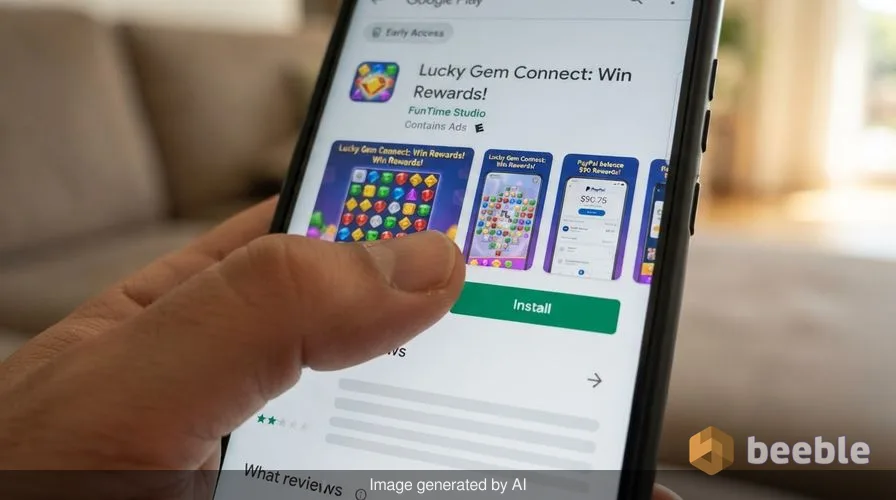
The thumb hovers over a bright green button on a smartphone screen. A social media advertisement promised a quick payout for playing a simple puzzle game. The interface looks familiar. It has the recognizable layout of the Google Play Store. There are screenshots of colorful gems and PayPal balance notifications. One element is missing. The space usually reserved for star ratings and user reviews is a blank grey box. A small label sits near the top of the page. It says Early Access. The user assumes this means they are among the first to see a new, innovative product. They tap the button. The download begins. The digital friction is gone because the traditional warning signs were never allowed to exist.
In everyday terms, we have been trained to look for social proof before we trust a piece of software. We check the star rating. We read the most recent reviews to see if a recent update broke the core functionality. This feedback loop is the primary defense mechanism of the modern app ecosystem. When a developer marks an application as Early Access, they opt out of this public scrutiny. Google intended this feature for developers who need to test their code on a wide variety of fragmented Android hardware. It was a tool for debugging and refinement. Now, this specific corner of the Play Store is a loophole for deceptive actors. Why does the absence of a star rating feel like a void in the user interface? It is because the absence of criticism is not the same as the presence of quality.
Zooming out to the industry level, the scale of this manipulation is massive. Bitdefender recently identified thousands of these apps that use the Early Access program to hide from public accountability. One specific title, a Grand Theft Auto clone called Vice Streets: Open World, reached over one million downloads before it vanished from the store. It had no reviews. It had no ratings. It existed in a state of perpetual beta that protected it from the very users it targeted. This is a profound shift in how software is distributed. Historically, the barrier to entry for the Play Store was the review process. Now, the barrier is a self-imposed shield that developers use to bypass the reputation economy.
Technically speaking, the Early Access program creates a data asymmetry between the developer and the user. The developer receives all the telemetry data. They see where users drop off and which ads generate the most clicks. The user receives nothing in return. They cannot warn others about the impossible withdrawal thresholds for the promised cash rewards. They cannot flag the game as a trademark infringement. As a result, the software functions as a one-way mirror. Behind the screen, the developers are often part of organized groups that recycle the same codebase across hundreds of different package names. This is technical debt repurposed as a weapon. They do not build a better product. They build a more efficient funnel for ad revenue.
Through this user lens, the deception begins long before the app is installed. The funnel starts on platforms like TikTok and Facebook. Scammers use artificial intelligence to create deepfake videos of celebrities. These digital puppets claim to have made thousands of dollars playing a specific slot machine or puzzle game. The videos are professional. They use the correct lighting and cadence to mimic authenticity. Consequently, the user arrives at the Google Play Store already convinced of the app's legitimacy. They see the Early Access label as a sign of exclusivity rather than a warning of instability.
Under the hood, these apps rely on a psychological engagement loop. The user receives generous virtual rewards in the first ten minutes of play. Their virtual wallet grows to ninety dollars. The withdrawal threshold is one hundred dollars. As the user nears the goal, the rewards shrink to pennies. The progression slows to a crawl. To continue playing, the user must watch a thirty-second advertisement. Then another. Then another. The promised payout is a mathematical impossibility hidden behind a wall of marketing noise. The app is not a game. It is a delivery vehicle for advertisements that leverages the user's desire for a financial shortcut.
At its core, this trend reveals a failure in the regulatory framework of the app store. Legitimate gambling applications must follow strict rules regarding geofencing, age verification, and licensing. These Early Access apps masquerade as casual utilities or puzzle games to sidestep these requirements. They are clunky, bloated, and often contain code that infringes on protected intellectual property. Curiously, the very system designed to help developers fix bugs is now the primary method for delivering bug-ridden or malicious software to the public. The infrastructure of the store is invisible until the pipe bursts, and currently, the Early Access program is a leaking pipe that floods the ecosystem with garbage.
In practice, this problem is multifaceted. It involves the evolution of the web into a series of walled gardens where the owners of the platform are often too slow to police their own territory. Google eventually removes these apps, but the developers simply upload a new APK under a different name ten minutes later. The cost of entry is low. The potential for illicit revenue is high. This creates a legacy of distrust that affects legitimate independent developers who actually need Early Access for its intended purpose. When a user is burned by a fake reward app, they are less likely to take a chance on a real indie game that is still in development. The fragmentation of trust is the most damaging outcome of this abuse.
Zooming out even further, we see the intersection of tech giants' business models and daily user routines. Google prioritizes the speed of the developer experience to keep people in their ecosystem. They want the onboarding process for new apps to be as seamless as possible. Paradoxically, this seamlessness is exactly what the scammers require. Every time a platform removes friction for developers, it risks removing safety for users. The lack of public reviews is not just a UI choice. It is a policy decision that favors the producer over the consumer.
Ultimately, digital literacy is about recognizing when a system is being used against its own logic. We must look at the Early Access label with the same skepticism we apply to an email from an unknown sender. The presence of an app on an official marketplace is no longer a certificate of safety. It is merely a sign that the developer successfully filled out a form. We should pay closer attention to the apps that ask us to bypass our intuition. If a piece of software promises something that sounds too good to be true, the code is likely designed to extract value from us rather than provide it.
On an individual level, we can reclaim control by observing our own software habits. We can choose to wait for a full release before downloading a utility or a game. We can ignore the siren song of social media ads that use celebrity faces to sell financial fantasies. The digital city we live in is vast, and like any city, it has corners where the infrastructure is poorly maintained. The Early Access program is currently one of those corners. By understanding the engineering logic behind these scams, we move from being passive consumers to informed participants in the digital world.
The mechanism of the review shield
The Google Play Store review system serves as a public ledger of software quality. When an app is in Early Access, this ledger is closed. This design choice protects developers from the reputational damage of early-stage bugs. However, threat actors use this closure to hide the fact that their apps do not work as advertised. By the time Google identifies a pattern of fraud, the developer has already collected the ad revenue from a million users.
The celebrity deepfake funnel
Marketing for these apps rarely happens within the store itself. Scammers use external platforms to drive traffic. AI-generated videos of popular creators and actors provide a false sense of security. These ads specifically target vulnerable demographics who are looking for financial relief. The transition from a trusted celebrity face to a legitimate-looking app store page is a powerful psychological tactic.
Sidestepping gambling regulations
Many of these applications are casinos in everything but name. By labeling themselves as casual games or puzzles, they avoid the scrutiny of gambling commissions. They do not verify the age of the user. They do not comply with regional laws regarding payouts. This allows them to operate in a legal grey area that traditional gambling apps cannot access.
The engagement loop and the withdrawal wall
The software architecture of a deceptive reward app is built around a specific mathematical curve. The first phase provides high rewards to hook the user. The second phase introduces heavy advertising. The third phase makes progress impossible. The user is trapped in a loop of watching ads to reach a goal that the code will never allow them to achieve.
Reclaiming digital trust
Users must understand that the Early Access tag is a signal of missing information. Without star ratings or public feedback, the traditional trust signals of the mobile ecosystem are dead. Digital literacy involves looking past the interface to the business model underneath. If the model relies on deceptive promises, the app is not worth the storage space it occupies.
Sources:
Bitdefender Threat Intelligence Report on Early Access Abuse (2024).
The Hacker News coverage of Vice Streets: Open World and mobile fraud trends.
Google Play Console Documentation on Early Access and Beta Testing protocols.
Analysis of APK package com.gamblechaos.withfriends.game and related deceptive utilities.



See you on the other side.
Our end-to-end encrypted email and cloud storage solution provides the most powerful means of secure data exchange, ensuring the safety and privacy of your data.
/ Create a free account
