


Why the EU’s Fight Against Big Tech Might Accidentally Break Your Favorite Streaming App

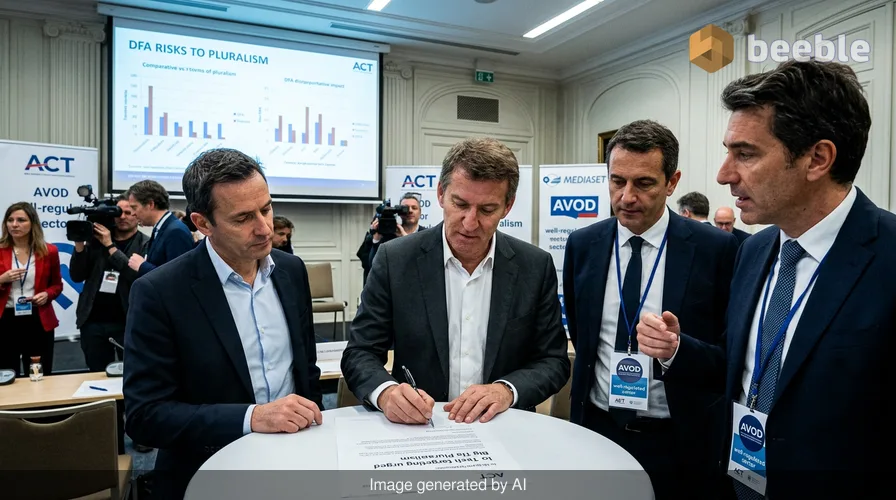
While the idea of a universal digital rulebook sounds like a win for the average user, the reality is far more complex. We often hear that a level playing field is the gold standard for fair competition, yet applying the same heavy-handed regulations to a local news broadcaster and a trillion-dollar social media giant is like demanding a neighborhood bookstore follow the same security protocols as a nuclear power plant.
Europe is currently at a crossroads with the upcoming Digital Fairness Act (DFA). On the surface, the goal is noble: protecting consumers from the shady corners of the internet. But a growing chorus of Europe’s largest media groups—from Canal+ and Sky to RTL and Paramount+—is sounding the alarm. They argue that if the EU doesn’t learn to tell the difference between a broadcaster and a Big Tech platform, the very services you rely on for news and entertainment could become collateral damage.
Behind the Jargon: What is the Digital Fairness Act?
To understand the tension, we first need to look under the hood of the DFA. Proposed by the European Commission’s Justice chief, Michael McGrath, and tech lead Henna Virkkunen, the act is designed to clean up the digital environment. It targets several specific "nuisances" that most of us encounter daily:
- Dark Patterns: Those sneaky interface designs that trick you into clicking 'Accept All' or make it nearly impossible to find the 'Unsubscribe' button.
- Addictive Design: Features like infinite scroll or constant notifications designed to keep you glued to your screen for hours.
- Subscription Traps: Services that are easy to join but require a labyrinthine process to leave.
- Personalized Advertising: The data-driven engines that show you ads for the shoes you just looked at on a different website.
In simple terms, the EU wants to ensure that being online doesn't feel like navigating a series of digital booby traps. For the average user, this sounds like a dream. No more accidental purchases, no more "doom-scrolling," and more transparent pricing. However, the Association of Commercial Television and Video on Demand Services in Europe (ACT) argues that the law’s current trajectory is too broad. They claim it treats "structurally distinct actors" as if they were all part of the same problem.
The Broadcaster’s Dilemma: Algorithms vs. Editors
The fundamental argument from the media industry is one of risk and responsibility. Broadcasters like ITV, Walt Disney, and Warner Bros. Discovery aren't just platforms; they are content creators. They operate under strict national and EU broadcasting laws that already dictate what they can show, how they can advertise to children, and how they must handle editorial standards.
Looking at the big picture, these companies see themselves as the immune system of a healthy democracy. They provide vetted news, original cultural programming, and local language content. Conversely, Big Tech platforms often act as neutral pipes—or increasingly, as opaque curators—that host content without the same level of editorial oversight.
When the DFA proposes to curb "recommender systems" or "autoplay" features, it’s aiming at TikTok or YouTube. But if you’re a user on a streaming service like Sky or Disney+, you probably want the next episode of a show to play automatically, and you likely benefit from a recommendation system that suggests a movie you might actually enjoy. To put it another way, while an algorithm pushing viral misinformation is a systemic threat, an algorithm suggesting a romantic comedy is a convenient service. The broadcasters fear the law won't recognize that distinction.
The Hidden Cost of "Fairness"
Practically speaking, the media industry’s concern isn't just about convenience; it’s about the bottom line. High-quality journalism and prestige television are incredibly expensive to produce. Unlike social media companies that primarily host user-generated content for free, broadcasters have to pay for cameras, crews, scripts, and investigative reporters.
To fund this, they rely on a mix of subscriptions and personalized advertising. If the DFA makes it significantly harder to serve targeted ads or use engagement features, that revenue stream could dry up. For the average user, this could lead to two outcomes:
- More Paywalls: If ad revenue drops because "personalized advertising" is overly restricted, free or low-cost content will likely disappear behind a subscription.
- Less Diversity: If only the largest global platforms can afford to navigate the new regulations, smaller, local broadcasters might be forced to consolidate or shut down, leading to a loss of media pluralism.
Historically, when regulation hits an entire sector without nuance, the largest players with the biggest legal budgets are the ones who survive, while the smaller, more specialized players get squeezed out. The ACT is essentially asking for a scalpel instead of a sledgehammer.
What This Means for You
As a consumer, you are the ultimate prize in this legislative tug-of-war. Here is how the outcome of this debate will likely manifest in your daily life by the end of 2026:
| Feature | Big Tech Impact (Social Media) | Broadcaster Impact (Streaming/News) |
|---|---|---|
| Autoplay | Less mindless scrolling; potentially better mental health. | Manual clicking between episodes; a clunkier viewing experience. |
| Personalized Ads | Fewer creepy ads following you around the web. | Ads may become less relevant but more frequent to make up for lower value. |
| Subscriptions | Easier to cancel those pesky monthly trials. | Potential price hikes as broadcasters look to replace lost ad revenue. |
| Content | Algorithms might prioritize safety over "virality." | Possible reduction in high-budget local programming due to tighter margins. |
From a consumer standpoint, the desire for digital fairness is valid. We've all been frustrated by a subscription that's impossible to cancel or an app that seems designed to waste our time. But the broadcasters' plea highlights a critical tension: we want privacy and fairness, but we also want high-quality, free-to-access information and entertainment.
Moving Toward a Precision-Guided Policy
Ultimately, the European Commission faces a delicate balancing act. If they lean too hard into a "one size fits all" approach, they risk weakening the very media organizations that provide a counterweight to disinformation. If they are too lenient, the "dark patterns" that plague our digital lives will continue to proliferate.
Curiously, this debate mirrors the early days of the GDPR (General Data Protection Regulation). When those privacy laws first arrived, we were hit with an avalanche of cookie banners that arguably made the internet more annoying without immediately making it safer. The goal for the Digital Fairness Act should be to avoid that "regulatory friction" while still holding the truly dominant, opaque players accountable.
As we move toward the proposal's release later this year, watch for how the language around "risk-based" regulation evolves. If the EU decides to categorize companies based on their market power and the specific function of their services, we might get the best of both worlds: a safer social media experience without breaking the streaming services and news outlets that keep us informed.
For now, the best thing you can do is observe your own digital habits. Notice which "addictive" features actually bring you value and which ones leave you feeling drained. The future of your digital diet is being negotiated in Brussels right now, and the stakes involve far more than just an 'Unsubscribe' button.
Sources:
- Reuters: Official Report on ACT Letter to EU Commission (April 2026)
- European Commission: Preliminary Outline of the Digital Fairness Act
- Association of Commercial Television and Video on Demand Services in Europe (ACT): Position Paper on Digital Regulation
- European Magazine Media Association: Statement on Digital Advertising and Pluralism



See you on the other side.
Our end-to-end encrypted email and cloud storage solution provides the most powerful means of secure data exchange, ensuring the safety and privacy of your data.
/ Create a free account
