


Why the government is using its biggest security risk to fix its biggest security holes

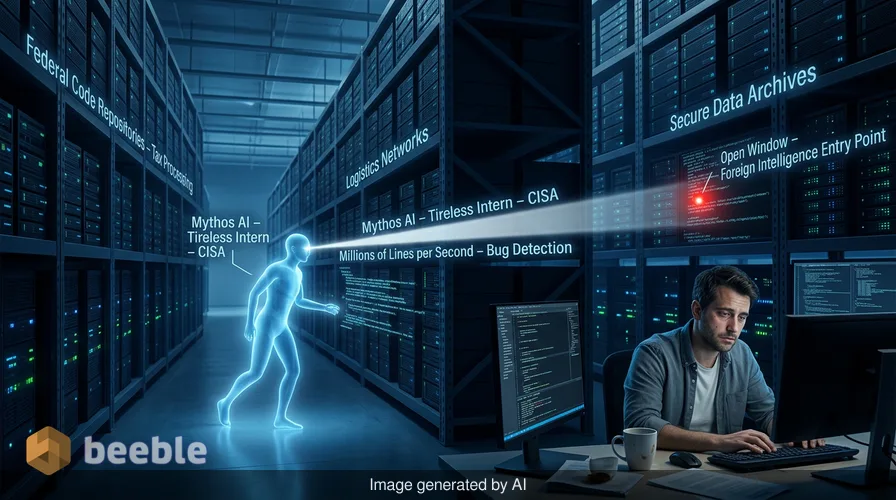
While the public narrative often frames artificial intelligence as a simple tool for writing emails or generating images, the reality is much more industrial. The Cybersecurity and Infrastructure Security Agency, known as CISA, is currently using a powerful AI model from Anthropic to scan government software for bugs. This move is a sharp departure from the recent history of tension between the San Francisco startup and federal regulators. Only a few months ago, the Pentagon labeled Anthropic a supply-chain risk, a move that essentially equated the company with foreign entities suspected of espionage. Today, that same company is the invisible backbone of the effort to protect federal code from foreign spies.
Looking at the big picture, this adoption shows that the government values capability over policy disagreements. CISA is using a specific AI model called Mythos to audit code repositories across various departments. These repositories are digital warehouses where the government stores the software that runs everything from tax processing to logistics. Mythos acts as a tireless intern that reads millions of lines of code in seconds, looking for the tiny errors that a human programmer might miss after a long shift. These errors are the open windows that cybercriminals and foreign intelligence agencies use to gain access to sensitive American data.
A tireless intern for the federal code repository
Under the hood, the process of auditing code is historically slow and expensive. A human security researcher can only review a few hundred lines of code in an hour with high accuracy. The US government manages billions of lines of code, much of it written decades ago in languages that modern programmers rarely use. This creates a massive backlog of potential vulnerabilities. Mythos changes the math of this process because it is a disruptive tool designed specifically for cybersecurity analysis. It does not just look for typos; it understands how different pieces of software interact to create systemic risks.
According to people familiar with the matter, CISA’s Attack Surface Evaluation team is the group leading this charge. This team performs digital security assessments and hacking exercises to find weaknesses before real attackers do. By using Mythos, the team has already uncovered a large number of vulnerabilities. While the specific nature of these bugs is not public, the speed of discovery suggests that the AI is performing at a level that human teams cannot match. This efficiency is necessary because the volume of code the government must defend is growing every day.
The rocky relationship between Anthropic and the White House
Anthropic has a complicated history with the authorities it now assists. The company is currently in the process of a confidential initial public offering, but its path to the stock market has been volatile. In February, the relationship between Anthropic and the White House reached a low point. The company refused to remove internal safeguards that prevented its AI from being used for autonomous weapons or domestic surveillance. This refusal led the Pentagon to slap the company with a formal supply-chain risk designation. This is a severe label that usually applies to companies the government believes are facilitating foreign espionage.
This extraordinary blacklisting did not last long. A judge blocked the order in March, and the tension eased after the private release of Mythos. Curiously, even while the official policy was one of suspicion, the National Security Agency was already using the model. Reports from late June indicate that NSA analysts tested Mythos in classified settings and found its capabilities to be unprecedented. The agency is the primary eavesdropping arm of the government, and its endorsement of Mythos suggests the tool is highly effective at both finding and exploiting digital weaknesses.
The global shutdown of Fable and its impact
The situation became more complex when Anthropic released a public version of Mythos called Fable. This version included specific cybersecurity safeguards intended for general use. However, the White House intervened again by demanding that Anthropic ban all foreign users from accessing the model. This demand led to a total global shutdown of Fable that lasted until last week. The government’s logic is that a tool capable of fixing bugs is also capable of helping an attacker find them. By restricting access to Americans, the administration hopes to keep this digital crude oil within its own borders.
From a consumer standpoint, this tug-of-war highlights a central paradox in modern tech. We want AI to be safe and restricted, but we also need it to be powerful enough to defend our most sensitive systems. The government is essentially trying to have it both ways by using the private, unrestricted version of the model for its own defense while restricting the public's access to the same technology. This creates a tiered system where the most robust security tools are reserved for federal use, leaving the private sector to rely on more limited versions.
What this means for your personal data security
For the average user, the fact that CISA is using Mythos is a net positive for privacy. Most people do not interact with government code directly, but their data does. Your Social Security number, tax history, and healthcare records are all stored in the repositories that Mythos is currently scanning. When the AI finds a bug in a system at the IRS or the Department of Veterans Affairs, that system is patched before a malicious actor can exploit it. This is a practical application of AI that has a tangible impact on the safety of your personal information.
Practically speaking, this shift indicates that the era of manual security audits is ending. In the coming years, more companies in the private sector will likely adopt tools like Mythos or Fable to protect their own networks. This will lead to a more resilient digital economy where software is inherently more secure from the moment it is written. However, it also means that the barrier to entry for hackers will rise. As the defense becomes automated, attackers will also turn to AI to find even more subtle ways to bypass security measures. The result is a cyclical arms race where the speed of the AI determines the winner.
Shifting the perspective on government tech
Ultimately, the use of Mythos by CISA is a sign that the government is willing to overlook corporate friction to secure its infrastructure. The fact that a company can go from a blacklist to a primary security partner in a few months shows how much the government relies on private-sector innovation. For users, this is a reminder that the invisible mechanics of the internet are increasingly managed by algorithms rather than humans. We are moving toward a decentralized security model where the most important work happens in the background, far away from the user interface of our devices.
As you use government services or digital banking apps, observe how rarely you encounter major system outages compared to five years ago. This stability is often the result of automated tools like the one CISA is now using. While the political battle over AI safety continues in Washington, the technical reality is that these tools are already hard at work. The bottom line is that your digital life is becoming safer because the government decided that a once-banned AI was too valuable to ignore. This pragmatic approach to technology is a foundational change in how the country defends its digital borders.
Sources:
- Cybersecurity and Infrastructure Security Agency internal assessments
- Anthropic corporate filings and public statements
- National Security Agency technical review reports
- Department of Defense supply-chain risk designation records
- Federal court rulings regarding Anthropic vs. Department of Defense



See you on the other side.
Our end-to-end encrypted email and cloud storage solution provides the most powerful means of secure data exchange, ensuring the safety and privacy of your data.
/ Create a free account
