


Why the Vatican is Stepping in to Regulate the Algorithms that Rule Our Lives

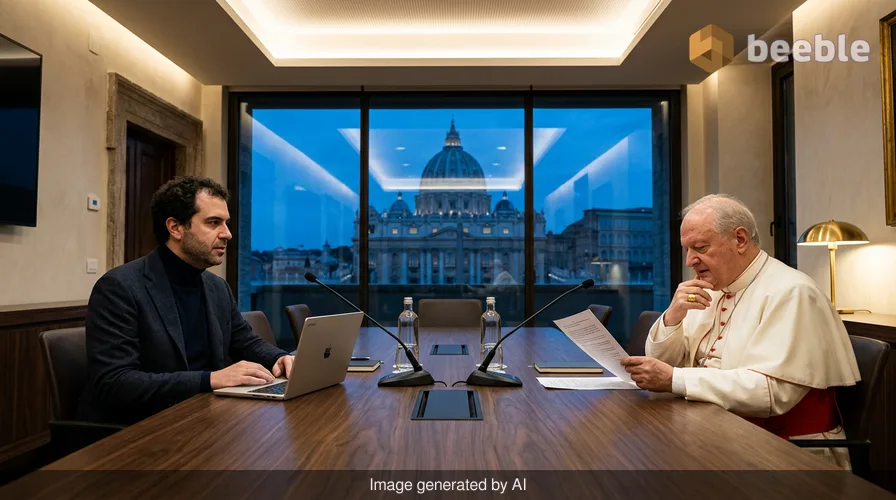
While it is tempting to view the Catholic Church as a guardian of ancient tradition alone, the reality is shifting toward something far more disruptive. In an era where silicon and software dictate global economies, the Holy See is positioning itself as an unexpected, yet formidable, moral regulator for the tech industry. This isn't just about theology; it is about who controls the digital tools that now influence everything from your job security to your mental health.
On May 25, 2026, Pope Leo XIV will release his first major encyclical, titled Magnifica Humanitas ("Magnificent Humanity"). This isn't a mere suggestion of kindness; it is a foundational document intended to guide over a billion followers—and, by extension, the global tech market—on the ethical use of artificial intelligence. In a curious twist of corporate and spiritual interests, Christopher Olah, the co-founder of Anthropic, will be standing beside the Pontiff. This partnership signals a systemic shift in how we view the power of the tech giants and the governments that seek to weaponize their creations.
The Moral Compass Meets the Machine
For the average user, the connection between a 2,000-year-old institution and a cutting-edge AI laboratory might seem opaque. However, looking at the big picture, the two share a common enemy: the unchecked, volatile expansion of AI systems that prioritize speed and profit over human safety. Anthropic has long marketed itself as the "safety first" alternative to more aggressive competitors, employing a method called Constitutional AI. Think of this as giving the AI a set of internal rules or a conscience—a digital manual on how to be helpful and harmless without constant human supervision.
This mirrors the Vatican’s own approach. The Church’s internal AI guidelines, which took effect earlier this year, mandate a high level of transparency. Practically speaking, the Vatican is treating AI like a tireless intern: extremely capable, but requiring strict supervision and a clear set of ethical boundaries to ensure it doesn't accidentally cause harm while trying to be productive.
The Battle Over the Digital Soul
The timing of this encyclical is no accident. We are currently witnessing an unprecedented legal and political showdown between the U.S. government and the tech sector. The Trump administration’s recent orders to ban federal agencies from using Anthropic technology—following the company's refusal to grant the military unrestricted access—has turned the safety of AI into a geopolitical flashpoint.
Anthropic’s lawsuit against the administration highlights a shifting dynamic: can a private company refuse to let its "resilient" technology be used for warfare? By joining forces with the Pope, Christopher Olah is essentially seeking a higher moral ground. For the consumer, this battle is foundational. It asks whether the AI in your phone and workplace should be a tool for empowerment or a weapon for surveillance and state control.
Labor, Justice, and the Workplace
Under the hood, Magnifica Humanitas is expected to tackle the most tangible concern for the everyday person: the displacement of human labor. Historically, the Church has been a vocal advocate for labor rights, and Pope Leo XIV is continuing this tradition by viewing AI through the lens of human dignity.
In simple terms, the Vatican is worried that if we automate everything, we lose the "human person" in the process. This isn't just about robots taking factory jobs; it's about the systemic way algorithms now manage human beings—hiring, firing, and monitoring productivity with a cold, mathematical efficiency. The encyclical will likely argue that while AI is scalable, human dignity is not something that can be compressed or optimized for a quarterly earnings report.
| Issue | The Vatican's Stance (2026) | Market Reality |
|---|---|---|
| AI in Warfare | Strictly monitored; calls for a total ban on autonomous killing. | Governments demand unrestricted use for national security. |
| Workplace Automation | AI must assist, not replace, the dignity of human labor. | Companies pursue cost-cutting through rapid AI integration. |
| Data Privacy | Human information is a sacred extension of the person. | Data is the "digital crude oil" used to train larger models. |
| Transparency | Mandatory disclosure of all AI-generated content. | Opaque algorithms often hide how decisions are made. |
Addressing the "AI Psychosis"
One of the more alarming terms mentioned in the Vatican's recent briefings is "AI psychosis." To put it another way, this refers to the breakdown of the boundary between human reality and machine-generated fiction. For the average parent or consumer, this is already a shifting reality. We see it in the rise of deepfakes, the erosion of social trust, and the addictive nature of AI-driven feeds that prioritize engagement over truth.
By establishing a new Vatican commission on AI, the Pope is creating a streamlined body to audit these technologies. This commission doesn't just consist of priests; it includes members from the Pontifical Academy of Sciences, who are looking at the energy consumption of data centers and the psychological impact of constant digital interaction. They are essentially acting as a global focus group for humanity, asking the "So What?" questions that tech companies often ignore in their rush to innovate.
What This Means for You
Ultimately, the alliance between the Pope and Anthropic serves as a reminder that we are moving past the "wild west" phase of artificial intelligence. From a consumer standpoint, you should expect to see more "moral labeling" on the tech you use. Just as you might check for a fair-trade label on your coffee, we are entering an era where users will want to know if their AI was trained ethically and whether it respects human boundaries.
| Practical Impact | What to Watch For |
|---|---|
| Privacy Changes | More robust disclosure prompts on apps asking to use your data for AI training. |
| Job Security | New labor unions and policies focused on "AI-human collaboration" rather than replacement. |
| Digital Literacy | A push for schools and workplaces to teach how to identify AI-generated misinformation. |
| Energy Costs | Potential price hikes in digital services as companies are forced to account for their massive energy footprints. |
Looking at the big picture, the Pope’s involvement provides a counterweight to the purely profit-driven motives of Silicon Valley and the power-driven motives of global governments. It suggests that the future of technology must be decentralised from pure power and re-centered around the human experience.
As we move toward the release of Magnifica Humanitas on May 25, it is worth observing your own digital habits. Are the tools you use making you more productive, or are they slowly eroding your sense of agency? The bottom line is that while AI might be all-knowing in its own algorithmic way, it lacks the one thing the Vatican is determined to protect: a soul.
As this story unfolds, the clash between Anthropic and the U.S. government will serve as a test case. If a company can successfully argue that "safety" is more important than "utility" in a court of law—and find support from the world’s oldest moral authority—it could change the trajectory of the tech industry forever. For the rest of us, it’s a signal to stop viewing AI as a magic black box and start seeing it for what it is: a tool that requires a very human hand on the steering wheel.
Sources:
- Vatican Press Office: Announcement of the Magnifica Humanitas Encyclical.
- Anthropic Regulatory Filings: Legal documents regarding the U.S. Federal ban and safety refusal.
- Dicastery for the Doctrine of the Faith: Internal AI Compliance Guidelines (2025).
- Pontifical Academy of Sciences: Report on the Energy Consumption of Generative AI Models.



See you on the other side.
Our end-to-end encrypted email and cloud storage solution provides the most powerful means of secure data exchange, ensuring the safety and privacy of your data.
/ Create a free account
