


Why the World’s Biggest Tech Deals in Berlin Actually Start in Your Pocket

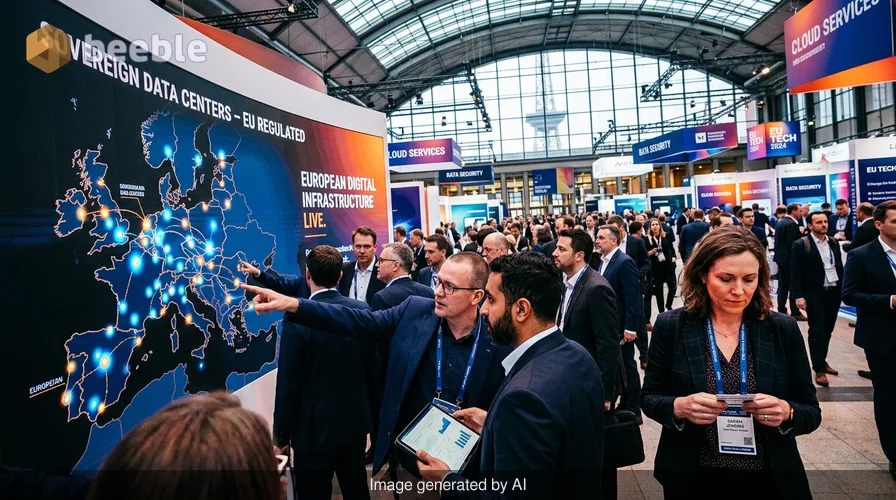
While it is tempting to view massive technology trade shows as little more than high-priced playgrounds for CEOs and venture capitalists, the reality is far more grounded in our daily lives. As we approach the end of May 2026, the tech world is turning its gaze toward Berlin for GITEX AI EUROPE. On the surface, it is a gathering of 1,400 exhibitors and 600 investors at Messe Berlin. Looking at the big picture, however, this event represents the construction site for what experts call sovereign digital transformation.
For the average user, that term sounds like something pulled from a policy white paper, but its implications are tangible. It is the difference between your personal data being stored in a transparent, regulated European data center or disappearing into an opaque, distant server farm with no legal accountability. This two-day event, running from 30 June to 1 July, is essentially where the digital rules of engagement for the next decade are being written.
The Quest for Digital Sovereignty and Why it Impacts Your Budget
Historically, Europe has been a heavy consumer of technology developed elsewhere. We use American operating systems, Chinese hardware, and global social media platforms. While this has been convenient, it has also created a systemic vulnerability. When a single global provider changes its terms of service or raises its subscription prices, the European consumer has traditionally had very little recourse. This is why the focus on sovereign digital transformation at GITEX is so disruptive to the status quo.
Under the hood, this movement is about building a robust, interconnected tech ecosystem that doesn’t rely on a single point of failure. Practically speaking, when European startups and enterprises collaborate at an event like this, they are building alternatives. This competition is what keeps your monthly cloud storage fees from skyrocketing and ensures that your smart home devices don't suddenly become expensive paperweights because a company on the other side of the Atlantic decided to pivot its business model.
AI Everything: Moving Beyond the Tireless Intern
We often think of Artificial Intelligence as a tireless intern—something that can draft emails or summarize long reports. But at the AI Everything Germany segment of the event, the focus shifts toward real-world applications that are far more foundational to modern life. We are seeing AI transition from a novelty into the invisible backbone of our infrastructure.
Consider your local energy grid. As we move toward more volatile renewable energy sources like wind and solar, the grid becomes much harder to manage. AI applications being showcased in Berlin are designed to predict energy spikes and dips with unprecedented accuracy. For you, this means a more resilient power supply and, ideally, more transparent pricing. It is not just about chatbots; it is about systemic efficiency that lowers the cost of living by optimizing the boring stuff we take for granted.
The Invisible Shield: Defending the Systems You Can’t See
Cybersecurity, represented here by GISEC Europe, is often the most overlooked part of the tech world until something goes wrong. To put it another way, cybersecurity is like the plumbing in your house: you only notice it when there is a leak. In our interconnected world, those leaks can be catastrophic, affecting everything from hospital records to the logistics chains that put food on grocery store shelves.
At the event, cybersecurity leaders are focusing on defense systems that are proactive rather than reactive. As hackers use AI to find vulnerabilities, the defense must also become more decentralized and resilient. For the consumer, this means better protection for the digital identities we use every day. Whether it is your banking app or your digital health pass, the innovations discussed in Berlin are the layers of armor that keep your private life private in an increasingly transparent digital world.
Quantum Technology: The Digital Crude Oil of 2030
Quantum computing often feels like science fiction, a topic reserved for researchers in white lab coats. However, the GITEX Quantum Expo (GQX) aims to show the commercialization of this tech. If microchips are the digital crude oil of today, quantum processors are the high-octane fuel of tomorrow.
While a quantum computer won’t be sitting on your desk anytime soon, its impact will reach you through chemistry and materials science. These machines can simulate molecular interactions that would take a traditional computer thousands of years to calculate. This means faster development of more efficient batteries for your car, more effective medicines, and even new materials that could make your smartphone virtually indestructible. The goal in Berlin is to turn these theoretical possibilities into a scalable reality.
The Industrial Kiln: Where Startups Become Giants
North Star Europe serves as the event's industrial kiln, where more than 750 startups are fired and tested. This is perhaps the most exciting part for anyone interested in the future of work. With over €1 trillion in assets under management represented by the attending investors, the scale is staggering.
One of the highlights is the Supernova Challenge, a pitch competition with a €50,000 prize. While that amount might seem small compared to the total investment pool, the real value is the visibility. Historically, these competitions have been the launching pad for unicorns—companies valued at over a billion dollars. When a startup wins here, it often means they have found a way to solve a problem that millions of people face, from streamlining urban transport to making decentralized finance more user-friendly.
| Event Segment | Focus Area | Impact on the Everyday User |
|---|---|---|
| AI Everything | Practical AI Applications | Lower energy costs and smarter city services. |
| GISEC Europe | Cybersecurity | Enhanced protection for personal data and banking. |
| GQX (Quantum) | Future Computing | Breakthroughs in medicine and battery life. |
| North Star | Startup Ecosystem | New apps and services that solve local problems. |
| Supernova Challenge | Innovation Pitch | Discovery of the next "must-have" technology. |
The "So What?" Filter: What This Means for Your Future
Ultimately, GITEX AI EUROPE is not just a trade show; it is a preview of the world we will be living in by the end of the decade. From a consumer standpoint, the shift toward European digital sovereignty is a net positive. It promises more competition, better privacy, and a tech landscape that is more resilient to global shocks.
Looking ahead, the takeaway for the average reader is to stay curious about the "how" and the "where" of the technology you use. We are moving out of an era of digital passivity. As the technologies discussed in Berlin become decentralized and more streamlined, users will have more choices about how their data is handled and which systems they trust.
The bottom line is this: The innovations being showcased next month at Messe Berlin are the blueprints for a more reliable and intuitive digital existence. It is worth paying attention to which startups emerge from the Supernova Challenge and which AI applications gain traction. These are the tools that will eventually find their way into your pocket, your home, and your workplace, shifting the way you interact with the world around you.
Sources:
- GITEX AI EUROPE Official Event Briefing (May 2026)
- Messe Berlin Exhibition Schedule and Industrial Reports
- European Commission Digital Sovereignty Strategic Papers
- North Star Europe Startup Participation Data
- GISEC Global Cybersecurity Trend Analysis 2026



See you on the other side.
Our end-to-end encrypted email and cloud storage solution provides the most powerful means of secure data exchange, ensuring the safety and privacy of your data.
/ Create a free account
