


Why We Watch Two Hours of Trailers Just to Feel Something We Already Know

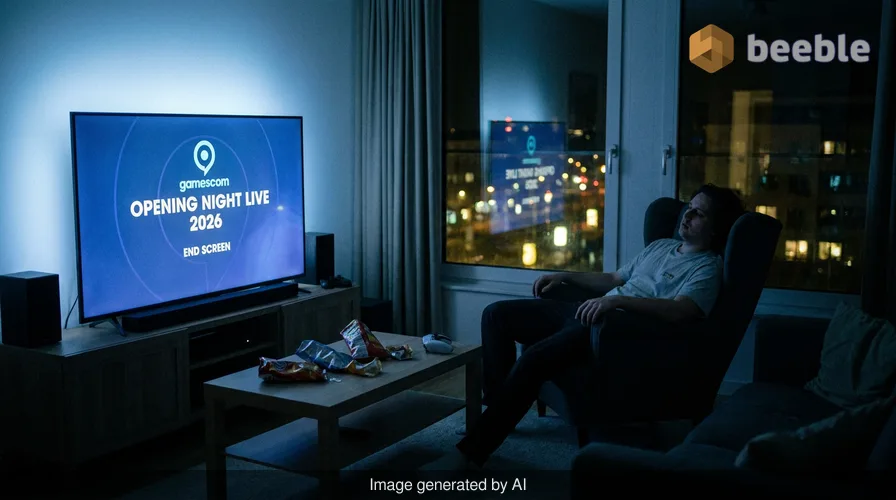
There is a specific, quiet exhaustion that arrives at the end of a two-hour gaming showcase. It is the feeling of a digital sugar crash. The pre-show music fades, the chat room scrolls past at a speed the human eye cannot track, and the screen goes black. You are left in the dim light of your room with a dozen new release dates and a lingering sense of deja vu. This emotional hollow exists because the modern video game showcase is a finely tuned machine. It relies on a predictable dopaminergic loop that promises a revolution while delivering a renovation. We tune in to Gamescom Opening Night Live 2026 for the shock of the new, but we stay for the comfort of the familiar.
Behind this seasonal ritual is an industry that prioritizes the mitigation of risk. The lineup for this year is a clear map of corporate safety. We see the return of Gears of War with E-Day and the third chapter of a remake saga in Final Fantasy 7 Revelation. Even the surprise expansion for a decade-old title, The Witcher 3: Songs of the Past, points to a broader trend. The audience is not just consuming games. They are seeking refuge in established ecosystems. This is the Content Walled Garden in its most effective form. When the cost of a triple-A failure reaches hundreds of millions of dollars, the industry stops building new cities. Instead, it expands the suburbs of its most successful metropolises.
The mechanical comfort of the eternal sequel
Geoff Keighley is the architect of this specific brand of anticipation. His role is to bridge the gap between the corporate boardrooms and the Discord servers. Through this audience lens, the showcase acts as a conversation between the developer and the player. However, the vocabulary of that conversation has become limited. The announcement of Gears of War: E-Day serves as a return to the franchise's origins. It is a narrative reset designed to capture a nostalgic audience that felt alienated by the series' recent directions. This is the home renovation metaphor in action. The foundation is solid, the walls are familiar, but the fresh coat of paint makes it feel like a new purchase.
This reliance on established IP reflects a fragmented market. In a sea of endless digital options, a known quantity is the only thing that cuts through the noise. When we see a trailer for The Witcher 3: Songs of the Past, we do not have to learn a new language. We already know the weight of Geralt's silver sword and the specific tone of the world's cynicism. The expansion is a low-risk way for CD Projekt Red to maintain brand relevance while they work on their next major project. For the player, it is an easy Friday night choice. It is the gaming equivalent of rewatching a favorite sitcom because the act of choosing something new is too taxing.
The Switch 2 and the hope for hardware disruption
Hardware transitions are the rare moments when the industry's friction actually creates heat. The rumored release date for FromSoftware’s Nintendo Switch 2 exclusive, The Duskbloods, is the centerpiece of this year's speculation. This title represents a convergence of two powerful forces: the technical mystery of a new console and the cult-like devotion to a specific developer. When a new console arrives, the invisible architecture of gaming becomes visible again. We talk about frame rates, resolution, and loading times. These technical details are the pillars of immersion.
FromSoftware has a history of creating games that act as a conversation between player and developer. Their design philosophy is often opaque, requiring the community to work together to solve puzzles. If The Duskbloods is indeed a launch-window exclusive, it indicates a shift in Nintendo’s strategy. They are moving away from purely family-friendly content toward the hardcore enthusiast market. This is a macro-level trend where hardware manufacturers use niche, high-difficulty titles to prove the power and versatility of their new silicon. The game is the proof of concept for the box.
The friction of the indie experimentalist
While the blockbusters provide the safety, the smaller titles provide the disruption. Pony Island 2, from the creator of Inscryption, is the antithesis of the Gears of War model. Daniel Mullins makes games that actively dislike the player. They break the fourth wall and mess with the computer's files. This is a vital part of the industry's health. Without these disruptive elements, the medium becomes stagnant and derivative. These games are the salt that makes the rest of the meal palatable.
Valor Mortis also occupies an interesting space. It is a first-person Soulslike from the team that created Ghostrunner. The game mechanics are a conversation about speed and precision. Unlike the bloated open-world games that dominate the market, these titles are streamlined. They focus on one or two core ideas and execute them with relentless focus. This is the indie vs. AAA philosophical battle. One side wants to give you a world you can live in for a hundred hours. The other side wants to give you an experience you cannot forget in ten.
The grand strategy of the digital buffet
Paradox Interactive is bringing a new grand strategy game to the show, which represents a different kind of audience engagement. These games are not about reflex. They are about systems. A grand strategy game is a sprawling city that is intimidating until you find a map. The appeal here is the illusion of control. In a world that feels increasingly chaotic, spending four hours managing the tax rates and trade routes of a fictional empire is a form of digital meditation. It is a complex system that the player can eventually master.
This genre highlights the shift toward long-term service models. A Paradox game is never finished at launch. It is a foundation for years of expansions and patches. This is the industry's way of fighting franchise fatigue. Instead of releasing a new game every two years, they keep the same game alive for a decade. The player becomes an investor in the ecosystem. The cost of entry is low, but the cost of staying current is a subscription in all but name. This is the Content Walled Garden at its most subtle.
Reclaiming the joy of the unexpected
As we approach the two-hour mark of Opening Night Live, the trailers for Path of Exile 2, Metro 2039, and Monster Hunter Outlanders will likely blur into a single stream of high-fidelity violence. It is easy to become cynical about the blockbuster marketing machine. However, the value of these events is not in the individual products. It is in the collective moment. Millions of people are looking at the same screen at the same time, waiting to be surprised. Even if that surprise is just a release date for a game we already knew was coming, the shared anticipation is real.
We should look at our media consumption with a critical eye. When you watch these trailers, ask yourself if you are excited for the game or just the idea of the game. Are you buying a new experience, or are you just buying a way to kill time? The industry is very good at confusing the two. By understanding the business mechanics behind the hype, we can reclaim our conscious choice. We can choose the weird indie game over the safe sequel. We can decide to wait for the reviews instead of pre-ordering the hype. The power in the entertainment industry always resides with the person holding the controller, even if the industry spends billions of dollars trying to make you forget that.
Sources: Gamescom official press release, CD Projekt Red investor reports, Paradox Interactive quarterly financial statements, Nintendo hardware development history records.



See you on the other side.
Our end-to-end encrypted email and cloud storage solution provides the most powerful means of secure data exchange, ensuring the safety and privacy of your data.
/ Create a free account
