


Why You Will Stop Searching and Start Asking for Holiday Gifts

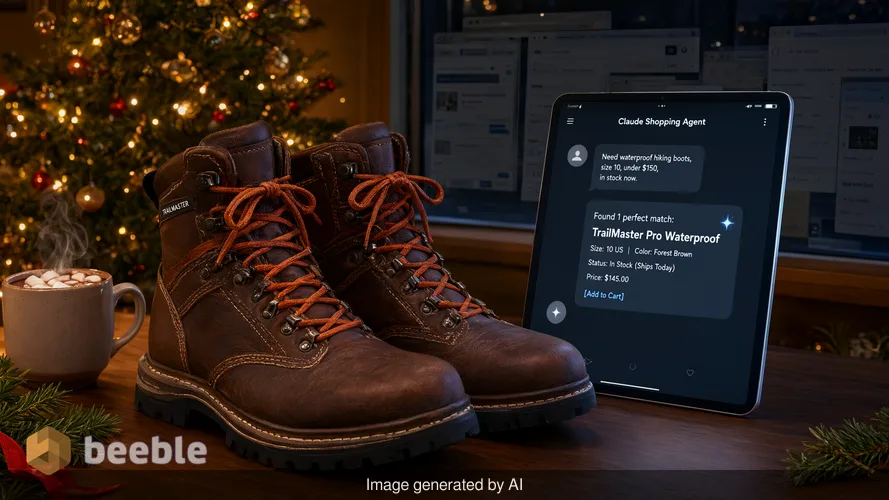
Have you ever spent three hours opening twenty different browser tabs just to find a pair of hiking boots that are actually in stock and do not cost a fortune? The traditional online shopping experience is often a chore of filtering, scrolling, and second-guessing. You look for a specific color, but the site shows you everything except that shade. You find a great price, but the checkout page informs you the item is backordered for three months. This friction is the reason many digital shopping carts sit abandoned. However, a shift in how stores interact with customers is underway as the holiday season approaches.
Anthropic, the company behind the Claude artificial intelligence, recently released a set of blueprints designed to change this dynamic. These blueprints are not ready-to-use apps for your phone. Instead, they are technical guides that help retailers, travel companies, and ticketing agencies build specialized AI agents. These agents act like a tireless intern who has memorized the entire inventory of a store and understands exactly what you want. The goal is to move away from the static search bar and toward a conversation that actually results in a purchase.
how agents move items into your cart
To understand what this means for the average user, we have to look at how these agents function under the hood. Most current chatbots on retail sites are basic. They follow a rigid script and often fail if you ask a question that is slightly complex. The new generation of agents built on Claude is different. They are designed to understand context and preferences. If you tell a shopping agent that you are planning a trip to the rainy Pacific Northwest and need waterproof gear for a toddler, it does not just show you a list of umbrellas. It looks for specific sizes, checks local weather requirements, and confirms that the items are available for immediate shipping.
Practically speaking, these agents can now take actions that previous bots could not. They can add items directly to your shopping cart based on the conversation. If you agree that a specific jacket looks good, the agent puts it in the cart for you. This reduces the number of clicks between finding a product and owning it. Anthropic refers to these as shopper agents. They bridge the gap between browsing a catalog and having a personal shopper who knows the store layout by heart.
the math behind the sixty percent conversion jump
Retailers are investing in this technology because the initial data is difficult to ignore. Adobe Analytics reported last month that visits to retail sites driven by AI tools convert into sales at a rate 60% higher than traffic from search engines or social media links. This is a massive leap in an industry where a 2% increase is usually considered a success. When people use AI to shop, they are not just looking; they are finding exactly what they need with much less effort.
Angela Jiang, who leads product for Anthropic’s Claude platform, noted that one partner saw cart sizes increase by 30% to 35% after implementing these tools. This happens because the AI is better at suggesting items that actually make sense for the customer. In the past, "recommended for you" sections were often powered by simple algorithms that showed you items you had already bought. An AI agent suggests a matching belt for the trousers you just picked or a specific memory card for the camera you are researching. Because these suggestions are relevant, customers are 60% more likely to complete the transaction. The process feels less like being sold to and more like being helped by someone who knows the catalog.
what merchant agents do behind the scenes
While shopper agents talk to you, a second type of tool called a merchant agent works for the store owner. Retail is a volatile business where prices change by the hour and stock levels fluctuate constantly. A merchant agent acts as an internal consultant for the business. It analyzes inventory levels, compares competitor prices, and suggests when to start a marketing campaign. For a small business owner, this is like having a data scientist on staff who never sleeps.
These merchant agents help solve the "out of stock" problem that ruins so many shopping trips. If a specific toy becomes a viral sensation on social media, the agent can alert the merchant to increase orders before the warehouse runs dry. It can also suggest price drops for items that are not moving fast enough to clear shelf space. For the consumer, this means the prices you see are more likely to be competitive and the items you want are more likely to be in the warehouse. However, Anthropic is clear about one boundary: these merchant agents do not complete purchases or manage money on behalf of the store. They provide the information, but a human still makes the final call on business decisions.
the practical reality of privacy and control
Looking at the big picture, the rise of shopping agents raises questions about how much data we share with retailers. For an agent to give a truly personalized recommendation, it needs to know something about your past purchases, your budget, and your style. This creates a more streamlined experience, but it also means more of your habits are stored in a database. For the average user, the trade-off is convenience for data. Most people seem willing to make that trade if it saves them an hour of frustrating search, but it remains a point of concern for those who prefer to shop anonymously.
There is also the question of whether an AI is truly unbiased. If an agent suggests a specific brand of coffee, is it because that coffee is the best match for your taste, or because the retailer has a higher profit margin on that bag? As these tools become more common, users will need to maintain a level of healthy skepticism. The agent is a tool for the retailer to increase sales, even if it is also a tool for the consumer to save time. The fact that cart sizes are growing by over 30% suggests that the AI is very good at convincing us to buy just one more thing.
why agents still cannot press the buy button for you
Despite the advanced capabilities of Claude, Anthropic has built in a safety net. The agents can add items to your cart, but they cannot finalize the payment. You still have to review the order and enter your payment information. This is a foundational design choice. It prevents the AI from accidentally spending your money because it misinterpreted a request or fell victim to a technical error. It also keeps the human in the loop for the most important part of the transaction.
Ultimately, this technology is about removing the mental load of shopping. Historically, we moved from physical storefronts to digital catalogs. Those catalogs became massive and unmanageable, leading to the current era of endless scrolling. The AI agent is the next logical step in this cycle. It turns the massive, opaque database of a global retailer into a simple, transparent conversation. You tell the computer what you need, and it does the heavy lifting of sorting through millions of options.
your new digital shopping habit
As we approach the end of the year, you will likely encounter these agents more frequently. They will appear as chat bubbles that seem much smarter than the ones you used last year. To get the most out of them, you should be specific. Instead of searching for "blenders," tell the agent you want a blender that can crush ice, fits under a standard cabinet, and costs less than eighty dollars. The more detail you provide, the better the agent performs. This is a fundamental shift in digital literacy. We are moving from learning how to use search keywords to learning how to give clear instructions to a machine.
From a consumer standpoint, this is a net win for efficiency, but it requires a new kind of awareness. Pay attention to how the agent nudges you toward extra items. Observe whether the recommendations feel genuinely helpful or just expensive. The digital backbone of the retail industry is changing, and the search bar is slowly becoming a relic of the past. By understanding that these agents are designed to increase conversion and cart size, you can use them to find what you need without overspending on things you did not ask for.
Sources:
- Anthropic official announcement regarding Claude retail blueprints, September 2026.
- Adobe Analytics retail conversion data report, August 2026.
- Industry commentary by Angela Jiang, Anthropic Head of Product.



See you on the other side.
Our end-to-end encrypted email and cloud storage solution provides the most powerful means of secure data exchange, ensuring the safety and privacy of your data.
/ Create a free account
