


Why Your Digital Coffee Payment Just Got Faster Than Your Physical One

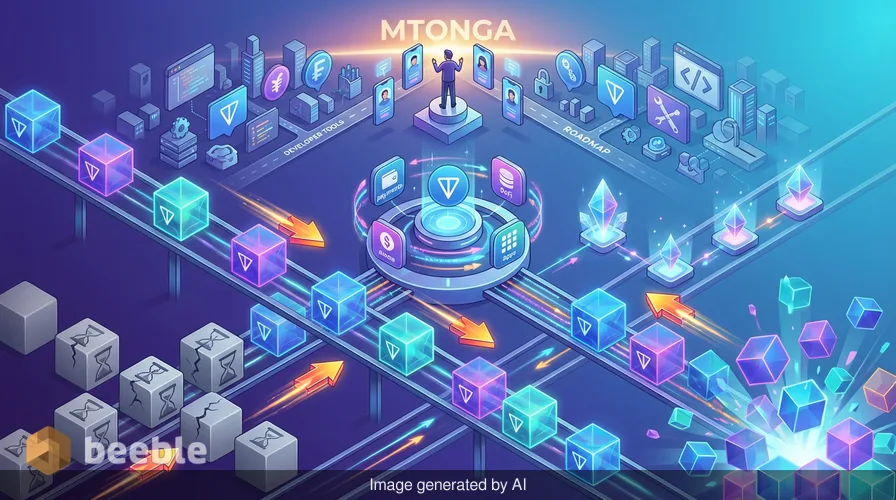
The Friction of the Five-Second Wait
Think about the last time you stood at a checkout counter, phone in hand, waiting for a payment to clear. There is a specific, subtle anxiety that fills those few seconds—the 'transactional limbo.' You’ve tapped your screen, the merchant is watching the terminal, and for a heartbeat, the money exists in a state of digital uncertainty. In the world of traditional banking, this is often masked by sleek animations. In the world of blockchain, however, that wait has historically been a visible, five-to-ten-second hurdle that reminded us we were using a work-in-progress technology.
On April 9, 2024, Pavel Durov, the founder of Telegram, announced an upgrade to the TON (The Open Network) blockchain that aims to eliminate that friction entirely. By moving from a five-second confirmation time to sub-second finality, TON has effectively crossed the threshold from 'experimental tech' to 'invisible infrastructure.'
The Mechanics of the Sub-Second Shift
To understand why this matters, we have to look behind the scenes of the digital vault. Most blockchains operate like a slow-moving train; you have to wait at the station for the next block to arrive before your transaction can be boarded and verified. If the train only comes every few minutes (like Bitcoin) or every twelve seconds (like Ethereum), the experience feels clunky compared to the instant gratification of a modern app.
Technically speaking, the TON upgrade centers on a new consensus mechanism called Catchain 2.0. By optimizing how the network’s validators talk to each other, blocks are now generated every 400 milliseconds. This is roughly the speed of a human blink. Furthermore, a new streaming layer ensures that apps don't have to wait for the next 'train' to arrive to know the transaction was successful. They receive the data almost instantly, allowing the user interface to respond with a satisfying green checkmark before you’ve even pulled your phone away from the terminal.
Zooming Out: The Race for the 'Everything App'
On a macro level, this isn't just about speed for speed’s sake. It is a systemic play to turn a messaging platform with 900 million users into a global financial layer. Historically, the barrier to mass crypto adoption hasn't been a lack of interest; it has been a lack of utility. Most people don't want to manage private keys or wait for 'finality' just to send $5 to a friend for lunch. They want the experience to be as mundane and reliable as sending a text message.
By integrating these near-instant transactions directly into Telegram, TON is attempting to bypass the 'Digital Wild West' phase of crypto. Paradoxically, the more advanced the technology becomes, the less we should notice it. When a transaction happens in under a second, the blockchain effectively disappears, leaving behind only the utility of the payment itself.
The MTONGA Roadmap and the Cost of Moving Money
Through this economic lens, speed is only half of the equation. The second hurdle is cost. Durov framed this speed boost as the first step in a seven-part plan titled 'Make TON Great Again' (MTONGA). While the name leans into a familiar brand of provocative marketing, the technical goals are pragmatic. The second step on this roadmap is a 6x reduction in transaction fees.
In everyday terms, high fees act like a hidden leak in your wallet. If it costs $2 in network fees to send $10, the system is broken for the average person. By slashing fees alongside the speed increase, TON is positioning itself to handle micropayments—the tiny, frequent transactions that power things like digital tipping, in-game purchases, and creator economies.
Beyond the Hype: A Skeptical Glance at Scalability
As a result of these upgrades, TON now rivals or exceeds the performance of major competitors like Solana or even centralized payment processors like Visa in terms of raw confirmation speed. However, a professional analyst must remain mindful of the trade-offs. Speed often comes at the cost of decentralization or increased hardware requirements for the people running the network.
In practice, the success of this upgrade won't be measured by technical whitepapers, but by whether the average user feels a difference. If developers don't update their apps to use the new 'streaming' data, the user might still see a spinning loading wheel, even if the blockchain has already finished its work. The infrastructure is now a high-speed rail; it’s up to the app developers to build the stations.
The Psychological Shift in Digital Ownership
Ultimately, the 'instant' nature of this upgrade changes our psychological relationship with digital assets. When money moves slowly, it feels like an 'investment'—something heavy and static. When it moves instantly, it feels like 'currency'—something fluid and alive.
Financially speaking, we are moving toward a world where the distinction between a message and a dollar is blurring. As TON scales, we may find that the most profound change isn't the technology itself, but the way it normalizes the idea of borderless, instant value transfer for the billion people already using the app for their daily conversations.
Food for Thought
- The Invisibility Test: Next time you use a digital payment app, notice the delay. Does the wait time change how much you trust the transaction?
- The Cost of Convenience: If a platform makes it 'too easy' to spend money with sub-second clicks, how does that impact your impulse control and budgeting habits?
- Infrastructure vs. Interface: Are we entering an era where the underlying technology (blockchain vs. bank) matters less to you than the speed of the app you’re holding?
Sources:
- TON Foundation Technical Documentation on Catchain 2.0
- Pavel Durov’s Official Telegram Channel Announcement (April 2024)
- TON Blockchain Explorer Data and Block Finality Metrics
- Comparative Analysis of Layer 1 Blockchain Transaction Speeds (2024)



See you on the other side.
Our end-to-end encrypted email and cloud storage solution provides the most powerful means of secure data exchange, ensuring the safety and privacy of your data.
/ Create a free account
