


Why your next AI assistant no longer requires a degree in computer science

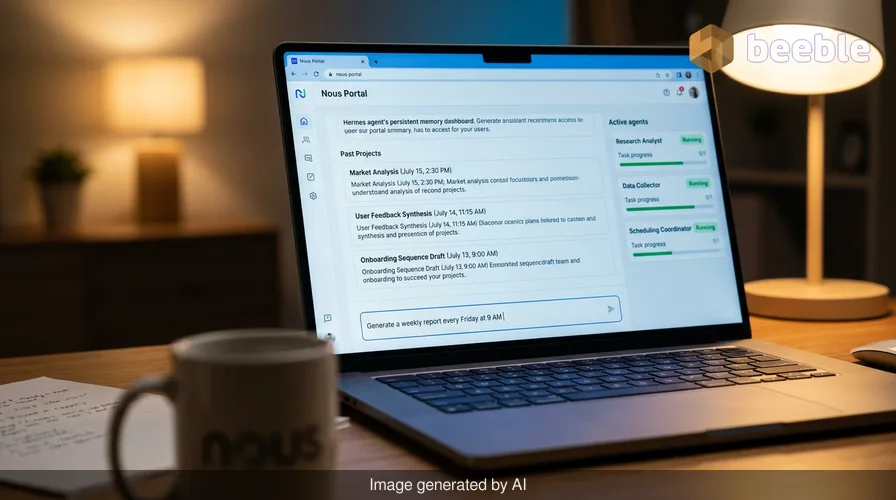
Have you ever tried to use a piece of software that felt like it was written for a NASA engineer? For months, that was the reality for anyone who wanted to use Hermes. This autonomous AI agent became a cult favorite in the tech world because of its unique ability to learn new skills, yet it remained locked behind a wall of code. To use it, you had to open a terminal, type cryptic commands, and hope you did not miss a semicolon. That era officially ended on June 2 when Nous Research released the Hermes Desktop app. This move transforms a high-end research tool into something anyone can install with a few clicks.
The end of the command line era for Hermes
Until this week, running Hermes was a test of patience. Most users interact with AI through clean websites like ChatGPT or Claude. Hermes was different. It existed primarily as a command-line interface, which is essentially a black box where you type text to get a response. While developers love this environment, the average person finds it intimidating. A few community members built their own unofficial visual interfaces, but these were often buggy or difficult to set up.
Nous Research changed the narrative by shipping a native public preview app for macOS, Windows, and Linux. The app is built on a framework called Electron, which is the same technology behind apps like Slack and Discord. This means it feels familiar the moment you open it. There are no configuration files to edit and no terminal windows to monitor. You download the file, drag it to your applications folder, and start working. This is a foundational change for the project. By removing the technical friction, Nous Research is moving Hermes from a niche developer tool to a mainstream productivity assistant.
A tireless intern that learns from its mistakes
To understand why people are excited about this release, you have to look at how Hermes works under the hood. Most AI tools are static. If you ask a standard chatbot to perform a complex task, it might fail. If you ask it again tomorrow, it will likely fail in the same way. Hermes acts more like a tireless intern. It is an autonomous agent, which means it can break down a large goal into smaller steps and execute them without constant supervision.
When Hermes successfully completes a new task, it does something clever. It creates a skill document. This document acts as a memory of how the problem was solved. The next time you ask for something similar, Hermes refers to its library of skills and applies what it learned previously. It gets more efficient the more you use it. This self-improving loop is the reason the AI community has followed the project so closely. The new desktop app makes this loop visible. Instead of watching lines of code scroll by, you can see the agent manage its memory and organize its tasks in a clean sidebar.
Inside the new desktop interface
The official app is more than just a fresh coat of paint. It brings several core features into a single workspace that previously required separate tools. One of the most practical additions is persistent memory. In the terminal version, keeping track of long-term projects was a chore. The desktop app stores your projects and the specific ways the agent solved them, so you can pick up exactly where you left off.
Scheduling is another major addition. You can tell the agent to run a web search for industry news every Monday at 8:00 AM and email you a summary. Because Hermes has access to your local files and the web, it can handle these recurring tasks in the background. It also supports image generation and has a built-in browser. This allows the agent to navigate websites, read articles, and even look for specific data points just like a human researcher would.
For those who need to scale their work, the app supports sub-agents. Think of these as smaller clones of Hermes that you can assign to specific parts of a project. One sub-agent might gather data while another writes a report. They work in parallel, which saves time on complex assignments. The terminal is a wall—one that keeps the curious away from the capable. This app removes that wall entirely.
Why local control matters for your privacy
One of the biggest concerns with modern AI is data privacy. When you use a cloud-based chatbot, your data lives on a server owned by a massive corporation. Hermes takes a different path. The app is MIT-licensed, which means the code is open for anyone to inspect. You can see exactly how it handles your information.
More importantly, the app offers multiple execution backends. You can run the AI models locally on your own computer if your hardware is powerful enough. If you choose this path, your data never leaves your machine. For users who need more power, the app connects to the Nous Portal. This portal allows you to use over 300 different AI models through a cloud connection. Even in this scenario, the agent core—the part that stores your skills and memory—remains under your control. This hybrid approach gives you the flexibility of the cloud with the security of a local setup. It is a resilient model for businesses that handle sensitive information.
Comparing the heavyweights in the agent space
Hermes is not the only player in the autonomous agent market. Its main rival is OpenClaw, which has enjoyed a head start with non-technical users. OpenClaw arrived early with a polished visual interface and a marketplace where users can share pre-made skills. It has over 50 integrations with apps like WhatsApp and Signal, making it a very connected tool.
However, the Hermes approach is different. While OpenClaw focuses on a deep ecosystem of integrations, Hermes focuses on the architecture of learning. The self-improving skills loop in Hermes is more advanced than the static skill sets found in most OpenClaw configurations. Now that Hermes has its own official app, the gap between the two is much smaller. Hermes is now just as easy to install as OpenClaw, but it offers a more intuitive way for the agent to grow alongside the user. Choosing between them now comes down to whether you want a pre-built ecosystem or a system that learns your specific way of working.
The cost of running an autonomous agent
While the Hermes Desktop app is free to download and use, running the actual AI models has a cost. If you run everything locally, the only cost is your electricity bill and the price of a high-end graphics card. For everyone else, there is the Nous Portal. The portal has a free tier—though the heavy lifting happens in the paid plans.
| Plan Level | Monthly Credits | Best For |
|---|---|---|
| Free | Limited | Casual testing and basic tasks |
| Plus | Standard | Daily personal use and research |
| Super | High | Small teams and heavy automation |
| Ultra | Unlimited | Enterprise-scale agent deployment |
These paid plans provide access to the 300+ models mentioned earlier. This includes the most powerful versions of the Hermes model, which are too large for most home computers to run smoothly. Even if you use a paid plan, the app itself remains open-source. You are paying for the computing power, not the right to use the software. This distinction is important for the decentralized philosophy of Nous Research.
What this means for your digital habits
The release of the Hermes Desktop app marks a shift in how we think about AI software. We are moving away from simple chat windows and toward active assistants that live on our desktops. This is a practical step toward making AI a foundational part of daily work. You no longer need to be a coder to benefit from an agent that remembers your preferences and builds its own library of skills.
For the average user, this means the barrier to entry is gone. You can now experiment with an autonomous agent that handles your scheduling, research, and report writing without needing a tutorial on how to use a terminal. As you use the app, pay attention to the "skills" it develops. You will see the agent become more specific to your needs over time. This release is a reminder that technology often starts in a basement or a terminal window, but it only becomes truly disruptive when it finally gets a front door.
Sources: Nous Research Official Release, Hermes Desktop GitHub Repository, OpenClaw Project Documentation.



See you on the other side.
Our end-to-end encrypted email and cloud storage solution provides the most powerful means of secure data exchange, ensuring the safety and privacy of your data.
/ Create a free account
