


Why your next digital assistant might come with a monthly bill

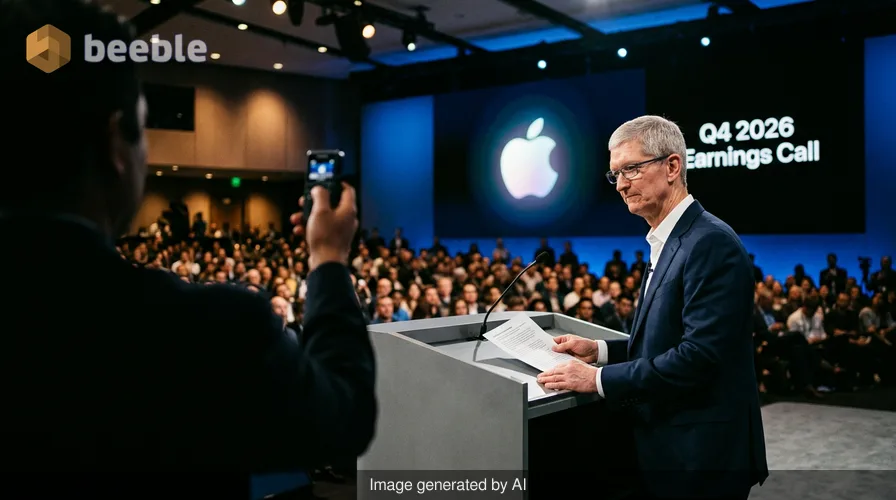
Would you pay a monthly fee to make your phone smarter? For a decade, we have viewed the voice assistants in our pockets as part of the hardware price, a built-in feature that stays the same regardless of how much we use it. That era is ending. During his final earnings call as Apple CEO on Thursday, Tim Cook suggested that the upcoming Siri AI upgrade will likely sit behind a paywall for those who want the best performance.
This shift arrives as Apple undergoes its most significant leadership change in years. John Ternus, formerly the Senior Vice President of Hardware Engineering, is now the CEO. He inherits a company that is simultaneously racing to catch up in the AI sector and navigating a global supply chain that makes hardware more expensive to build every day. The plan to charge for Siri AI is not just about increasing profit margins. It is a response to the massive amount of processing power these new systems require.
The new math of the cloud
To understand why Apple wants your subscription, you have to look at how AI works under the hood. Traditional Siri commands happen mostly on your device or through simple server requests. The new Siri AI is different. It functions like a tireless intern that needs a high-end workstation to finish its tasks. Every time you ask a sophisticated AI to summarize an hour-long meeting or edit a photo using voice commands, it consumes a specific amount of "compute."
Compute is essentially the rental time on a powerful supercomputer. Unlike storage, which is like a digital closet where you leave your boxes, compute is like a digital utility. It is more similar to electricity or water. The more you use, the more it costs the provider. Tim Cook explained that the company plans to integrate these costs into iCloud+. Users who use Siri AI frequently will likely need to "buy up the stack" to access more processing power.
This follows the model already established by OpenAI and Anthropic. Those companies offer a basic version of their tools for free but charge $20 a month for faster speeds and higher usage limits. Apple is simply applying this logic to the iPhone. Practically speaking, the average user might get a few high-level AI tasks for free each day, while power users who rely on the assistant for work will see a prompt to upgrade their iCloud+ plan.
The high cost of catching up
Apple has spent the last year in a defensive position. The company recently paid $250 million to settle a class action lawsuit involving the iPhone 16. The suit claimed Apple marketed the device with AI capabilities that did not exist at launch. This delay forced the company to take an unusual step: licensing the Gemini model from Google. Even with its own internal development, Apple is using a competitor’s technology to ensure Siri stays relevant in a market dominated by rapid releases from Silicon Valley rivals.
This partnership with Google is transparent proof that building a foundational AI model is difficult even for a company with a trillion-dollar valuation. By licensing Gemini, Apple buys time to refine its own systems, but that licensing comes with its own costs. When you combine those fees with the internal research and development budget, the push toward a subscription model becomes an economic necessity for the company.
The invisible backbone of the RAM shortage
While software gets the headlines, the hardware side of the business is facing a slow leak. A global shortage of high-bandwidth memory, or RAM, has made it significantly more expensive to manufacture smartphones and computers. AI requires massive amounts of memory to run locally on a device. Because every tech giant is currently buying up all available RAM for their data centers, there is less left for consumer gadgets.
We are already seeing the results of this supply chain friction. Meta, Samsung, and Microsoft have all raised prices on their latest hardware to offset these costs. Apple increased the prices of Macs and iPads just last month. While the iPhone has avoided a price hike so far, the Siri AI paywall serves as a buffer. Instead of making the phone $100 more expensive at the store, Apple is moving that cost into a monthly service fee.
| Industry Player | Recent Pricing Action | Primary Reason Given |
|---|---|---|
| Apple | Raised Mac/iPad prices | Component costs and RAM shortage |
| Samsung | Increased flagship phone prices | AI hardware requirements |
| Meta | Raised Quest headset pricing | Supply chain volatility |
| Sony | Increased console and accessory prices | Component scarcity |
What this means for your daily budget
Looking at the big picture, the way we buy technology is shifting from ownership to access. Historically, you bought a tool and you owned its functions. Now, you are buying a portal to a service. If you are a casual user who only uses Siri to set timers or check the weather, this change will likely have no impact on your life. The basic functions will remain bundled with the device.
However, for the average user who wants to use AI to draft emails, manage their calendar, or automate complex workflows, the "iPhone tax" is about to increase. Here is how this change will likely manifest in your digital habits:
- The iCloud+ Tiers: Expect new labels in your settings menu, such as "iCloud+ with AI Pro" or "Compute Boost."
- Usage Limits: Your phone may notify you when you are nearing your monthly limit for "advanced requests."
- Performance Throttling: If you do not pay for the extra compute, your AI assistant might become slower or revert to the older, less capable version of Siri during peak hours.
From a consumer standpoint, this adds another layer of "subscription fatigue." We already pay for music, video, and storage. Adding a fee for the intelligence of the device itself marks a new chapter in the relationship between hardware manufacturers and their customers.
A new era under John Ternus
John Ternus takes the helm at a volatile time. As the former hardware chief, he knows better than anyone that the physical limits of the iPhone are being tested by AI software. His challenge is to convince users that these new digital capabilities are worth a recurring fee. The rollout of iOS 27 beta shows that the company is fully committed to this path, even if it means admitting that the hardware alone is no longer enough to provide the experience customers expect.
Ultimately, this move by Apple is a reflection of the reality of modern computing. Intelligence is expensive. The digital crude oil that fuels these systems—data and processing power—is not free to produce or maintain. By moving Siri behind a paywall, Apple is signaling that the era of "free" software updates for major features is coming to an end.
Instead of viewing your phone as a static object, start thinking of it as a gateway to a service. As you prepare for the broad rollout of Siri AI this fall, observe how often you actually rely on these tools. Understanding your own usage patterns is the only way to decide if the "compute" upgrade is a foundational tool for your productivity or just another slow leak in your monthly budget.
Sources: Apple Q3 2026 Earnings Call Transcript, Bureau of Labor Statistics Electronics Price Index, International Data Corporation (IDC) Semiconductor Tracker.



See you on the other side.
Our end-to-end encrypted email and cloud storage solution provides the most powerful means of secure data exchange, ensuring the safety and privacy of your data.
/ Create a free account
