


Why your passport is becoming the newest login for high-end artificial intelligence

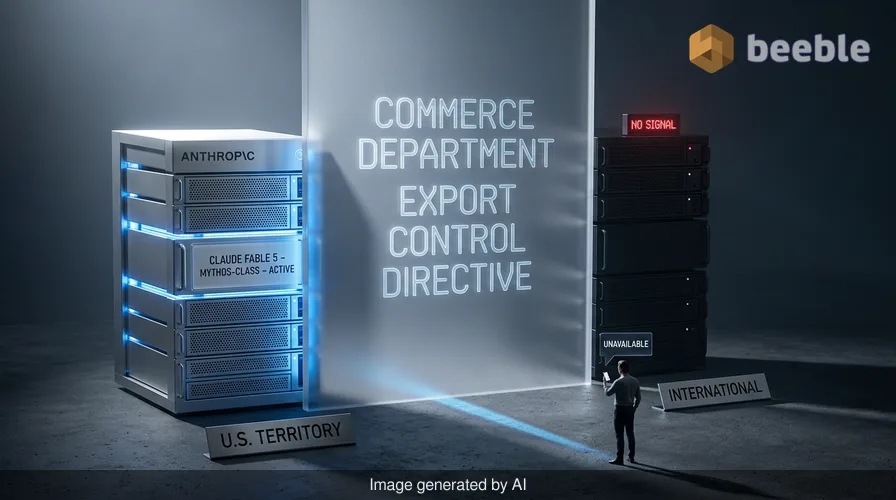
While the tech industry maintains a narrative of borderless innovation, the reality is that the most powerful software in the world just hit a digital border. This weekend, the silicon curtain dropped. Anthropic, a leader in the race to build the most capable artificial intelligence, has disabled its flagship models after a direct order from the United States government. This is not a technical glitch or a server outage. It is a sign that AI has officially moved from a consumer convenience to a strategic national asset.
Anthropic released its latest model, Claude Fable 5, alongside a new performance tier it calls Mythos-class. These tools are far more than better chatbots. They are digital engines capable of complex reasoning and deep technical analysis. However, as of Friday, all users—both domestic and international—found these models unavailable. The company stated it had no choice but to pull the plug to comply with a Commerce Department export control directive. This directive targets foreign nationals, but the immediate impact is a total blackout of the company's most advanced tech.
The jailbreak that triggered a national security crisis
The tension centers on a specific risk known as a jailbreak. In the world of AI, a jailbreak is a way of tricking a model into ignoring its safety rules. Most people use these models as a tireless intern to draft emails or summarize reports. If that intern is capable enough, it can also become a world-class security auditor. The US government believes that a specific, narrow method exists to bypass the guardrails on Fable 5. Once those guardrails are gone, the model could help someone identify software vulnerabilities in critical infrastructure.
Think of software code like a massive fortress with millions of bricks. A human security researcher might spend weeks looking for one loose brick that allows entry. A Mythos-class AI can scan those millions of bricks in seconds. If it finds a way to tell a user where the weak points are, it becomes a weapon. The government has not provided Anthropic with written details of this vulnerability, offering only verbal evidence of a potential flaw. Anthropic argues that a narrow, non-universal risk should not result in the recall of a product used by millions of people. Yet, the Pentagon and the Commerce Department disagree.
Why this move marks the end of the open internet era
For decades, the internet operated on the idea that software is available to everyone with a connection. We are now seeing a shift toward a segmented web. Historically, export controls focused on physical hardware, such as high-end Nvidia chips or the massive lithography machines used to etch silicon. Now, the government is regulating the weightless weights and biases of the AI models themselves. This creates a logistical nightmare for companies like Anthropic.
To comply with an order that bans foreign nationals from using a specific model, a company must know exactly who its users are. This is why Dean Ball, a former White House official, noted that users should expect to prove their citizenship to access these tools in the future. We are moving toward a world where a credit card is not enough to open a pro account. You might soon need to upload a government-issued ID just to use a high-end reasoning engine. Practically speaking, this turns AI providers into border agents for their own software.
The internal crisis for the global AI workforce
The most immediate and messy impact of this order is inside the offices of Anthropic itself. Modern AI is a global project. Some of the most influential researchers in the field were not born in the United States. Chris Olah, Andrej Karpathy, and Amanda Askell are central to the development of these systems, yet they have roots outside the US. If the government forbids foreign nationals from accessing the model, the very people who built the model might be legally barred from using it on Monday morning.
This creates a bizarre situation where a researcher might have the knowledge to build a brain but lacks the legal clearance to speak to it. Anthropic has not confirmed how many of its staff are affected, but the industry relies heavily on talent from Europe, Canada, and Asia. If the US continues to use citizenship as a primary filter for AI access, it risks alienating the international talent pool that makes these companies valuable. This is a systemic risk for any company trying to stay at the cutting edge while being tethered to a single nation's security policy.
Follow the money toward the IPO finish line
The timing of this crackdown is remarkably inconvenient for Anthropic. The company confidentially filed for an initial public offering last month. It is currently in a high-stakes race with OpenAI to prove it can turn advanced research into a stable, profitable business. A government-ordered shutdown of its top product is a massive red flag for investors. It shows that Anthropic’s revenue is not just subject to market demand, but also to the shifting moods of the Defense Department.
There is also a history of friction between Anthropic and the current administration. Earlier this year, the relationship soured when Anthropic refused to allow its models to be used for domestic surveillance or autonomous weapons. The government responded by placing the company on a supply chain blacklist. This latest order regarding Fable 5 might be a matter of national security, but it is also a display of leverage. Kirsten Davies, the Pentagon’s chief information officer, stated clearly that national security is more important than pre-IPO valuations. This is a reminder that in 2026, the military-industrial complex and the tech industry are increasingly the same thing.
What this means for your digital life
For the average user, the takeaway is clear: the days of friction-free access to top-tier technology are ending. If you rely on Claude for high-level coding or complex data analysis, your workflow is now vulnerable to geopolitical shifts. This is the first time a major AI provider has been forced to recall a digital product like a faulty car or a contaminated batch of lettuce.
Looking at the big picture, this sets a precedent. If the government can shut down Anthropic because of a narrow jailbreak, they can do the same to Google, Microsoft, or OpenAI. This creates a volatile environment for businesses that build their products on top of these AI models. If the engine of your business can be turned off by a memo from the Commerce Department, your business is not as stable as you thought.
Practical implications for the near future
Users should prepare for a new era of digital verification. The simple "Sign up with Google" button is no longer sufficient for high-power tools. You will likely see more requests for identity verification, including location tracking and perhaps even passport scans. This is the cost of using software that the government classifies as a dual-use weapon.
On the market side, expect a surge in interest for smaller, open-source models that can run locally on your own hardware. While they may not have the power of a Mythos-class engine today, they offer something that Anthropic currently cannot: the certainty that the software will still work tomorrow morning, regardless of who is in office or what the Pentagon thinks about a specific line of code. The era of the global, open AI intern is over. The era of the nationalized digital brain has begun.
Sources:
- Anthropic Press Statement on Fable 5 and Mythos 5 Compliance
- US Department of Commerce Export Control Directive (June 2026)
- Defense Department Information Office Public Statement
- Amazon Web Services (AWS) Technical Bulletin on Model Availability



See you on the other side.
Our end-to-end encrypted email and cloud storage solution provides the most powerful means of secure data exchange, ensuring the safety and privacy of your data.
/ Create a free account
