


Why your teenager's Instagram account will suddenly go dark at midnight

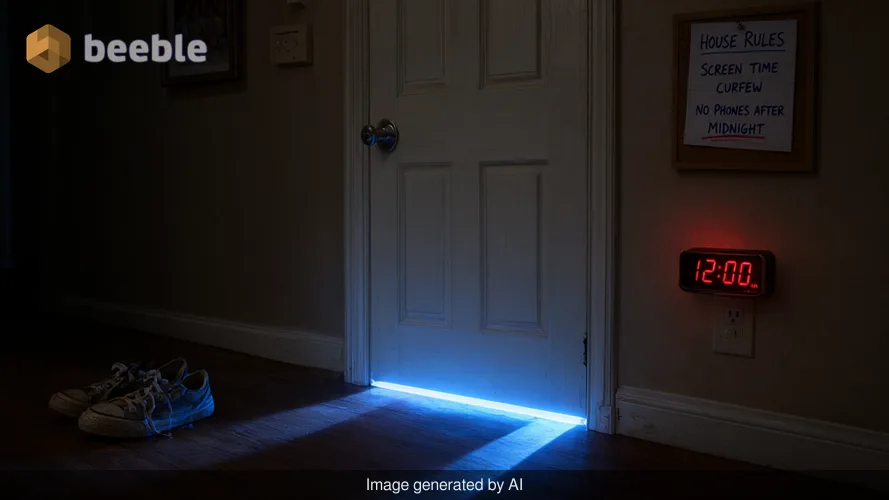
Have you ever walked past your teenager’s bedroom after midnight and seen that unmistakable blue glow peeking out from under the door? That late-night scrolling has become a standard feature of modern adolescence, but a massive new legal agreement is about to flip the switch. Meta, the parent company of Instagram and Facebook, just finalized a settlement with 48 US states that will fundamentally change how minors use social media. This is not a voluntary update or a simple PR move. It is a legally binding overhaul worth $18 billion that aims to put a hard limit on digital consumption for anyone under the age of 18.
For the average parent, the jargon surrounding data privacy and algorithmic safety can feel like a dense fog. Practically speaking, this deal means the digital playground now has a mandatory closing time and a much higher fence. Starting soon, teenage accounts in the United States will automatically lock down at midnight and remain inaccessible until 6 am. Users will also face a strict two-hour daily limit. While Meta previously offered tools for parents to set these boundaries, the settlement makes these features the default setting. The burden of safety has shifted from the parent’s settings menu to the company’s core architecture.
The eighteen billion dollar price tag for safety
To put the $18 billion settlement in perspective, looking at the big picture reveals how massive this financial hit is for a tech giant. This sum is roughly equivalent to what a major corporation might spend to build two of the world’s most advanced semiconductor manufacturing plants. Meta will pay this amount over a decade, representing a significant recurring cost that will sit on its balance sheet for years. This financial pressure is the stick that the US states are using to ensure the company follows through on its promises.
Historically, tech companies have treated safety features as optional upgrades. If a parent wanted to protect their child, they had to navigate through layers of menus to find the right toggles. The settlement reverses this logic. By making time limits and midnight blackouts the default, the company acknowledges that the product itself requires built-in safeguards. The deal also includes hidden "like" counts for teens, removing one of the primary social metrics that researchers link to anxiety and status-seeking behavior. These changes will remain in place for at least ten years, creating a decade-long experiment in digital regulation.
The tireless intern under the hood
Under the hood, social media apps rely on recommendation engines to keep users engaged. Think of the Instagram algorithm as a tireless intern that never sleeps. This intern watches every second you spend on a video and every image you pause to look at, all to deliver a constant stream of content that matches your interests perfectly. While this makes the app efficient, critics like Arturo Béjar, a former Meta engineering director, argue it makes the platform inherently addictive.
During the legal proceedings, Béjar pointed out a foundational problem with the new settlement. He noted that Meta still gets to define what "harm" means. In his view, a two-hour limit on a platform that is designed to be addictive is similar to limiting the consumption of harmful substances rather than removing the harm itself. Even with a two-hour cap, the tireless intern is still working to show teenagers content that might lead them down dangerous rabbit holes. The settlement does not force Meta to turn off these recommendation algorithms by default, which remains a major point of contention for safety advocates.
Breaking the don't ask don't tell era of age verification
One of the most disruptive changes involves how Meta identifies its users. For years, the company operated under what Béjar described as a "don't ask, don't tell" approach to age. While federal law requires users to be at least 13, many children simply lied about their birth year to create accounts. Meta has now agreed to use much more robust age-verification technology. This includes a mix of its own internal tools and third-party systems that can more accurately guess a user's age based on their behavior and data.
| Feature | Old System | New Settlement Requirement |
|---|---|---|
| Daily Limit | Optional (set by parent) | 2-hour default (requires parent to disable) |
| Nightly Curfew | None | Midnight to 6 am blackout (default) |
| Age Checks | Self-reported birthdate | Third-party verification & independent audits |
| Like Counts | Visible | Hidden for all users under 18 |
| Chronological Feed | Opt-in | Remains opt-in (not default) |
The settlement sets specific goals for "false positives." This means the company is now legally required to minimize how often it accidentally identifies a minor as an adult. If the system flags a user as being under 13 and removes them, the company must also investigate the ages of that user's friends. This creates a ripple effect where one caught underage user could lead to the removal of an entire social circle of children who are too young for the platform. Independent auditors will regularly test these systems to ensure they actually work.
Why the settlement excludes some states
Curiously, not every state joined this massive agreement. Florida and New Mexico opted out for different reasons. Florida’s attorney general argued the terms were not tough enough to protect children, while New Mexico had already won a separate legal battle against the company. For the rest of the country, the settlement creates a unified standard for how Meta must handle teenage accounts. This avoids a fragmented system where a teenager in New York has different protections than a teenager in California.
From a consumer standpoint, these changes reflect a broader shift in how we view digital products. We are moving away from the idea that apps are harmless tools and toward a reality where they are treated like heavy machinery or pharmaceuticals. Just as a car requires seatbelts and a drug requires a warning label, social media now requires guardrails. The settlement acknowledges that the design of these apps has tangible effects on the mental health and sleep patterns of young people.
The bottom line for parents and users
Ultimately, this $18 billion deal is a foundational step, but it is not a total solution. The two-hour limit is a hard cap, but what happens during those two hours remains largely under Meta's control. The company still uses autoplay for videos by default, and the chronological feed—which shows posts in the order they were shared rather than what the algorithm thinks you like—is still something users have to turn on manually.
For the average user, these changes provide a much-needed breathing room. The midnight blackout prevents the mindless scrolling that often eats into essential sleep time. However, parents should stay vigilant about how their children interact with the content that does make it through the filters. The algorithmic intern is still active, even if its shift now ends at midnight.
As we move toward a more regulated digital environment, the most important takeaway is that technology is not inevitable. The design choices of a multi-billion dollar corporation are subject to public pressure and legal oversight. The next time you see a new feature on your phone, remember that it was designed with a specific goal in mind—usually your attention. This settlement is a reminder that you have the right to claim some of that attention back for your family. Observe your own digital habits and notice if a two-hour limit might benefit the adults in the house as much as the teenagers. The infrastructure of the internet is shifting, and for the first time in a long time, the users are gaining a bit of ground.
Sources:
- Meta Platforms Official Press Release regarding State Settlements (August 2026)
- US District Court for the Northern District of California Case Filings
- Testimony of Arturo Béjar, Federal Trial Records
- Cybersafety Research Center: Annual Audit of Platform Safety Tools



See you on the other side.
Our end-to-end encrypted email and cloud storage solution provides the most powerful means of secure data exchange, ensuring the safety and privacy of your data.
/ Create a free account
