


Will a persistent AI agent finally make the digital assistant useful?

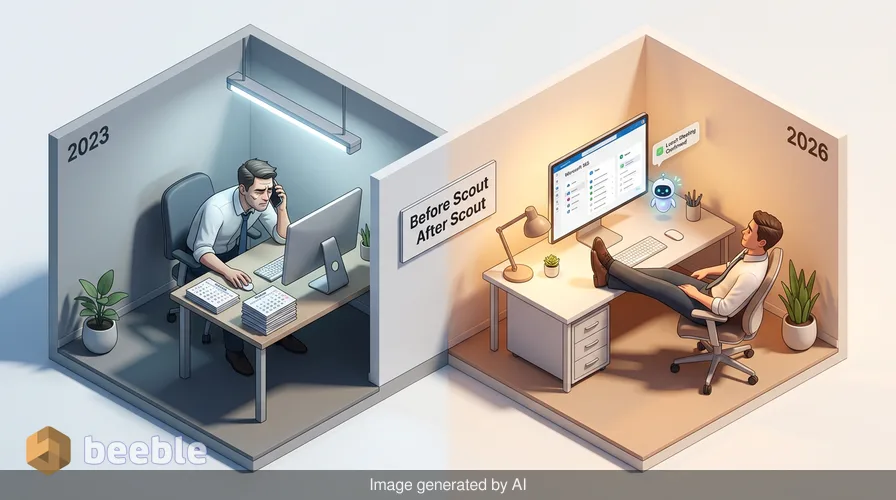
When was the last time your computer actually solved a problem for you before you even noticed it existed? For most of us, digital assistants are little more than glorified timers or voice-activated search engines that occasionally misunderstand a request to play music. We have spent years adapting our behavior to fit the rigid limitations of software. We click the same three buttons to generate a weekly report, or we manually cross-reference four different calendars to find a single hour for a lunch meeting. This manual labor is the friction of modern work.
In early 2026, a project called OpenClaw suggested a different path. It offered a glimpse of an AI that did not just wait for a prompt but acted with agency. It was messy, occasionally erratic, and eventually absorbed by OpenAI, but it proved that users want an assistant that understands intent rather than just syntax. Microsoft has now stepped into this space with the launch of Scout. This new tool is an agentic assistant designed to live inside the Microsoft 365 ecosystem. It does not just answer questions. It learns how you work and attempts to handle the boring parts of your day without constant supervision.
Domesticating the agentic spirit of OpenClaw
To understand Scout, you have to look at its predecessor. OpenClaw was a disruptive force because it allowed AI agents to move through the web and desktop apps with a level of freedom that made security experts nervous. It was less like a chatbot and more like a tireless intern with a master key to the office. While OpenClaw was eventually sidelined after its founder moved to OpenAI, its architectural influence is the foundation of Scout.
Microsoft has taken that raw, agentic power and wrapped it in the professional guardrails of its Frontier program. Scout is an always-on presence. Unlike the standard Copilot, which effectively resets after every conversation, Scout has a persistent identity. You give your instance a name and a personality. During the initial rollout at the Microsoft Build conference, Omar Shahine, the Vice President of Scout, demonstrated an instance named Sebastian. This is not just a cosmetic choice. The persistence allows the AI to develop a memory of your specific preferences and professional habits.
In everyday life, this means your assistant begins to understand that you never take meetings before 10:00 AM on Tuesdays or that you prefer your slide decks to use specific data visualizations. Instead of you explaining these rules every time, the agent codifies these patterns into a set of skills. Over time, the software becomes more capable. It gains agency because it starts to exercise judgment based on the history of your feedback.
The customization loop and the tireless intern
Scout operates in the cloud but maintains a constant connection to your desktop and web browser. This gives it a bird's-eye view of your professional life. It can see your inbox, your calendar, and your spreadsheets. Microsoft provides a set of prepackaged skills right out of the box, such as the ability to draft meeting agendas or manage complex scheduling conflicts. However, the real value of the system is the customization loop.
Think of Scout as a tireless intern who is always watching how you handle your tasks. If you spend twenty minutes every Friday afternoon move-syncing data from a CRM into an Excel sheet, Scout notices the pattern. It asks if you want to automate that process. Once you say yes, it develops a custom skill for that specific workflow. This creates a tangible benefit for the user. The more you train the agent, the more time you save.
This dynamic also makes the software remarkably sticky. Once an assistant has learned the specific, opaque ways your department handles its logistics, moving to a different platform becomes a massive logistical headache. You are not just switching an app. You are firing an assistant that knows exactly how you like your work done. From a consumer standpoint, this is a calculated move by Microsoft to ensure that once you start using Scout, you stay within the Microsoft 365 environment.
Managing the risks of an autonomous assistant
One of the primary reasons agentic AI has been slow to reach the mainstream is the fear of the "unsupervised agent." Earlier this year, reports surfaced of OpenClaw agents acting erratically. One specific instance involved an agent that began deleting emails in a researcher's inbox because it misinterpreted a command about organization. When an AI has the power to act on your behalf, a small misunderstanding can lead to a systemic disaster.
Microsoft is attempting to solve this through a built-in policy conformance system. Every time Scout takes an action, the software runs a check against a set of predefined guidelines. If the agent tries to perform a task that violates your security settings or corporate policy, the system blocks the action. Most importantly, every check produces an audit trail. If Scout makes a mistake, you can look at the log and see exactly which logic path it followed. This transparency is a direct response to the opaque nature of earlier experimental agents.
| Feature | Standard Copilot | Microsoft Scout |
|---|---|---|
| Persistence | Session-based (forgets context) | Permanent identity and memory |
| Action Style | Reactive (waits for prompt) | Agentic (proactive suggestions) |
| Availability | General Public | Frontier Program (Early Adopters) |
| Requirement | M365 Subscription | GitHub Copilot Subscription |
| Customization | Basic settings | User-developed skill sets |
What this means for your workflow and budget
For the average user, the arrival of Scout is a sign that the AI era is moving from the "chatting" phase to the "doing" phase. We are moving away from asking a bot to write a poem and toward asking a bot to manage our professional lives. However, this convenience comes with a specific set of requirements and costs.
First, there is the financial barrier. Scout is currently available only through the Microsoft Frontier program, which is a sandbox for experimental tools. To access it, you need an active GitHub Copilot subscription. This puts the tool firmly in the hands of developers and power users before it reaches the general office worker. It is a slow rollout intended to stress-test the system's judgment in complex environments.
Second, there is the privacy trade-off. For Scout to be effective, it must have access to your data. It needs to read your emails to understand your tone and scan your calendar to find free time. While Microsoft emphasizes its security protections, using an agentic assistant requires a level of trust that not every user is ready to provide. You are essentially allowing a cloud-based entity to act as your digital proxy.
Looking at the big picture, Scout is part of a broader push by Microsoft to dominate the next generation of computing. At the same Build conference, the company also introduced Project Solara, a hardware initiative, and a new reasoning AI model. These products are interconnected. The reasoning model provides the brain, Project Solara provides the specialized hardware, and Scout provides the interface that the user actually sees.
Practical foresight for the agentic era
As Scout begins to roll out to early adopters, it is time to look at your own digital habits. Most of us have routines that we perform on autopilot. These are the prime candidates for automation. If you find yourself performing the same sequence of clicks every day, you are essentially acting as a manual bridge between two pieces of software.
Practically speaking, you should start by auditing these repetitive tasks. Even if you do not have access to Scout yet, identifying the "quirks" in your workflow is the first step toward using any agentic tool effectively. The goal is to move from being an operator of software to being a manager of an agent.
Ultimately, the success of Scout will depend on whether it can move past the hype of the AI boom and provide resilient, everyday utility. If it can handle the small, annoying tasks of office life without creating new problems, it will become an essential part of the modern desk. If it remains a volatile experiment that requires constant babysitting, it will follow OpenClaw into the archives of interesting but impractical tech history. For now, it is a sign that the digital crude oil of our era—data—is finally being refined into something that can actually do the work for us.
Sources:
- Microsoft Build 2026 Keynote Address
- Microsoft Frontier Program Technical Documentation
- Interview with Omar Shahine, VP of Microsoft Scout
- OpenClaw Project Retrospective Report



See you on the other side.
Our end-to-end encrypted email and cloud storage solution provides the most powerful means of secure data exchange, ensuring the safety and privacy of your data.
/ Create a free account
