


Will cheaper AI tools actually make your digital life any better?

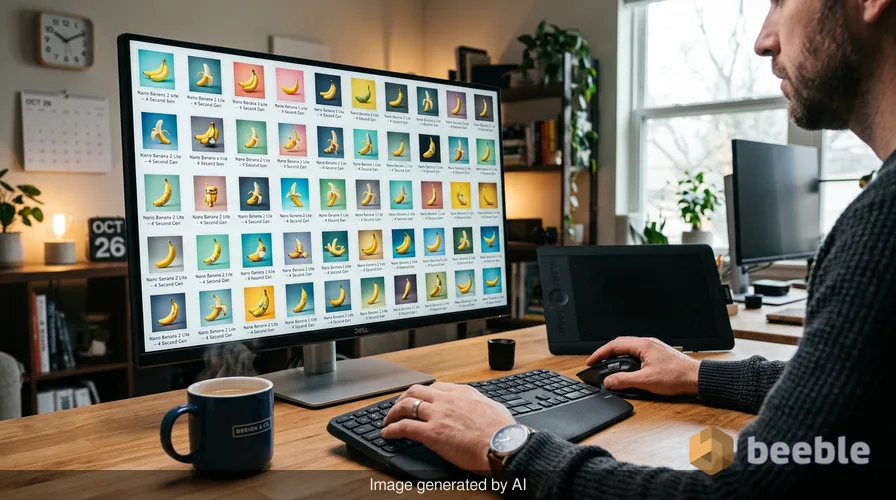
Have you ever wondered why your social media feed is suddenly full of images that look just a little too perfect or perhaps a little too strange? You might see a kitchen that belongs in a dream or a cat wearing a tuxedo, all appearing with a specific, glossy texture. This wave of content is the result of a massive shift in how we build the internet. On Tuesday, Google moved this trend forward by releasing Nano Banana 2 Lite. It is the newest version of its in-house AI video and image generator, and it highlights a new priority for big tech companies: making AI cheap enough and fast enough to be everywhere.
For the average user, the name Nano Banana 2 Lite sounds like a snack or a mobile game. Behind the jargon, it is a tool built for people who need to create thousands of images without spending a fortune or waiting minutes for a progress bar to finish. Google claims this model has much lower latency than previous versions. It can produce a finished image in four seconds. In a world where we expect instant results, four seconds is the time it takes to take a breath and blink twice. This speed is a tool for rapid iteration, allowing a designer to try fifty different ideas in the time it used to take to brew a cup of coffee.
The tireless intern in your browser
To understand why this matters, think of Nano Banana 2 Lite as a tireless intern who works for nearly nothing. This intern can sketch 1,000 ideas for a logo or a social media post before you finish your morning routine. In everyday life, most people do not need 1,000 images of a sunset. However, for a small business owner trying to run ads on five different platforms, this volume is a necessity. The model is a generalist tool, but Google optimized it for these high-volume workflows where speed is more important than absolute artistic perfection.
Looking at the big picture, the cost is perhaps the most disruptive part of this announcement. Google set the price at $0.034 per 1,000 images. To put that in perspective, you could generate 30,000 images for about the price of a single cup of premium coffee. This pricing model makes the tool accessible to almost anyone with a basic internet connection and a credit card. It marks a departure from the early days of AI, where generating high-quality media required expensive hardware or monthly subscriptions that cost as much as a gym membership.
Comparing the banana family
Google now has a crowded lineup of image generators. Understanding which one does what is essential for anyone trying to navigate the Google AI Studio or the Gemini API. The company now refers to the original Nano Banana from last summer as a legacy model. This means it is essentially retired. Nano Banana 2, released in February, remains the generalist workhorse for those who need more realism. Then there is Nano Banana Pro, which is the high-end version for advanced use cases where quality cannot be sacrificed for speed.
| Model Name | Primary Use | Cost per 1,000 Images | Speed (Latency) |
|---|---|---|---|
| Nano Banana 2 Lite | High-volume, rapid drafts | $0.034 | ~4 seconds |
| Nano Banana 2 | General quality work | [citation needed] | Moderate |
| Nano Banana Pro | High-fidelity, professional | Higher | Slower |
| Nano Banana (Legacy) | Basic generation | N/A | Retired |
From a consumer standpoint, the Lite version is the most practical choice for day-to-day tasks. If you are drafting a presentation for school or a local community meeting, you probably do not need the Pro version. You need something that works instantly and does not drain your budget. This is the democratization of digital creation, even if it comes with the risk of more clutter on our screens.
The $75 million deal and the price of progress
While the technology is impressive, it does not exist in a vacuum. Google is navigating a complex relationship with the creative community. The release of Nano Banana 2 Lite comes shortly after Google struck a $75 million deal with A24, the indie film studio behind hits like Everything Everywhere All At Once. This partnership is a point of contention for many film fans and artists. They worry that AI tools will eventually replace the human touch that makes A24 movies unique.
Google often markets its models as helpful assistants for the advertising industry. However, the ties between Hollywood and AI companies continue to tighten. For a studio like A24, $75 million is a massive influx of capital. For Google, it is an entry point into the world of prestige storytelling. This partnership suggests that AI-generated imagery and video will soon move beyond social media ads and into the movies we watch in theaters. Many creators view this as a threat to their livelihoods, while tech companies see it as a necessary evolution of the medium.
Moving from static images to cinematic video
Google also used this Tuesday announcement to expand the reach of Gemini Omni Flash. This tool is more advanced than the image generators because it focuses on video. Flash costs $0.10 per second of video output. While ten cents a second sounds cheap, a full minute of video would cost six dollars. This is still affordable for a business, but it is a significant step up from the nearly free price of static images.
To bridge the gap between static pictures and moving video, Google introduced a demo app called Omni Product Studio. This app can take a static image generated by an AI and transform it into a cinematic e-commerce video. Imagine you are a small business owner who sells handmade candles. You could use Nano Banana 2 Lite to generate a clean photo of a candle on a wooden table. Then, you could use Omni Product Studio to turn that photo into a five-second clip where the flame flickers and the camera slowly zooms in. This process takes minutes and costs less than a dollar, replacing what used to require a professional photographer and a film editor.
The problem of digital slop
There is a downside to making creation this easy. The term "AI slop" has become common among internet users to describe the flood of low-quality, AI-generated content that offers no real value. Because Nano Banana 2 Lite makes images so cheaply, there is a risk that the internet will be further buried under a mountain of generic visuals. Google acknowledges that creative iteration is the goal, but the reality is that many users will use these tools to automate low-effort content.
Curiously, the very companies building these tools are the ones also building the filters to hide the slop. Google Search and YouTube are constantly updated to identify and de-prioritize low-quality AI content. It is a strange cycle where one part of the company sells you the tool to create a thousand images, and another part of the company works to make sure no one actually sees them unless they are genuinely useful. This creates a volatile environment for digital marketers who must balance the speed of AI with the need for authentic human connection.
What this means for your digital habits
Ultimately, the arrival of Nano Banana 2 Lite and Gemini Omni Flash tells us that the cost of digital creation is heading toward zero. This has three practical implications for you as a consumer and a user of the internet. First, you should expect to see a lot more video in places that used to have only text or static images. E-commerce sites, instructional manuals, and even your email inbox will likely become more animated as the cost of video generation drops.
Second, the value of "human-made" content will likely increase. Just as handmade furniture became more valuable after the rise of factory-made alternatives, stories and images with a clear human perspective will stand out in a sea of AI-generated visuals. You might find yourself checking for "AI-generated" labels more often as these tools become more realistic.
Finally, if you are a creator or a small business owner, the barrier to entry is gone. You no longer need a large budget to produce professional-looking marketing materials. However, because everyone has access to the same tools, the competition will shift from who has the best equipment to who has the best ideas. Speed is a useful asset, but it is not a substitute for a unique vision. As you interact with these new tools in Google AI Studio or through your favorite apps, observe how they change your own habits. You might find that having 1,000 images at your fingertips makes it harder, not easier, to choose the right one.
Sources: Google official blog, Gemini API documentation, Google AI Studio product release notes.



See you on the other side.
Our end-to-end encrypted email and cloud storage solution provides the most powerful means of secure data exchange, ensuring the safety and privacy of your data.
/ Create a free account
