


Will your smart glasses soon be illegal in Norway?

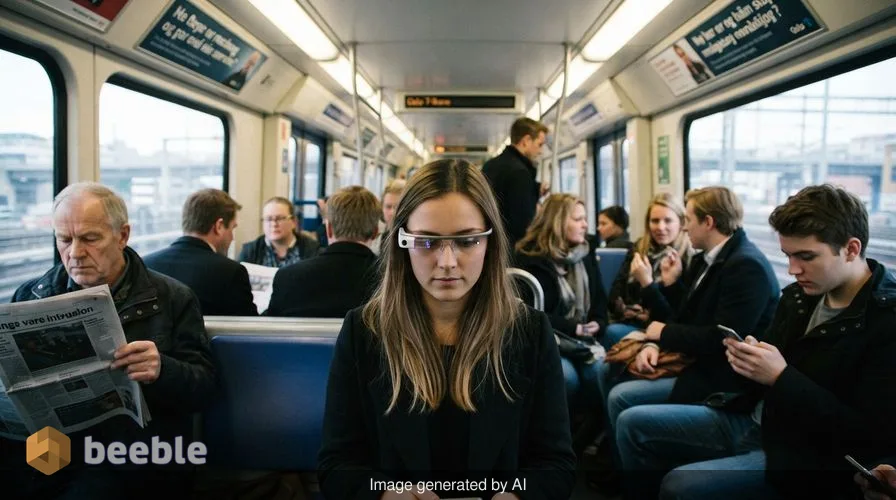
In the physical world, we understand the boundaries of a glance. When a stranger stares too long, social intuition signals a breach of privacy. We recognize the difference between a person looking at a map and a person looking at us. Digital reality is now dismantling these cues. Smart glasses look like standard eyewear but function like mobile surveillance stations. A wearer might be reading a text, or they might be running a facial recognition scan on every person in the subway car. Norway is now the first country to signal a major regulatory shift to address this invisible intrusion.
On Tuesday, the Norwegian Ministry of Digitalisation announced plans to tighten rules for smart eyewear. The move responds to a growing discomfort with devices that record, stream, and analyze surroundings without the knowledge of those being watched. Minister Karianne Tung stated that the government will regulate these devices more strictly to protect people from the pressures of new technology. This is not a hypothetical debate about future gadgets. It is a direct response to hardware already on the market that allows users to capture high-definition video through a frames-integrated camera.
The friction between public space and private data
Privacy in public is a fundamental legal concept. In many jurisdictions, you have a lower expectation of privacy when you walk down a city street. You might appear in the background of a tourist’s photo or on a shop’s security camera. However, smart glasses change the scale of data collection. A security camera is stationary and its presence is usually predictable. Smart glasses are mobile, discreet, and capable of identifying individuals in real-time. This capability turns a casual walk into a series of unauthorized data points.
Minister Tung specifically highlighted the potential ban on facial recognition functions in public spaces. Under current European law, which Norway follows through the European Economic Area agreement, biometric data receives high protection. Facial recognition transforms a person’s face into a unique digital code. The General Data Protection Regulation (GDPR) classifies this as special category data. Processing this information generally requires explicit consent or a heavy legal justification. Smart glasses make obtaining that consent impossible in a crowded park or a busy train station.
Oslo establishes an expert group for wearable oversight
The Ministry of Digitalisation is not acting in a vacuum. It will establish an expert group to advise on the technical and legal nuances of wearable technology. This group has a difficult task. They must define what constitutes an "intrusive" feature versus a "standard" one. Most smart glasses use a small LED light to indicate when the camera is active. Privacy advocates argue these lights are too small to be noticed in daylight or from a distance. The expert group will likely evaluate if these hardware signals are sufficient or if manufacturers must implement more obvious indicators.
This regulatory focus follows a methodical investigation into how current laws fail to cover wearable tech. Existing rules often focus on the "data controller," which is usually a company. When an individual wears smart glasses, they become the data controller. This creates a legal gray area where personal use overlaps with systemic surveillance. The Norwegian government wants to close this gap by urging public and private sectors to establish their own internal guidelines before national laws take full effect.
The paradox of accessibility and surveillance
Regulation is rarely a simple binary of allowed or forbidden. Smart glasses offer life-changing benefits for the blind and visually impaired. Some devices use AI to describe the environment, read signs aloud, or identify friends in a room. For these users, the camera is a digital proxy for sight. A blanket ban on certain features could inadvertently strip away tools that provide independence to disabled citizens.
This creates a tension between the right to privacy and the right to accessibility. The Norwegian government must craft rules that are proportionate. One potential solution is a functional exemption for assistive technology. However, this requires a clear legal definition of what qualifies as an assistive device. If a standard pair of commercial smart glasses includes these features, the law must decide if the user's intent matters more than the device's technical capabilities.
Moving from opaque policies to transparent hardware
The current wearable market is often opaque. Many users do not read the privacy policies of their hardware manufacturers. They may not know if their videos are stored locally or uploaded to a cloud server for AI training. I have seen countless terms of service where the "right to record" is buried under pages of legalese. Norway’s push for stricter regulation suggests that the burden of privacy should move from the bystander to the manufacturer and the wearer.
From a compliance standpoint, manufacturers may need to adopt privacy by design. This could involve hardware-level blocks on facial recognition software or mandatory encryption that prevents the sharing of raw video files without a verified legal request. For businesses, this means the era of "testing" wearable tech in the workplace without a clear policy is ending. Companies in Norway will soon need to justify why an employee needs a camera on their face to perform a job.
Practical steps for the digital age
As Norway prepares these new rules, individuals and businesses can take immediate steps to navigate the changing landscape. Privacy is not a static state; it is a continuous negotiation between you and the devices around you. If you are a consumer, you should check the physical privacy indicators on any wearable tech you buy. If you are a business owner, you should audit your workplace to see if employees are using these devices and establish a clear usage policy.
Actionable checklist for wearable privacy:
- Verify if your device has a physical "recording" indicator that is visible to others.
- Review the data sharing settings in the companion app to stop cloud uploads of raw video.
- Ask for consent before recording conversations in private or professional settings.
- Check local municipal ordinances, as some cities may implement "no-recording" zones ahead of national laws.
- Disable facial recognition features if they are not essential for your specific needs.
Norway's decision serves as a compass for other European nations. The regulatory landscape is a patchwork quilt, but the trend is moving toward more control for the person being recorded. Digital footprints are no longer just the trails we leave online. They are now the images of our faces captured by a stranger’s glasses on a Tuesday morning. By regulating these devices, Oslo is attempting to restore the social contract of the public square.
Sources
- Norwegian Ministry of Digitalisation and Public Governance (Announcement Aug 2026)
- General Data Protection Regulation (GDPR), Article 9: Processing of special categories of personal data
- EU AI Act (Regulation (EU) 2024/1689), Title II: Prohibited AI Practices
- Norwegian Personal Data Act (Personopplysningsloven)
Disclaimer: This article is for informational and journalistic purposes only. It does not constitute formal legal advice. Privacy laws vary significantly by jurisdiction and specific use case.



See you on the other side.
Our end-to-end encrypted email and cloud storage solution provides the most powerful means of secure data exchange, ensuring the safety and privacy of your data.
/ Create a free account
