


Would You Trust ChatGPT With Your Bank Login?

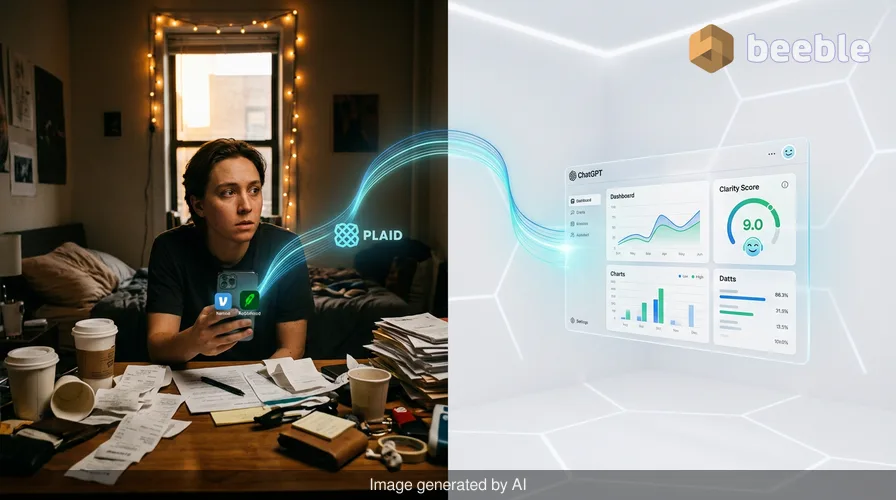
When was the last time you looked at your bank statement and felt a genuine sense of clarity rather than a mild pang of anxiety? For most of us, personal finance feels less like a well-oiled machine and more like a junk drawer of digital receipts, forgotten subscriptions, and "wait, what was that charge?" moments. We have apps for budgeting, apps for investing, and apps for taxes, yet the overarching story of our financial health remains stubbornly opaque.
On Friday, OpenAI made a disruptive move to change that. The company launched a new suite of personal finance tools for ChatGPT Pro subscribers in the U.S., allowing users to connect their actual bank accounts directly to the chatbot. This isn’t just a new prompt or a clever plugin; it is a foundational shift in how we might interact with our money. By partnering with Plaid—the same invisible backbone that connects apps like Venmo and Robinhood to your bank—OpenAI is turning its AI into a tireless intern for your wallet.
How the Digital Courier Works
Behind the jargon of "financial connection services," the process is relatively streamlined. OpenAI isn’t actually seeing your login credentials. Instead, they are using Plaid as a secure courier. When you select the “Finances” option in the ChatGPT sidebar, you are prompted to link your accounts from over 12,000 institutions, including heavyweights like Chase, Schwab, and Fidelity.
Once the connection is established, the data doesn't just sit there. ChatGPT organizes it into a functional dashboard. Looking at the big picture, this gives you a bird’s-eye view of your portfolio performance, spending habits, and those pesky recurring subscriptions that tend to leak money like a slow tire.
In everyday life, this means you can stop manually exporting CSV files into Excel just to figure out how much you spent on takeout last month. You can simply ask, "@Finances, how much did I spend on dining out compared to groceries in April?" and get an immediate, conversational answer. It’s an attempt to move personal finance away from the cold, rigid world of spreadsheets and into the more intuitive realm of natural language.
The Brain Upgrade: From Chatbot to Financial Analyst
Why now? Historically, large language models were notoriously bad at math. They were built to predict the next word in a sentence, not to balance a checkbook. However, OpenAI noted that its new GPT-5.5 model is significantly more robust when it comes to reasoning with context.
To put it another way, earlier versions of AI might have seen a $50 charge at a gas station and a $50 charge at a grocery store as identical data points. GPT-5.5 is designed to understand the systemic relationship between these transactions. It knows that a sudden spike in utility bills combined with a drop in savings might suggest a need to adjust your discretionary spending.
What this means is that the AI is transitioning from a simple search engine to a reasoning engine. OpenAI even worked with finance experts to create specific benchmarks to ensure the model doesn't just give plausible-sounding advice, but mathematically sound guidance. This specialization is a growing trend; we’ve already seen Anthropic move into health tools and Perplexity launch financial research products. The era of the "generalist" AI is ending, replaced by bots that are being sent to finishing school for specific industries.
The Hiro Factor: Specialized Expertise
In simple terms, OpenAI didn’t build this from scratch. Only a month ago, they acquired the team behind a personal finance startup called Hiro. While OpenAI hasn't explicitly stated that Hiro is the new finance tool, the fingerprints of that acquisition are all over this release. Hiro was known for its user-friendly approach to complex financial data, and that influence is tangible in the new dashboard interface.
| Feature | Traditional Banking Apps | ChatGPT Personal Finance |
|---|---|---|
| Data Entry | Manual or automatic syncing | Automatic via Plaid (12,000+ banks) |
| Analysis Style | Static charts and graphs | Conversational, natural language |
| Predictive Power | Minimal (mostly historical) | High (future planning, tax impact) |
| Integration | Walled gardens | Cross-platform (Web, iOS) |
| Privacy Control | Hard to delete specific data | Manual memory & connection deletion |
The Privacy Elephant in the Room
From a consumer standpoint, the biggest hurdle isn't the technology—it’s the trust. Handing over financial data to an AI company feels inherently volatile to some. OpenAI seems aware of this skepticism. They’ve built in several layers of transparency and control.
Users can navigate to their settings to remove specific account connections at any time. Crucially, once you disconnect a service, OpenAI promises to wipe that synced data from their systems within 30 days. They have also introduced "financial memories," which users can view and delete individually. If you don't want the AI to remember that you’re saving for a wedding or that you have a specific stock portfolio, you can scrub those specific details without nuking the entire setup.
Essentially, the goal is to make the data as liquid as possible for the user, but as secure as possible from outside interference. However, as with any interconnected digital service, the "So What?" filter remains: is the convenience of an AI bookkeeper worth the risk of centralized data? For many, the answer will depend on how resilient the system proves to be against the inevitable attempts at cyber intrusion.
Looking Ahead: Taxes and Credit Scores
Looking at the roadmap, the current preview is just the beginning. OpenAI has already teased an upcoming integration with Intuit. This is where the product moves from "convenient" to "essential" for some. Imagine asking ChatGPT, "If I sell $5,000 of my Apple stock today, how will it affect my tax bill next April?" or "What are my odds of getting approved for this specific credit card based on my current debt-to-income ratio?"
These are complex, multi-layered questions that usually require a human accountant or hours of personal research. By bringing this level of analysis to a Pro subscription, OpenAI is democratizing high-level financial advice that was once the province of the wealthy.
Practical Takeaways for the Everyday User
Ultimately, this launch signals that AI is moving out of the "toy" phase and into the "utility" phase. If you are a ChatGPT Pro subscriber, here is how to approach this new tool pragmatically:
- Start Small: You don't have to connect your primary retirement account on day one. Start by linking a single credit card to test the AI’s ability to categorize your spending accurately.
- Verify the Math: While GPT-5.5 is more resilient to errors, it is not infallible. Use the tool for high-level strategy—like building a 5-year plan to buy a house—but double-check the fine print on interest rates and tax laws.
- Audit Your Data: Make it a habit to check your "Finances" settings once a month. Delete any financial memories that are no longer relevant to keep the AI focused and your data footprint small.
Rather than viewing this as just another feature, we should see it as a shift in our digital habits. We are moving toward a world where we no longer "manage" our finances; we "collaborate" with them. Observe how often you find yourself asking the bot for permission to make a purchase—that subtle change in behavior will be the true measure of this technology’s impact.
Sources:
- OpenAI Official Newsroom Release: "Introducing ChatGPT Personal Finance"
- Plaid Developer Blog: "Securing the Future of AI-Driven Finance"
- Market Analysis: "The Strategic Impact of the Hiro Acquisition on OpenAI’s Ecosystem"
- Tech Financial Report: "GPT-5.5 and the Evolution of LLM Reasoning Capabilities"



See you on the other side.
Our end-to-end encrypted email and cloud storage solution provides the most powerful means of secure data exchange, ensuring the safety and privacy of your data.
/ Create a free account
