


Would you wear smart glasses if Meta removed the camera?

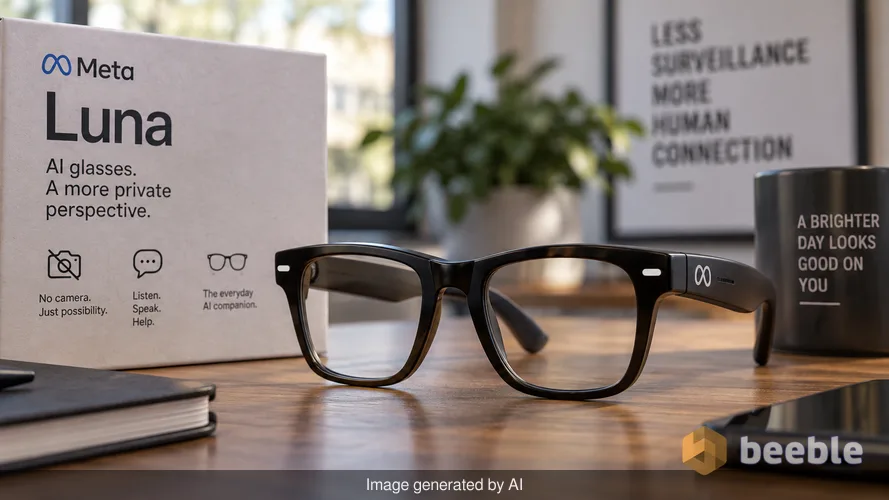
Would you invite a tech company to sit on your face if they promised not to watch everything you see? This question sits at the center of Meta’s latest hardware pivot. For the last few years, the company has found surprising success with its Ray-Ban Meta smart glasses. These devices look like classic eyewear but hide cameras and speakers in the frames. While the sales figures have outpaced previous attempts at smart glasses, the social reception has been far from universal. Many people still view these devices with deep suspicion, often labeling them as surveillance tools for the modern voyeur.
Meta now appears ready to test a different hypothesis. Reports suggest the company is preparing a new model, code-named Luna, that removes the camera entirely. By ditching the lens, Meta hopes to bypass the privacy concerns that have turned potential customers away. This move suggests a shift in how the company views the future of wearables. Instead of a device that records the world, Luna is a device that listens and speaks. It acts as a dedicated physical house for an artificial intelligence assistant, rather than a hands-free GoPro.
The social wall facing smart eyewear
The history of smart glasses is littered with failures, and most of those failures share a common cause. People do not like being recorded without their consent. When Google Glass arrived over a decade ago, it failed largely because the public felt uncomfortable around the small, glowing lens. The term glasshole entered the lexicon to describe users who prioritized their tech over social etiquette. Meta’s current smart glasses have tried to fix this with a small LED light that shines when the camera is active. However, that light is easy to cover with a piece of tape or a marker.
For the average person in a coffee shop or a gym, a pair of glasses with a lens represents a permanent threat to privacy. This perception has created a glass ceiling for the industry. While tech enthusiasts and content creators enjoy the ability to film point-of-view videos, the broader public remains wary. Meta’s decision to develop Luna indicates an admission that the camera is a barrier to mass adoption. By removing the optics, the company removes the creep factor. This makes the glasses socially acceptable in places where cameras are usually banned, such as locker rooms, private meetings, or doctor offices.
How Luna works without eyes
If you take away the camera, what is left? According to reports from The Information, Luna relies entirely on audio and AI interaction. The device has six built-in microphones to capture the user's voice and environmental sounds. It also includes a dedicated button on the side of the frames. When a user presses this button, it activates the company's AI chatbot and Muse, a new AI consumer agent.
Think of this setup as a tireless intern who lives in your ear. The six microphones allow the AI to hear you clearly even in noisy environments, like a busy street or a windy park. Because there is no camera, the device uses less battery and requires less processing power. This allows for a thinner, lighter frame that looks and feels like standard glasses. The experience is purely auditory. You ask a question, and the AI provides the answer through small speakers located near your temples.
This shift toward an audio-only interface is a practical response to the limitations of current technology. Building high-quality displays into glasses is expensive and makes the hardware bulky. By focusing on sound, Meta can offer a streamlined product that costs less to manufacture. It also forces the user to interact with AI in a way that feels more like a conversation and less like a search engine query.
The high cost of the metaverse dream
Meta is not making this move just to be polite. The company is under intense financial pressure to prove that its hardware division, Reality Labs, can eventually make a profit. In April, earnings reports showed that the division continues to lose billions of dollars every quarter. Mark Zuckerberg has bet the future of his company on the idea that smart glasses and virtual reality will replace the smartphone. So far, that bet has been a slow leak in the company's tire.
To stop the bleeding, Meta needs a hit product that appeals to millions, not just thousands. The current Ray-Ban Meta glasses are a niche success, but they are still a specialty item. Luna represents an attempt to reach the practical consumer. This is the person who wants the benefits of AI—reminders, quick translations, or hands-free messaging—but does not care about filming their lunch.
On the market side, a camera-free version is also a play for the enterprise sector. Many office buildings and high-security industrial sites forbid cameras. A worker who needs a hands-free AI assistant currently has to leave their smart glasses at the door. Luna solves this problem. It allows Meta to sell hardware to corporations that previously blocked the technology for security reasons.
Why audio-first AI matters for you
Looking at the big picture, the removal of the camera suggests that the real value of wearables is not in what they see, but in how they connect us to information. For the average user, the smartphone is a constant source of distraction. We pull it out to check one notification and end up scrolling for twenty minutes. Smart glasses aim to break this cycle by providing information without a screen.
| Feature | Ray-Ban Meta | Meta Luna (Reported) |
|---|---|---|
| Camera | 12MP Photo/Video | None |
| Microphones | 5 Mic Array | 6 Mic Array |
| Primary Interaction | Visual/Audio | Audio/Button |
| Privacy Risk | High | Low |
| Main Use Case | Content Creation | AI Assistance |
| Battery Life | Moderate | Likely Higher |
Practically speaking, a camera-free pair of glasses is a more resilient tool for daily life. You do not have to worry about the lens getting scratched or the legal implications of wearing them in a private space. You are simply wearing a headset that looks like eyewear. This lowers the barrier to entry for people who are tech-curious but privacy-conscious.
Under the hood, this also gives Meta a massive data advantage. While they lose the visual data from a camera, they gain a constant stream of audio interactions. Every time you ask Muse a question, Meta learns more about your habits, needs, and preferences. This data is the digital crude oil that fuels their advertising machine. The trade-off for the consumer is clear: you get privacy from the lens, but you give up more of your vocal and behavioral data to the AI.
The bottom line for your budget
When Luna likely appears at the Meta Connect event next week, the most important detail for consumers will be the price. Current smart glasses often retail for $300 or more. By removing the expensive camera sensors and the processing chips required to handle video, Meta has the opportunity to lower the price point. A pair of smart glasses priced under $200 could disrupt the market and force competitors to react.
From a consumer standpoint, you should consider if you actually need a dedicated AI device on your face. Most of what Luna promises to do can already be done with a pair of high-end earbuds like AirPods. The advantage of glasses is the placement of the microphones and the ability to wear them all day without ear fatigue. However, you are still buying into the Meta ecosystem.
Ultimately, the arrival of Luna signifies a maturing industry. The initial hype of recording every moment of our lives is fading, replaced by a more grounded desire for useful tools. Meta is learning that to win the space on our faces, they must first respect the boundaries of our social lives.
Practical foresight
As we move toward a world where AI is always listening, you should start observing your own digital habits. Ask yourself if you are comfortable with an AI agent managing your schedule or answering your questions in real-time. If the answer is yes, then camera-free glasses might be the first wearable that actually fits into your life without causing an argument at the dinner table. Pay attention to how often you reach for your phone just to ask a simple question. If that action feels like a chore, the shift toward audio-first wearables is designed specifically for you.
Sources: The Information, Meta Reality Labs Q1 2026 Earnings, Meta Connect Event Schedule 2026.



See you on the other side.
Our end-to-end encrypted email and cloud storage solution provides the most powerful means of secure data exchange, ensuring the safety and privacy of your data.
/ Create a free account
