


Would You Work Alongside a Joke-Cracking Humanoid? Japan’s New Plan to Reclaim the Robot Race

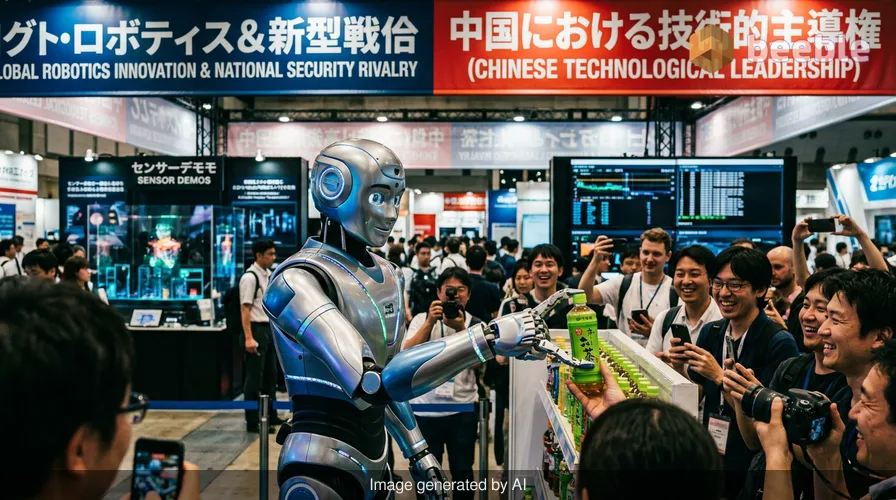
Would you trust a robot to bring you a glass of water if it also cracked a joke about getting a sunburn? It sounds like a scene from a mid-budget sci-fi movie, but at the recent Humanoid Robot Expo in Tokyo, this was the literal state of the art. A human-sized machine named Galbot, developed by a Chinese firm, stood in a simulated convenience store, picked up a bottle of tea, and quipped about its need for a holiday.
Behind the humor, however, lies a volatile and high-stakes geopolitical shift. For decades, Japan was the undisputed heavyweight champion of robotics. From the factory floors of Toyota to the early charm of Honda’s ASIMO, the world looked to Tokyo for the future of automation. But as we move into 2026, the landscape has shifted. The Tokyo expo, Japan’s first-ever event dedicated exclusively to humanoids, revealed a startling reality: the hardware on the floor was overwhelmingly Chinese.
Facing this unprecedented competition, Japan is shifting its strategy. Rather than just trying to build a better metal arm, the island nation is pivoting toward the invisible brains behind the machines. They are betting on something called physical AI.
The Hardware Gap: Why China is Leading the Physical Race
Looking at the big picture, China’s dominance in robot manufacturing isn't an accident. It is the result of a centralized, systemic push. Beijing’s latest five-year plan has treated humanoid robots with the same urgency as semiconductors or electric vehicles. By leveraging their massive existing supply chains—the same ones that build your smartphones and EV batteries—Chinese firms can produce high-quality robotic limbs and torsos at a scale and price point that others struggle to match.
In everyday life, this means the "bodies" of our future robotic helpers are likely to be built in the same hubs that currently dominate global manufacturing. These machines can already walk, dance, and perform synchronized movements with uncanny grace. However, while a robot dancing to a pre-programmed pop song looks impressive on camera, it is essentially just a very expensive, moving statue. It isn't thinking; it is just following a script.
Behind the Jargon: What is Physical AI?
This is where Japan hopes to find its edge. To put it another way, if China is building the body, Japan wants to build the nervous system. At the Tokyo expo, the conversation moved away from gears and motors toward physical AI.
In simple terms, when we interact with AI today, we usually think of Large Language Models like ChatGPT. These models are brilliant at processing text and images, but they are essentially brains in a jar. They have no concept of gravity, friction, or the fragility of a glass bottle. Physical AI is the bridge between the digital and the tangible. It takes information from sensors—cameras, pressure pads, and depth finders—and translates it into real-world action.
Imagine a tireless intern who knows everything about the world but has never actually used a pair of hands. You can explain how to pick up an egg a thousand times, but until that intern feels the weight and the delicate shell, they will likely crush it. Physical AI is the process of training that intern through massive amounts of high-quality data.
Companies like Tokyo-based FastLabel are becoming foundational players in this niche. They don't build the robots themselves; they create the massive datasets needed to train them. By partnering with hardware firms like China’s RealMan, they are helping robots understand the difference between a soft piece of bread and a hard plastic container. This isn't just about programming; it is about teaching a machine to perceive the world with the same nuance as a human.
The Grip of Reality: The Hardest Problem in Tech
Practically speaking, we are currently facing a major technical hurdle: the grip. While it is easy to make a robot walk from point A to point B, making it pick up a random object in a messy room is a nightmare for engineers.
Historically, industrial robots have lived in cages. They perform one task—welding a specific joint or moving a specific box—over and over again. But a humanoid robot in a home or a dynamic warehouse faces a chaotic environment. As Masato Ando of Aska Corporation points out, movements at a higher level are not fixed. The robot has to make its own judgments because there are millions of different patterns it might encounter.
| Task Level | Complexity | Current Status | The Goal |
|---|---|---|---|
| Repetitive Motion | Low | Fully Automated | Robots in cages/factories |
| Basic Interaction | Medium | Emerging | Robots picking up specific items |
| Dynamic Judgment | High | Experimental | Robots navigating a messy kitchen |
| Social Integration | Extreme | Proof of Concept | Joke-cracking robots like Galbot |
Zooming out, the ability to solve this "judgment problem" is what will determine if humanoid robots remain expensive toys or become disruptive tools for the global economy.
The "So What?" Filter: Why This Matters for You
From a consumer standpoint, you might wonder why we need robots that look like us at all. Why not just have specialized machines? The answer lies in our infrastructure. Our world—our stairs, our door handles, our kitchen counters—was designed by humans, for humans. A humanoid robot is a decentralized solution; it doesn't require us to rebuild our homes or factories to accommodate it. It fits into the world we already have.
For a country like Japan, which is grappling with a resilient but shrinking workforce due to an aging population, these machines aren't just a luxury—they are a necessity. But the transition won't be seamless. There is a deep-seated opaque fear about robots replacing humans. Industry leaders are quick to pivot the narrative, suggesting that these machines will be partners, not replacements.
Ultimately, the goal is to create a robot that can work alongside a human in a factory or a nursing home without being a safety hazard or a psychological burden. The joke-cracking Galbot is a charming attempt to bridge that gap, but the real work is happening under the hood, where software is learning to navigate the messy, unpredictable reality of human life.
Practical Foresight: Navigating the Robotic Future
As we look toward the end of the decade, the line between "tech" and "physical reality" will continue to blur. Here is how you should view these developments through a pragmatic lens:
- Observe Your Digital Habits: Much like how we learned to prompt AI for text, we will soon need to learn how to "onboard" physical assistants. The user-friendly nature of these robots will depend entirely on the quality of the data Japan is currently trying to standardize.
- Watch the Supply Chain: The rivalry between the US, China, and Japan in this sector will likely affect the price of consumer electronics. As robotics manufacturing scales, the cost of high-precision sensors and motors will drop, potentially leading to cheaper automation in other areas of your life, from smart appliances to your car.
- Shift Your Perspective on Labor: Automation is no longer just about the "invisible backbone" of heavy industry. It is moving into the frontline. We should start thinking of robots as the digital crude oil of the 21st century—a resource that, if refined correctly with high-quality data, can power sectors that are currently running on empty due to labor shortages.
We are moving away from the era of the "dumb" machine. Whether it is a joke-cracking assistant or a silent factory worker, the next generation of robots will be defined not by how well they are built, but by how well they understand the world they are touching.
Sources:
- International Federation of Robotics (IFR) World Robotics 2025 Report
- Humanoid Robot Expo (Tokyo) Official Exhibitor Summaries
- Ministry of Economy, Trade and Industry (METI) Japan: Robotics Policy 2026
- FastLabel Corporate AI Data Infrastructure Briefings
- China Ministry of Industry and Information Technology (MIIT) Five-Year Plan for Robot Industry



See you on the other side.
Our end-to-end encrypted email and cloud storage solution provides the most powerful means of secure data exchange, ensuring the safety and privacy of your data.
/ Create a free account
