


Your Next Suitcase Might Be Handled by a Robot—And That’s the Only Way Japan’s Travel Boom Survives

Japan is currently the world’s most popular pressure cooker. By the end of last year, the country welcomed a record-breaking 42.7 million international visitors, and the first two months of 2026 have already seen another 7 million people touch down at hubs like Tokyo’s Haneda Airport. While these numbers are a dream for the national treasury, they are a nightmare for the invisible backbone of the travel industry: the ground crews.
Behind every seamless vacation is a small army of baggage handlers and cargo loaders working in a high-stakes, physically punishing environment. But Japan is running out of people to do the job. With a shrinking, aging population and a projected need for 6.5 million foreign workers by 2040, the math simply doesn’t add up for human-only labor.
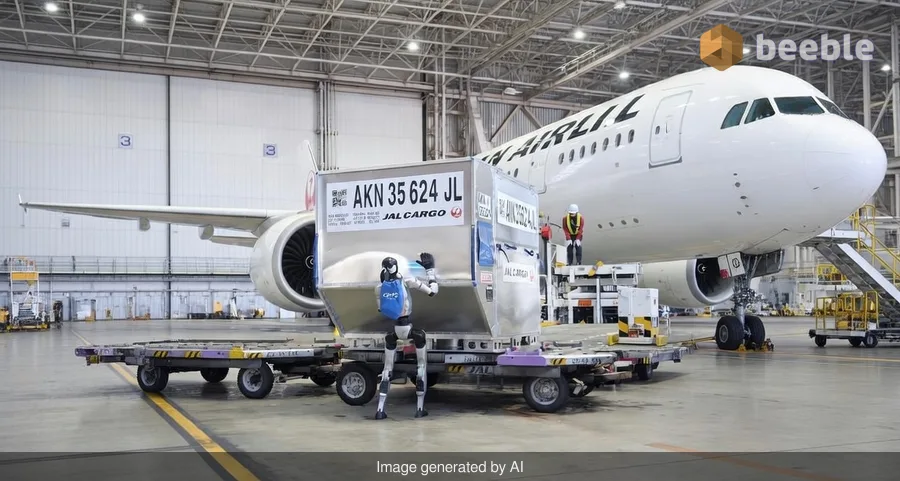
This is why, starting in May 2026, travelers peering out of their aircraft windows at Haneda might see something unusual. Alongside the fluorescent-vested human crews, 130-centimeter-tall humanoid robots will be tentatively pushing cargo onto conveyor belts. This isn’t a marketing stunt; it is a foundational shift in how heavy industry survives a demographic collapse.
The Hardware Under the Hood
To the average user, the idea of a “humanoid” baggage handler might conjure images of C-3PO or a sleek Hollywood android. The reality is more practical. These machines, manufactured by the Hangzhou-based robotics firm Unitree, are designed with a specific form factor: roughly four-foot-three, built to operate in spaces originally designed for humans.
In simple terms, the choice of a humanoid shape over a specialized arm or a wheeled crate is about adaptability. Airports are highly standardized but legacy-heavy environments. Rather than tearing up the tarmac to install billion-dollar automated tracks, Japan Airlines (JAL) and its partner, GMO AI and Robotics, are betting on “plug-and-play” workers that can use the same ramps, handles, and belts that humans do.
Under the hood, these robots rely on a suite of LiDAR sensors and cameras to navigate the volatile environment of an active runway. However, looking at the big picture, these aren't autonomous masters of the universe yet. In recent demonstrations, the Unitree units were seen “tentatively” pushing cargo. They are essentially tireless interns that require frequent supervision and, more importantly, frequent recharging. With a battery life of roughly two to three hours, these robots will spend a significant portion of their shift tethered to a power outlet, highlighting that while the tech is emerging, it isn't yet a one-to-one replacement for human endurance.
Why Your Suitcase Needs a Robot Assistant
From a consumer standpoint, the “So What?” of this story isn't just about cool tech; it’s about reliability. If you’ve traveled through major global hubs recently, you’ve likely experienced the systemic fragility of modern aviation—lost luggage, three-hour waits at the carousel, and canceled flights due to crew shortages.
Japan’s labor shortage is an interconnected crisis. As the indigenous workforce shrinks, the remaining workers are stretched thin, leading to burnout and safety risks. Yoshiteru Suzuki, president of JAL Ground Service, recently noted that using robots for physically demanding work will inevitably reduce the burden on workers. Practically speaking, this means the human staff can focus on safety management and complex problem-solving—tasks where human judgment remains unprecedented—while the robots handle the repetitive, spine-straining labor of moving thousands of 20-kilogram suitcases.
| Feature | Human Ground Crew | Unitree Humanoid (Trial Version) |
|---|---|---|
| Shift Length | 8–12 hours (with breaks) | 2–3 hours (then requires recharge) |
| Strength | High (variable by individual) | Consistent (optimized for standard cargo) |
| Versatility | Excellent; can handle any anomaly | Limited; follows standardized paths |
| Safety Judgment | Foundational; high-level awareness | Dependent on sensors and human oversight |
| Availability | Subject to labor market shortages | Scalable based on fleet size |
| Cost | Rising wages and benefits | High initial CAPEX; low operational cost |
| Primary Role | Oversight and complex tasks | Repetitive manual labor |
The Economic and Political Tightrope
Looking at the market side, this experiment, which is slated to run until 2028, is a transparent attempt to bypass a looming political and economic stalemate. Japan finds itself in a paradoxical position: it desperately needs more labor to maintain its growth targets, yet the government faces intense pressure to rein in immigration.
Robotics offers a decentralized solution to this problem. Instead of relying solely on shifting immigration policies, JAL is investing in a scalable robotic workforce. If the trial at Haneda proves successful, the implications will ripple far beyond the tarmac. We could see similar deployments in aircraft cabin cleaning—another high-turnover, labor-intensive job—and eventually in warehouse logistics across the country.
Curiously, there is a level of skepticism to maintain here. Corporate PR often paints automation as a seamless transition, but the integration of robots into human workflows is rarely frictionless. There is the “waving to a colleague” factor—social cues programmed into robots to make them less intimidating to human coworkers. While this makes for a great media demonstration, the real test is how these machines perform in a torrential downpour or a mid-August heatwave on the Haneda asphalt, environments that are notoriously brutal on sensitive electronics.
What This Means for You
Ultimately, for the traveler, this experiment marks the beginning of a more transparently automated world. We are moving away from the era where technology was hidden behind a screen and into an era where it occupies physical space alongside us.
1. Expect a Shift in Reliability: The goal here is to stabilize the “back-end” of travel. If robots can handle the bulk of cargo movement, the systemic delays caused by staffing shortages should, in theory, decrease. You might not see a lower ticket price—automation is expensive to implement—but you might see your bag arrive on the carousel more consistently.
2. The Human Touch Becomes a Premium: As robots take over the heavy lifting and cleaning, human interaction in airports will likely become more specialized. Security, safety, and high-level customer service will remain human-centric, but the “invisible” parts of your journey will increasingly be handled by silicon and steel.
3. A Test Case for Global Labor: Japan is the world’s laboratory for aging demographics. If humanoid robots can solve the baggage crisis at Haneda, expect to see the same models appearing at Heathrow, JFK, and Changi within the decade. This is the first step in a global shift where “manual labor” is no longer synonymous with “human labor.”
As we move toward the 2028 conclusion of this trial, the question isn't whether robots can replace baggage handlers, but how quickly we can adapt our infrastructure to support them. For now, if you find yourself at Haneda this summer, give a nod to the 130cm-tall machine struggling with a heavy suitcase. It’s not just moving a bag; it’s carrying the weight of an entire industry’s survival.
Sources:
- Kyodo News Agency – Industrial Reports on JAL Ground Service trials.
- Japan National Tourism Organization (JNTO) – 2025/2026 Visitor Statistics.
- GMO AI & Robotics Group – Technical Specifications for Unitree Deployment.
- Japan Airlines (JAL) – Official Press Release on Haneda Automation Experiment.



See you on the other side.
Our end-to-end encrypted email and cloud storage solution provides the most powerful means of secure data exchange, ensuring the safety and privacy of your data.
/ Create a free account
